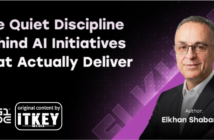


Elkhan Shabanov, CEO of DIGICODE Americas, reflects on the paradox of today’s tech scene: while AI and infrastructure have removed most barriers to building, they’ve amplified the importance of execution. With so much noise and so many tools, the startups that thrive are still the ones who execute with discipline, not just enthusiasm.
Tech Is No Longer the Hard Part
Let’s be honest: most of what used to block startup founders has been solved. Infrastructure is instant. Prototyping is fast. AI can write your backend logic and design your homepage. A founder today has access to a Swiss Army knife of modern tech, available from day one.
But while building has never been easier, succeeding has never been more nuanced.
Technology alone doesn’t build a company. Execution does. And in this new AI-powered era, execution is more strategic (and more human) than ever.
The Same Questions Still Matter
Here’s what AI won’t answer for you:
- What exact problem are you solving?
- Who really needs this, who will pay for it?
- Is the market big enough, and is timing right?
- How will you support and grow that user base?
- What will stop you from being copied overnight?
These are the timeless fundamentals. And if you skip them, no matter how great your MVP is, you’re building on sand.
The Discipline Advantage
Founders who succeed in today’s environment do three things consistently:
1. They focus ruthlessly.
Just because you can build 20 features doesn’t mean you should. The best founders isolate one pain point, solve it elegantly, and validate traction before scaling.
2. They iterate fast, but with intent.
AI enables speed, but speed without strategy is just noise. Every iteration should serve a learning goal: Will users pay? Will they return? Can this scale?
3. They know when to say no.
To features. To partnerships. To advice. The sheer volume of input in today’s startup scene can derail even the best product. Disciplined founders filter and prioritize.
Community Is a Resource, Not a Strategy
Slack groups, Twitter spaces, Substack newsletters, and startup meetups are incredibly valuable. But without direction, they become echo chambers. One founder’s genius hack might be your team’s biggest distraction.
A cautionary tale: A startup meetup billed as a session on “outsourcing for startups” quickly devolved into debates about hiring $5/hour VAs to manage inboxes, ignoring higher-value outsourcing like product development or user research.
The lesson? Be intentional with how you engage. Ask questions that matter. Don’t mistake noise for insight.
Avoiding Common Early-Stage Traps
Here are a few other pitfalls that separate successful founders from those who stall out:
- Overhiring too early: Fixed costs are dangerous when the roadmap is unclear. Start lean, automate where possible, and only hire when growth demands it.
- Choosing co-founders for energy, not alignment: Enthusiasm fades. Misalignment on vision or values will derail your startup faster than tech debt ever could.
- Overprotecting the idea: Unless it’s deeply patentable, keeping it secret slows you down. Share it. Test it. Let it evolve.
- Thinking lean = slow: Being cautious is smart. But moving too slowly means you’ll miss windows of opportunity. Urgency matters.
The Human Factor: Still Your Biggest Differentiator
Even in an AI-powered landscape, what makes a company work isn’t code, it’s clarity, conviction, and people.
Startups still run on the founder’s energy. Teams still need culture. Customers still want to feel seen, heard, and supported.
What sets apart a fast-follower product from a breakout business is how deeply the founder understands the user, how well the solution fits the market, and how quickly they can evolve based on feedback.
Final Takeaway: Execution Is the New IP
If access and tools are now universal, then execution becomes your intellectual property. How you prioritize. How you listen. How you ship. That’s the difference.
In this new era, founders who execute with precision, speed, and purpose will rise, even if their idea isn’t the most novel.
Because ultimately, the winners won’t be those who build the fastest. They’ll be the ones who learn the fastest and act on it. So, the real edge lies in how deliberately you execute and evolve.

Elkhan Shabanov, CEO Americas at Digicode, with his extensive 20+ years of experience, stands at the forefront of defining innovative strategies for IT outsourcing, multinational team management, and synchronization. His expertise in structuring enterprise and cloud technology solutions paves the way for startups and Fortune Global Companies to navigate the complexities of global team coordination.