

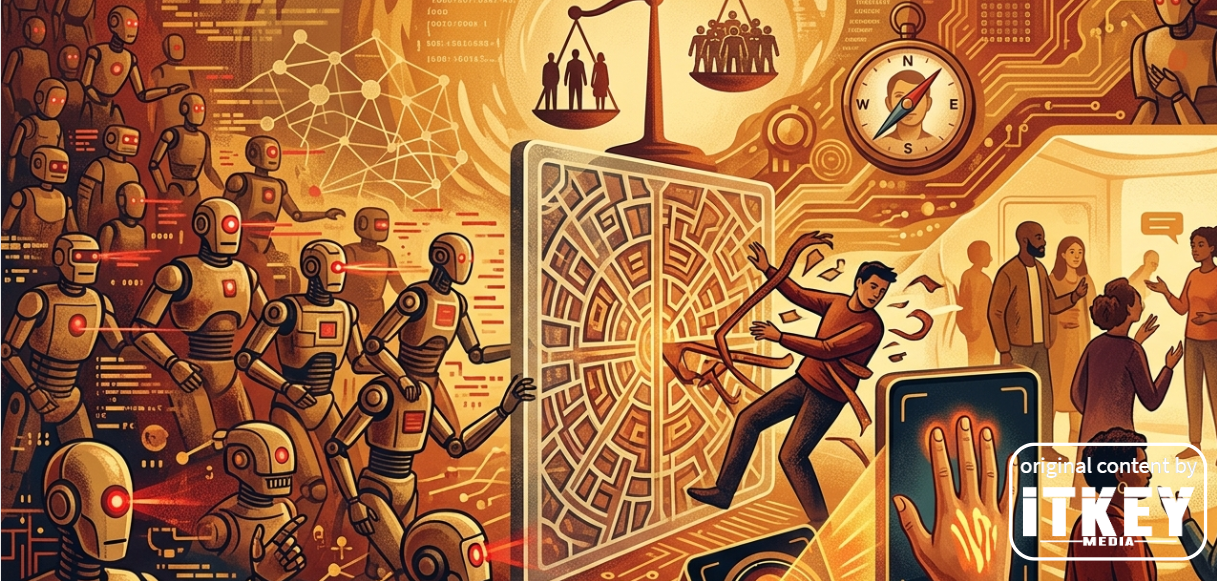
Generative AI has already become so convincing in mimicking human behavior—from writing style to website navigation—that security systems must make significant efforts to distinguish bots from real users. This has triggered a true arms race: companies are investing billions in data centers, computing power, and cutting-edge detection algorithms in an attempt to keep pace with the rapid evolution of bots.
The economic consequences are significant. Despite rapid revenue growth among leading developers, their spending on maintaining computing infrastructure and training new models often exceeds profits. This creates immense pressure on economic resources, accelerates changes in the labor market, and poses risks of instability if investments do not pay off as quickly as expected.
At the same time, this competition is driving a massive increase in automated traffic, including AI crawlers from major technology companies, such as OpenAI, Google, or Meta. According to various estimates, more than half of global internet traffic now consists of bots, a significant portion of which is malicious.
However, the fight for ‘clean traffic’ often harms real users. Bot detection systems analyze interaction speed, mouse movements, behavioral signals, and geolocation, but these methods are not error-free. Algorithms risk filtering out legitimate users, such as VPN users or those with atypical interaction patterns. Another challenge is algorithmic bias. The case of Amazon’s experimental recruitment system—consequently abandoned—demonstrated this clearly, as it discriminated against women due to ‘male’ patterns in the training data.
Therefore, the most difficult task is not to create another smart algorithm, but to preserve fair rules for those who remain human. This has led to the emergence of alternative approaches—so-called ‘proof of human’ mechanisms: cryptographic identifiers or behavioral biometrics that confirm human presence without revealing identity. Projects like World ID have already verified millions of people, but they also raise questions about privacy and inclusivity.
To ensure AI does not discriminate against people, continuous and comprehensive oversight is required. This includes collecting data that represents all groups in society, testing models for bias before deployment, regularly validating them on real-world cases, explaining decision-making processes, allowing users to challenge outcomes, and involving diverse teams in development. Only such ongoing efforts can make AI fair rather than a source of inequality.

Olga is a recognized expert in IT and information security with 19 years of experience. Among other things, she specializes in information security systems design and implementation. Her profound knowledge of IT technologies and principles of building IT infrastructure put her in the position of the Chairperson of the Committee on IT and Cyber Security of the German-Ukrainian Chamber of Industry and Commerce. Olga is also the CEO of the Ukrainian IT company Silvery LLC.