

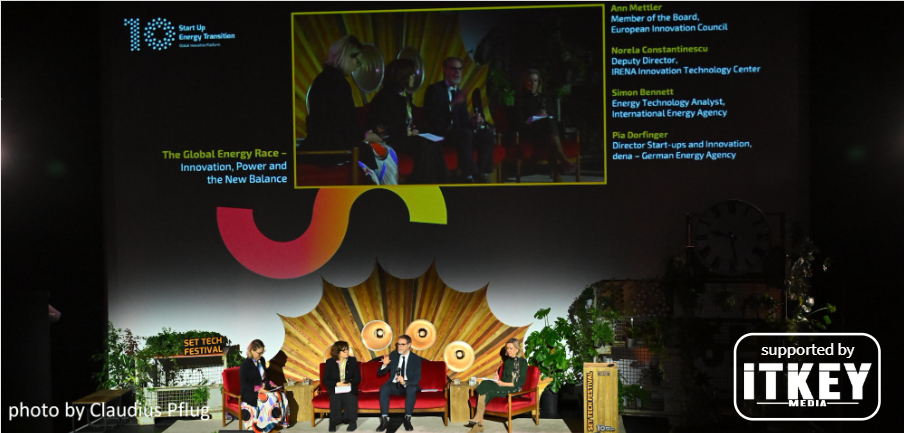
- SET Tech Festival marked 10 years, gathering global leaders in energy innovation.
- An exemplary panel on energy race emphasized energy security as the primary driver of technological innovation
- It discussed how Europe faces challenges balancing competitiveness, resilience, and clean energy transition goals
- The future of energy transition depends on in-depth integration and strategic long-term energy policies
On March 17th, dena’s SET Tech Festival celebrated its 10th anniversary and Colosseum Berlin hosted one of Europe’s and the world’s landmark events for energy and climate technology innovators. The iconic venue welcomed over 1,000 international visionary founders, global investors, corporate leaders, and policymakers around breakthrough solutions for the global energy transition. Aside from the in-depth panel discussion, the Festival featured extensive networking opportunities and, of course, startup pitches and SET Award ceremony.
Spotlight on the Global Energy Race
ITKeyMedia spotlights the panel discussion The Global Energy Race – Innovation, Power, and the New Balance. The participating panelists were:
- Simon Bennett, Energy Technology Analyst at the International Energy Agency (IEA)
- Norela Constantinescu, Deputy Director at the IRENA Innovation Technology Center
- Ann Mettler, Member of the Board at the European Innovation Council

Pia Dorfinger, Director Startups and Innovation at dena
Dena’s Director of Startups and Innovation Pia Dorfinger moderated the discussion. She began by reminding that the two represented organizations—IRENA and International Energy Agency—were standing alongside dena as organizers of the first SET Tech Festival 10 years ago.
Energy Security as the Driving Force of Innovation
Looking at the volatility of today’s world and the lack of predictability, the natural question to start off was about how these factors influence the decision-making process. According to Mr Bennett, the International Energy Agency finds itself in a significant moment for the energy sector, where the organization’s original calling gets called upon. Seeing how the IEA was created in response to the 1973-74 oil crisis and has been in place since then, it does not see the present-day oil-related uncertainties as completely new. They are investigated in IEA’s The State of Energy Innovation 2026 report alongside a survey of experts about what they consider drivers of energy innovation, which revealed the overwhelming conviction that the main driver is energy security. As such, innovation responds to this security demand, same as any other market demand.
For Ms Constantinescu and IRENA, the main focus is to keep the long-term perspective, backed by economic reality, including geopolitical fragmentation, industrial competition, and fiscal constraints. In order to move toward the long-term vision (which remains Net Zero and leaves doubt as to whether it’s achievable by 2030 as declared), prioritize not only increasing renewable energy generation but also identifying and tackling bottlenecks, including grid stability, flexibility, as well as aligning diversification with the ongoing electrification. Even if the date has to be postponed, the long-term goal must be adhered to. Moreover, Ms Constantinescu is convinced that security and affordability converge in the long term.
Ms Mettler holds several positions that have to do with the energy transition from a number of angles: climate objectives, security and resilience, scaling up and commercializing, and preserving the economic value within Europe. The latter is a topical issue for stakeholders in Brussels who proactively investigate the obstacles for startup growth in the EU even with a selection of financial instruments in place, which, according to Ms Mettler, is very timely. She points out how unacceptably detrimental it is for Europe to prevent its startups from growing. In this view, clean energy goes beyond climate objectives and gains additional economic value.
Dependencies and Integration
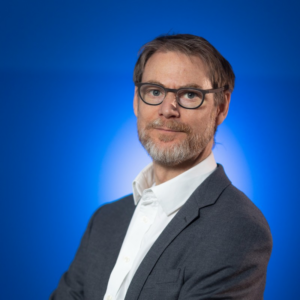
Simon Bennett, Energy Technology Analyst at the International Energy Agency
The question arises whether it’s possible to follow climate objectives, as well as resilience and competitiveness all at once and whether it might lead to a hypothetical new dependency instead of fossil fuels. Mr Bennett points out the fundamental difference between depending on imported fuels and imported technologies. While there is ongoing work on comparing those in exact numbers, a ship loaded with solar panels is essentially many times more valuable than a ship loaded with LNG. He agrees with Ms Mettler that the overall industrial competitiveness is another factor to take into account when building the perspective. The resilience and competitiveness are the strength of such a long-term perspective, which could not be achieved by adhering to climate objectives alone, as it was e.g. 10 years ago when SET Tech Festival first started. According to the expert, the confluence of these three factors allows doubling down on each part of this triangle without sacrificing other parts.
In the short-term perspective, as Ms Constantinescu puts it, pushing forward resilience and competitiveness requires thorough work on coordinating the development. Here, AI and other digital solutions can naturally facilitate coordinating and synchronizing the development of diverse parts of the energy ecosystem. The expert also points out how some elements sustain each other, e.g. through deploying renewables and increasing the use of renewable energy, energy efficiency gets achieved. That said, myriads of interdependencies like this make the process of energy transition intrinsically complex and not straightforward. Thus, a crucial part of innovation today is system integration. One also needs to remember that in clean tech, the impact will not be as immediate as fossil fuel-related volatility, instead being longer-term. Further, Ms Constantinescu reminded that about 50% of production of wind turbines and solar panels is concentrated in one country which is also responsible for 60% of processing and refining critical minerals, creating dependencies that are bad for security. At that, she emphasized Europe’s bureaucracy-related strengths, such as market design and integration of renewables, which are to be seen as the EU’s competitive edge.
Global Competition and Strategic Leverage

Norela Constantinescu, Deputy Director at the IRENA Innovation Technology Center
As for the regional distribution of energy transition within the EU, Ms Mettler took a step back and admitted that EU institutions didn’t price in factors like sovereignty, resilience, and industrial fabric (or lack thereof) into its energy policies, leaving those up to the nation states. This led to focusing the deployment of renewable energy facilities without paying attention to manufacturing them, thus losing on the manufacturing side to other economies and creating dependencies, which, as we can observe, are easily weaponized. This came out as a result of the lack of systemic thinking and contradicts the principle that critical infrastructure, including energy, needs to be secure. In the same key, Europe also needs to double down on storage technologies. As such, Ms Mettler declared that if Europe had the ‘medal’ of the world’s top energy innovator, now it’s lost to China and needs to learn from China how to recognize one’s advantages and make the best of them instead of buying commodities cheap to find out the real price later. Going further, she is convinced that the right thing to do is to help other economies internationally build similar energy sovereignty and resilience of their own to help them avoid the possibility of their dependencies being weaponized by an external force.
Mr Bennett adds that it’s curious how climate-related import regulations and the import of cleantech parts also become political leverages, which illustrates how far Europe and the world have come. Still, all stakeholders need to remind themselves that the ongoing electrification brings opportunities first of all. For instance, returning to Chinese lessons, the electrification of large industries is a decisive step toward energy sovereignty and independence from imports. Once again, this makes both political, economic, and environmental sense. Meanwhile, another strength of Europe is the integrated grid and all its aspects and the people’s proactive interest in it.
Ms Constantinescu reminds that China actually has a very well-integrated energy policy which encompasses all the aspects and processes, from critical minerals to deployments of renewables and electrification. As for Europe, she agreed with Mr Bennett concerning the integrated grid as the EU’s strength, further strengthened by AI and other digital solutions. Integration should remain a part of the broad mindset at all stages. Here it’s important to stay realistic and not restrain from imports altogether but carefully consider which imported parts can be integrated to maximize efficiency without compromising sovereignty. Specifically, this points at importing some parts from China’s competitors.
Rising Innovation and the Power of Visibility

Ann Mettler, Member of the Board at the European Innovation Council
Wrapping up, Ms Mettler advised both founders and investors to look more closely into dual-use technologies. She is firmly convinced that the biggest thing that Europe is about to rearm itself with hundreds of billions of euros getting spent on arms-related expenses. She hopes that clean energy becomes an integral part of this story because without it, energy will remain Europe’s vulnerability. Specifically, this context draws her attention to battery technology.
Mr Bennett added that the mentioned IEA’s The State of Energy Innovation 2026 report notes a spectacular rise of battery-related patents, making it potentially the most disruptive energy technology because of its sheer number of possible applications. Therefore, it’s up to aspiring founders who are convinced about the disruptive potential of their technologies in our current situation to be very loud about it on all platforms, to all audiences.
Ms Constantinescu concluded by exemplifying the natural connection between energy transition and the rise of AI. While AI increasingly needs more energy to develop, energy transition employs AI to accelerate itself on a variety of fronts, from grid balancing and system optimization to forecasting and predictive maintenance. This connection leads to an energy transition into industrial transformation.
The panelists underscored that the energy transition is no longer solely a climate imperative but a complex intersection of security, competitiveness, and technological innovation. As global dependencies shift from fuels to technologies, the need for integrated strategies, resilient systems, and scalable solutions becomes increasingly critical for Europe and beyond. Ultimately, the discussion made it clear that bold innovation, coordinated policy, and long-term thinking will determine who leads in the evolving global energy landscape.

Kostiantyn is a freelance writer from Crimea but based in Lviv. He loves writing about IT and high tech because those topics are always upbeat and he’s an inherent optimist!