
- Vilnius-based Axiology builds unified DLT infrastructure addressing Europe’s fragmented capital markets system
- The startup’s powerful founding team blends regulatory, legal, operational, and deep tech expertise
- The live platform integrates issuance, trading, custody, and settlement
- With the new EUR 5M funding, Axiology’s future growth focuses on adoption, scaling infrastructure, and market expansion
This February, the Lithuanian capital markets infrastructure provider Axiology secured its EUR 5M of Seed investment. The round was co-led by Exponential Science Capital, e2vc, and the well-known Lithuanian VC firm CoInvest Capital (invested in Inbalance, among others). Other participants included TIBAS Ventures and Plug and Play Tech Center, joined by Axiology’s previous supporters BSV Ventures (invested in Repsense, among others) and NGL Ventures (invested in Sort A Brick, among others).
The Founding Team with Profound Infrastructure Expertise
Axiology was founded in 2023 by a team that combines regulatory, legal, operational and technology expertise in capital markets infrastructure. Marius Jurgilas (CEO) previously served on the board of the Bank of Lithuania where he was responsible for market infrastructure. He worked directly on regulatory innovation aimed at positioning Lithuania as a leading fintech hub in Europe, where he saw both how the system operates at its core and where it fails to keep up with technological progress.
This perspective is complemented by strong legal and operational expertise. Andrius Mamontovas (CLO) brings the legal capability required to navigate and secure a licence in a completely new regulatory space, while Algirdas Neciunskas (COO) contributes over two decades of experience in financial market infrastructure and operations, including national-level systems. On the technology side, Andrius Košuba (CTO) leads the development of production-grade DLT infrastructure designed to meet capital markets standards.
DLT and the Future of Market Infrastructure

Tudor Stanciu, Co-Founder at Ventures’n’Law
‘The idea for Axiology came from direct exposure to how fragmented and layered capital markets infrastructure still is. The gap between what technology enables today and how markets operate remains significant. Distributed ledger technology made it possible to rethink this from the ground up, but the EU DLT Pilot Regime created the regulatory moment to actually implement it,’ Mr Jurgilas shares.
‘Distributed Ledger Technology (DLT) is often framed as a disruptive force for capital markets. In practice, it is better understood as an infrastructure shift: a way to record, transfer and settle financial instruments on a shared ledger rather than through fragmented intermediaries. In capital markets, this enables ‘tokenisation,’ understood as the digital representation of shares, bonds or fund units, while preserving their legal nature. Despite the ambition, uptake has been limited, with only a handful of licences granted and even fewer active infrastructures. Examples include German 21X (Germany), Lithuanian Axiology, and Spanish Securitize Europe. DLT’s value lies in what it reveals: the future of capital markets in Europe will be determined by technology as much as by how far regulators are willing to adapt the legal infrastructure around it,’ Tudor Stanciu of Ventures’n’Law explains.
The Axiology team decided to focus on fixed-income instruments specifically because they saw real demand before even getting licensed. According to the team, fixed-income instruments are structurally well-suited for this type of infrastructure, and both institutions and issuers are already exploring how to make them more efficient, which made it a practical starting point. As the EU DLT Pilot Regime evolves, the company expects to include a broader range of financial instruments and expand into equities as well over time.
From Concept to Licensed Infrastructure
A philosophical term referring to the study of value, the name ‘Axiology’ is meant to reflect the company’s focus on how value is created, transferred, and preserved within financial systems. It signals the intent to rethink not just the technology layer, but the underlying structure of capital markets to make them more efficient, transparent, and accessible.

Marius Jurgilas, Co-Founder and CEO at Axiology
Axiology managed to move from concept to a live, regulated infrastructure provider in a relatively short period of time. The company’s defining milestone was obtaining the DLT licence in July 2025. The platform went live within weeks, first with its bond issuance and registration service, followed by our shareholder registry management solution. Reportedly, that second service has already reached a meaningful scale with over EUR 100M in shares accounted for on the platform. The next major step is the go-live of our multilateral trading facility, completing the transition towards a full lifecycle infrastructure.
‘The real challenge has been building something that does not have an established blueprint. There are no best practices for running a fully integrated, DLT-based capital markets infrastructure, because this has not been done before. That makes it difficult but meaningful at the same time,’ Mr Jurgilas tells ITKeyMedia.
Three Core Services, One Unified Capital Markets Stack
As of today, Axiology has introduced three services to the market:
- the securities depository services are already in use by crowdfunding platforms, enabling them to structure debt instruments as bonds and distribute them to investors. This broadens the range of available asset classes and supports greater portfolio diversification for end users;
- the shareholder registry service is currently active in Lithuania, where over EUR 21M in shares have already been recorded, with plans to expand into additional international markets;
- most recently, the Multilateral Trading Facility (MTF), connected to brokers from day one, is integrated into a unified system combining trading, custody, and settlement services under a single regulated infrastructure.
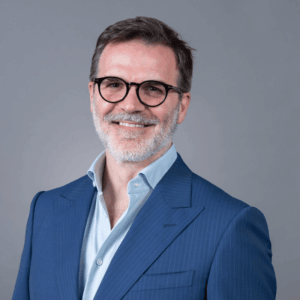
Dr Paolo Tasca, Co-Founder at Exponential Science
‘Axiology provides the infrastructure that allows financial assets, such as bonds or shares, to be issued, held, traded, and settled digitally in one place. Up until now, these processes have happened across multiple systems and intermediaries. Axiology brings them together into a single, integrated environment. In practice, this means that instead of relying on several different providers to complete a single transaction, everything can be done within one system. This makes the process faster, simpler, and more efficient anytime you think about capital markets,’ Mr Jurgilas explains.
‘Axiology is tackling one of the biggest challenges in finance today: fragmentation and limited access to core financial instruments. By rebuilding capital markets infrastructure on compliant distributed ledger systems, they are making markets faster, cheaper and more inclusive. This is exactly the type of transformative technology Exponential Science exists to support,’ Exponential Science Capital’s co-founder Dr Paolo Tasca comments.
Expanding Access to Government Bonds
Reportedly, Axiology is collaborating with Lithuania’s Ministry of Finance to develop a digital-native version of Government Defence Bonds. Currently limited to local distribution, these instruments could be issued via Axiology’s TSS (Trading and Settlement Systems) across the European Economic Area, expanding access to a wider investor base, including the Lithuanian diaspora, and strengthening defence funding sources.
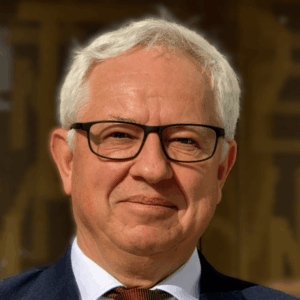
Jochen Metzger, Board Member at Axiology, ex-Head of North Rhine-Westphalia at Deutsche Bundesbank
End investors access this through Axiology’s partners, without onboarding Axiology directly. This ensures that investors benefit from Axiology with minimal friction and don’t require another platform or onboarding process. They are welcome to continue using the institutions they already trust, while the underlying infrastructure becomes more efficient through Axiology’s tech solution. The benefit is delivered without adding complexity on the user side. Additionally, participation is determined by regulatory and onboarding requirements, not citizenship — so, over time, the model is positioned to extend beyond the EU as frameworks evolve.
Addressing Fragmentation in Europe
‘Europe’s capital markets are undergoing a structural shift as issuers, infrastructures and regulators look for more efficient ways to manage the lifecycle of securities. Axiology is one of the few platforms able to operate each stage within a single regulated system, which is indispensable for addressing market fragmentation across Europe. This investment signals strong confidence in our ability to deliver the infrastructure that modern markets require,’ Axiology’s board member Jochen Metzger states.
A concern may arise about ensuring liquidity in a tokenised market where fragmentation could simply reappear at the asset level. Mr Jurgilas clarifies that liquidity comes down to whether the same instruments are traded in the same place, rather than being fragmented across disconnected silos. Axiology has assets issued using its infrastructure and sitting on the same rails. Any institution connected to the platform can trade them, and all brokers connected to Axiology’s MTF share the same liquidity pool. In other words, while an investor only sees their own broker, the liquidity behind that trade comes from the entire network.
Market Readiness and Institutional Adoption
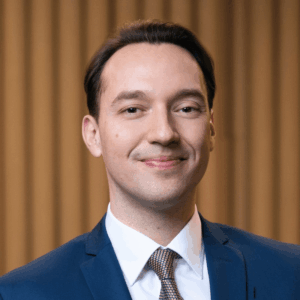
Justinas Pašys, Founder and CEO at NGL
According to Mr Jurgilas, adopting Axiology does not require significant behavioural shifts from institutional participants. On the contrary, the market is already moving in this direction as institutions are embracing change and actively exploring tokenisation lately. Central banks and regulators are also engaging, whether through initiatives like the ECB’s work on connecting DLT infrastructures to central bank money through Pontes and Appia, or proposed updates to the DLT Pilot Regime that would make these systems scalable.
‘It is natural that the market moves cautiously. This is core financial infrastructure. But that caution is not a barrier, it is part of the process. Our role is to provide a regulated, working environment that reduces uncertainty and allows institutions to move forward with confidence. In that sense, we are making an ongoing transition faster, clearer and more practical,’ Mr Jurgilas remarks.
For instance, T+1 settlement will be mandatory in Europe from autumn 2027, pushing institutions to modernise their post-trade processes. Axiology enables them to take this a step further, towards T+0 and ultimately atomic settlement, where transactions are completed instantly and with finality.
Investor Conviction and Strategic Alignment

Carolin Wais, Partner at Plug and Play Tech Center
NGL first invested in Axiology in 2024 at a pre-revenue stage, driven by the conviction in a strong team with deep financial infrastructure expertise. The investors’ thesis was centered around the team’s ability to secure a DLT licence and then build a foundational layer for Europe’s capital markets.
NGL’s founder and CEO Justinas Pašys firmly believes that the team is well positioned to deliver on its ambitious goal of creating a unified, regulated capital markets infrastructure in Europe and is excited to see this translating into licensing, institutional backing, and early commercial traction.
The Plug and Play Tech Center team first met Axiology through Batch 5 of the Startup Lithuania Accelerator.
‘We look for founders tackling foundational problems with long-term impact. From the outset, the team stood out for its rare combination of regulatory credibility, technical execution, and clear vision for unifying Europe’s capital markets,’ Plug and Play Tech Center’s partner Carolin Wais recalls.

Povilas Žinys, Director at Plug and Play Lithuania
‘By rebuilding capital markets on compliant distributed ledger systems, the team is creating faster, more efficient, and more inclusive financial markets for Europe. We’re excited to support Axiology as they scale their unified, regulated platform and help shape the future of European capital markets,’ Ms Wais continues.
‘Axiology stands out as a prime example of how Lithuania’s innovation ecosystem can contribute to Europe-wide transformation. By combining regulatory depth with cutting-edge DLT technology, they’re not just solving a local challenge — they’re paving the way for a unified, accessible European capital market. This seed round reflects growing confidence in Lithuania as a hub for regulated fintech innovation, and we at Plug and Play are proud to support their journey from acceleration to expansion,’ Plug and Play Lithuania’s director Povilas Žinys adds.
According to Coinvest Capital’s managing director Viktorija Trimbel, Axiology’s vision is fully aligned with her fund’s mission to nurture a more inclusive financing ecosystem and to close key market gaps for both companies and investors.

Kaan Eren, Partner at e2vc
‘We’re excited to support Axiology alongside our co-leads in this next phase of growth. The team has built a strong platform with clear international ambition, and we look forward to working together to scale further in the region and beyond,’ e2vc’s partner Kaan Eren comments.
Future Vision and Market Expansion
The recent seed round enables Axiology to expand its system, bringing the full lifecycle of digital fixed-income instruments into one regulated environment and execute its go-to-market strategy. Namely, the startup can scale its fully integrated, regulated infrastructure for digital financial instruments in the EU.
‘In the near term, this entails commercial expansion of the infrastructure stack launched in Q4 2025, including the digital CSD, MTF, shareholder registry, and DvP settlement in both stablecoin and central bank money. Onboarding crowdfunding platforms, brokers, and institutional issuers already in the pipeline will be the key. In addition, we are developing new products, including an intraday liquidity solution to address the most pressing needs of our clients,’ Mr Neciunskas specifies.
Over the next two to three years, Axiology will be focused on demonstrating clear adoption. This includes growing assets under custody and expanding a broad base of active clients, especially across brokers and distribution partners. The team’s internal metrics are designed to position Axiology as the leading venue for SME and retail capital markets in the EU, with the ambition of becoming global cross-border digital capital markets infrastructure.
Towards a Truly Unified European Capital Market
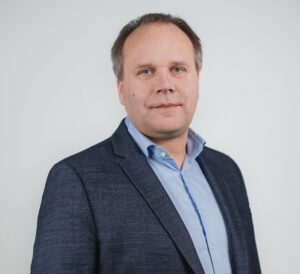
Algirdas Neciunskas, Co-Founder and COO at Axiology
‘Let me paint you a picture. Take government bonds, more specifically Lithuanian defence bonds. Access to them is typically limited to investors with local banking relationships. Even Lithuanian citizens living abroad may find it difficult to participate, while investors from other European countries are effectively excluded. In a more integrated market, this changes. A Lithuanian living in Spain, or an investor in Germany who wants exposure to European border security or regional stability, could access the same instrument seamlessly. The asset itself does not change, but with the help of Axiology’s technology access to it does,’ Mr Neciunskas explains.
This points to a broader issue in Europe: a Single Market is already in place for non-financial companies to sell goods and services across borders with relative ease. However, when it comes to raising capital, the market remains far more fragmented and often confined to mainly domestic channels. Axiology sees its role in helping change that by reducing infrastructure barriers that fragment access across countries and systems. With this help, capital can move more freely across Europe over time, enable investors to participate in opportunities beyond their home markets and help issuers reach a broader European investor base.
Axiology’s progress highlights how the next evolution of capital markets infrastructure may emerge not from traditional financial hubs, but from more agile ecosystems willing to rethink the system from first principles. Its integrated, regulated approach to tokenised securities points to a future where Europe’s fragmented markets can operate as a truly unified capital environment. The Lithuanian origin of this ambition underscores CEE’s growing role in shaping the foundations of global financial infrastructure.

Kostiantyn is a freelance writer from Crimea but based in Lviv. He loves writing about IT and high tech because those topics are always upbeat and he’s an inherent optimist!