

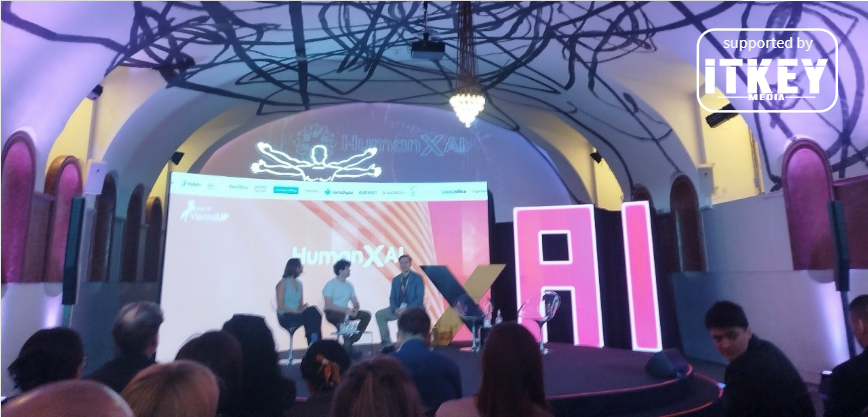
- Part of ViennaUP, HumanxAI Conference explored Europe’s path toward independent tech infrastructure and sovereignty
- The panelists argued that European regulations can become competitive advantages rather than barriers to innovation
- They highlighted fragmented markets, limited capital access, and the need for unified startup frameworks
The geopolitical and macroeconomic chess board of global technology is shifting rapidly. For years, the narrative surrounding the European tech ecosystem has been one of anxiety: a fragmented market, lagging capital pools, and a desperate race to catch up with the hyper-scale dominance of the US and Asia.
But what if the very premise of Europe’s technology problem is fundamentally flawed?
At the HumanxAI Conference—held at the mumok (Modern Art Museum) in Vienna as part of the massive ViennaUP festival on May 19th—tech pioneers gathered for a powerhouse panel titled ‘Can Europe Build Its Own Technology Foundation? (And Why It Matters for Every Sector)’
- Zoran Arsovski, Founder at VertoDigital (moderator)
- Dr Konstantin Bezuhanov, CEO at Evrotrust
- Victor Caduc, Co-Founder and CEO at Proxima
- Hannah Wundsam, Managing Director at Austrian Startups
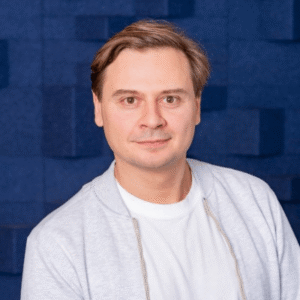
Zoran Arsovski, Founder at VertoDigital
The panelists challenged conventional wisdom, debated the weaponization of compliance, and mapped out Europe’s distinct path toward digital sovereignty.
The Compliance Weapon: Flipping the Red Tape Narrative
For a long time, European founders viewed regulations like GDPR, the AI Act, and the upcoming eIDAS 3 framework as frustrating bureaucratic hurdles that stifled the fast-paced innovation seen in Silicon Valley. Evrotrust’s CEO Dr Konstantin Bezuhanov kicked off the discussion by turning that exact mindset on its head.
‘I completely believe that asking if Europe can build its own tech foundation is the wrong question. It assumes we are defeated and that we are just trying to catch up. In Europe, we have something no one else has—and for some reason, we keep on apologizing for it,’ Dr Bezuhanov argued

Konstantin Bezuhanov, Co-Founder and CEO at Evrotrust
He pointed to the massive systemic failures of unregulated markets, highlighting the infamous 2024 CrowdStrike update that crippled 8.5 billion devices globally, and catastrophic healthcare data breaches in the US that left hundreds of millions of citizens permanently exposed without a unified legal framework.
Europe, by contrast, has built a predictable, bulletproof infrastructure through DORA (Digital Operational Resilience Act), GDPR, and the AI Act. Instead of slowing companies down, Dr Bezuhanov insists that smart founders are learning to weaponize compliance as a global market strategy. For example, the AI Act is quickly becoming a massive sales advantage because enterprises inherently trust companies that meet its rigorous, transparent benchmarks.
‘Compliance is a market-making event. The next category-defining giants will be the European founders who leverage these rules as their core go-to-market advantage,’ Dr Bezuhanov stated
Capital Fractures and the ‘28th Regime’
While the regulatory framework offers an unexpected shield, the structural hurdles of scaling across 27 different member states remain a massive headache. Ms Wundsam highlighted how market fragmentation forces European scale-ups to flee to the US, adopting Delaware corporate structures simply because international investors don’t want to navigate 27 distinct legal systems.
To combat this, Wundsam spotlighted the growing momentum behind the push for a unified ‘28th Regime’—a standardized, pan-European legal framework for startups.

Hannah Wundsam, Managing Director at Austrian Startups
‘We have more potential customers in Europe than the US, but the market is shattered across over 100 regulatory roadblocks. A unified European company structure would allow a founder to register once and operate seamlessly across the entire bloc, opening the floodgates for international capital,’ Ms Wundsam explained
She also called out Europe’s massive failure to deploy its own institutional wealth. Currently, political hesitation keeps trillions of euros sitting idle in European pension funds. Unlocking as little as 10% of that capital into venture funds would instantly inject an additional EUR 9B of growth capital into the European ecosystem. While countries like France have shown strong leadership in creating national startup champions, other nations, like Austria, have been notably slower to execute on promised scale-up funds.
Digital Sovereignty: Outsourcing Our Brains is a Matter of Survival
As the conversation shifted to AI and data infrastructure, Mr Caduc brought a sense of urgency to the stage, framing the tech race as more than a business challenge: a matter of geopolitical survival.

Victor Caduc, Co-Founder and CEO at Proxima
‘The question we are facing is: should we outsource our intelligence capacity? Should we outsource our brains? If we rely entirely on American or Asian hyperscalers, we will end up completely dependent,’ Mr Caduc challenged the audience.
According to him, Europe possesses a unique golden opportunity to become the global hub for trusted decentralized data storage. Backed by a highly connected territory, reliable infrastructure, and an abundance of affordable renewable energy, Europe is uniquely positioned to lead.
The secret weapon to achieving this speed and scale is the open-source philosophy. By rallying around open-source AI models and building a fully sovereign, resilient multi-cloud ecosystem, Europe can sidestep the monopolistic grip of non-European tech giants.
Beyond the SaaS Hype: The Next Wave of Tech
The panel closed with a sharp tactical warning for founders trying to ride the current AI wave. Both Dr Bezuhanov and Ms Wundsam warned against the lazy branding of slapping ‘AI company’ onto pitch decks, noting how this often creates unrealistic expectations from investors.
Instead, the market is experiencing a massive dynamic shift. In Germany alone, 2025 saw a 30% surge in newly founded startups compared to the previous year, signaling a major transition away from traditional SaaS models. The panelists noted that the next hyper-growth sectors in Europe belong to:
- AI-Backed Services: Moving away from pure software-as-a-service toward productized, human-in-the-loop services (e.g., AI-powered legal or operational work) that prioritize immediate execution and trust.
- Robotics and Hardware: Sectors that were deemed uninvestable just three years ago are experiencing a massive renaissance as Europe leans into its industrial strengths.
Key Takeaways:
- The Mindset Shift: Europe needs to stop apologizing for its regulations. Frameworks like GDPR and the AI Act are powerful trust mechanisms that can be weaponized as competitive global advantages.
- The 28th Regime: Standardizing legal structures across Europe is vital to stop corporate flight to the US and keep elite talent within the continent.
- Pension Fund Mobilization: Accessing just a fraction of Europe’s institutional capital would solve the ecosystem’s growth funding crisis.
- Open-Source Sovereignty: Europe must use open-source AI and localized multi-cloud infrastructure to protect its data, leverage renewable energy, and avoid outsourcing its digital intelligence.
Europe’s tech future may depend less on competing with global tech giants and more on recognizing the advantages it already possesses. The HumanxAI panel highlighted how regulation, digital sovereignty, and open innovation can become strategic assets rather than obstacles in building a resilient European ecosystem. As global competition intensifies, Europe’s ability to unite its markets, mobilize capital, and develop trusted technologies will determine whether it becomes a leader in the next era of innovation.

Kostiantyn is a freelance writer from Crimea but based in Lviv. He loves writing about IT and high tech because those topics are always upbeat and he’s an inherent optimist!