

- Kyiv-based DroneUA opens its first UK office, marking a key milestone in global expansion
- Founded in 2013, the company grew exponentially from a kitchen-based startup to 160+ specialists
- DroneUA leads Ukraine’s agricultural drone market, treating over 3 million hectares
- The London office enables new partnerships, local innovation, and tailoring UK/European technology applications
This November, Ukrainian drone and robotics company DroneUA officially launched its first office in the UK. According to the team, this move underscores the UK’s strong appreciation for Ukrainian engineering and aligns with DroneUA’s ambition to globalize its business. This new presence follows the company’s earlier expansion to North America, where it registered its trademark in February 2025.
Founders from Unlikely Backgrounds and Their Leap into Drone Robotics
DroneUA was founded by Fevzi Ametov and Valerii Iakovenko in 2013. Their backgrounds were far from robotics: Mr Iakovenko was trained as a medical doctor and worked in surgery before moving into corporate insurance and finance, while Mr Ametov studied economics.
Just before the crisis of 2013-2014, the two realized the need to step away from the corporate world and build something of our own, something rooted in innovation. Their shared passion for robotics pushed them to leap toward the most challenging directions, including industrial drone applications. Few understood the potential of drones at the time, and for many years, DroneUA has been operating at the very edge of emerging technologies, evolving shoulder-to-shoulder with the rest of the world.
From a Kitchen-Based Startup to an Expansive Global Corporation

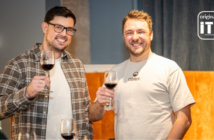
Valerii Iakovenko, Founder and Managing Partner at Futurology, Co-Founder and CEO at DroneUA
‘The story of DroneUA has been a race against time along a very bumpy road. We made our share of mistakes and strong decisions, growing from two people assembling drones in a kitchen to a team of more than 160 specialists working across three countries,’ Mr Iakovenko shares.
From a product perspective, DroneUA progressed from hardware to software, and then to large-scale integrations — projects so big that some involved mapping territories comparable to mid-sized European countries. A key milestone was expanding from drones into broader robotics, significantly widening the team’s expertise.
One achievement that the DroneUA team is particularly proud of is its contribution to the rapid adoption of agricultural drones in Ukraine. DroneUA provided crop-protection services across more than 3 million hectares, helping Ukraine become the largest agricultural drone market in Europe, bigger than all other European markets combined. Mr Iakovenko refers to USAID estimating DroneUA’s market share at 52%.
Another major milestone was DroneUA’s transition from a startup-style organization to a corporate structure with a board overseeing growth and operations. This shift began in late 2021 and was key to the company’s survival in 2022 when 75% of competitors disappeared from the market.
DroneUA officially entered the North American market in February 2025, when it registered its trademark in the United States. In August 2024, it secured its largest-ever US government contract — its third such deal in just a year. By March 2025, DroneUA began collaborating with NASA, sending a test batch of its robotics equipment to Virginia for evaluation.
Strengthening Ukrainian Tech Presence in Europe
The company’s new UK office in Knightsbridge, London, marks DroneUA’s further international expansion. ITKeyMedia approached DroneUA’s co-founder and CEO Valerii Iakovenko to dive deeper into the company’s international ambition and its place in the global landscape.
In the UK and Europe DroneUA will obviously face competitors with longer establishment in the market. What competitive advantages does DroneUA bring?
Valerii Iakovenko: We’re a very diverse company. Each market we enter comes with its own unique challenges and needs, and we bring our in-depth technical expertise and a wealth of practical experience, often enabling us to do what others considered impossible. We see competition as a positive signal that a market has real potential. What matters most is the speed of market development – and our ability to evolve even faster.
Given that the UK has a well‑defined uncrewed systems strategy (e.g. the UK’s Defence Drone Strategy) and advanced certification requirements, what biggest regulatory, supply‑chain localisation and compliance challenges for a company originally rooted in Ukraine would you point out?
VI: The Ukrainian robotics ecosystem is best described as something built entirely from scratch — a remarkable example of how the world’s largest drone ecosystem can emerge in an extremely short time. Today, Ukraine produces more drones than any other country, and any Ukrainian company stepping into global markets immediately ranks among the largest players.
But this isn’t just about drones. It’s about localized manufacturing, incredibly rapid product development cycles, extreme competitiveness, and the ability to survive under immense pressure. Any Ukrainian business that survived 2022 is no longer merely ‘local’ — it’s inherently global.

What specific capabilities or market insights do you believe DroneUA’s new London office will bring that were missing or underleveraged until now?
VI: London is our third global location, and we plan to grow it progressively by building partnerships that strengthen technological collaboration between the UK and Ukraine. But there’s something important that bears emphasizing: drones are just tools. All the technologies we develop must ultimately serve industrial needs: improving efficiency and safety across sectors. Wherever Ukrainian expertise goes, the end goal should be civil applications, alternative supply-chain capacity, and trusted technology.
Do you plan to differentiate your UK/European value proposition from your Ukraine‑base and US operation in any way?
VI: Since every market is unique, there are projects we simply won’t launch in certain regions due to regulatory or operational specifics. For example, we are actively investing in agricultural drone operations in the US, but this approach won’t be replicated in the UK. In the UK, we will likely focus on different agricultural technologies than drone-based spraying.
With global expansion often comes the need for investment, partnerships, and potentially local manufacturing or service centres. How do you envisage your investment roadmap in the UK/Europe: would you seek UK‑based manufacturing, local equity partners, joint ventures, or prefer to remain export‑centric from Ukraine?
VI: We see ourselves as investors when entering new markets. We establish facilities and engineering centers, hire local talent, create jobs, and—most importantly—Ukrainians share their experience and introduce new technologies. At that, globalization as we once knew it no longer exists. Local manufacturing, independent supply chains, and reduced dependency are lessons we’ve lived through directly — and they shape our investment priorities moving forward.
As a business that was forced to evolve rapidly during war, do you foresee the need for any organizational or cultural changes to transition from a war‑time rapid‑innovation mentality to a sustainable global commercial mindset?
VI: We must always remember that technology is created for good. DroneUA was founded before the war started in 2014, and we’ve seen waves of companies focused solely on the security sector appear — and then quickly disappear as soon as the demand shifts. The only way to build a lasting company is through a diversified business model, where the core technologies have commercial, scalable, and peaceful applications. That’s the mindset we intend to preserve as we grow globally.
Overall, how do you envision DroneUA’s global presence and role in the UK/Europe evolving drone ecosystem?
VI: The UK is an extremely active market with a genuine interest in and appreciation for Ukrainian expertise. Among all European countries, the UK has shown some of the strongest support for Ukraine’s tech ecosystem. I believe it’s only fair for us to bring value back — by contributing to the development of local tech ecosystems. At the same time, there is a great deal we can learn from the UK, from business standards to ethics and entrepreneurial culture. Our long-term mission is to continue helping Ukraine evolve into a global tech hub — strong international partners are key to achieving this.
The opening of DroneUA’s new London office represents a significant milestone in the company’s journey from a kitchen-based startup to a global leader in drone and robotics technology. By establishing a presence in the UK, DroneUA not only strengthens international collaboration and knowledge exchange but also underscores the global relevance and competitiveness of Ukrainian engineering. This expansion highlights the company’s commitment to scalable civil applications of its technologies while cementing its role as a bridge between Ukraine’s tech ecosystem and the broader European market.

Kostiantyn is a freelance writer from Crimea but based in Lviv. He loves writing about IT and high tech because those topics are always upbeat and he’s an inherent optimist!