

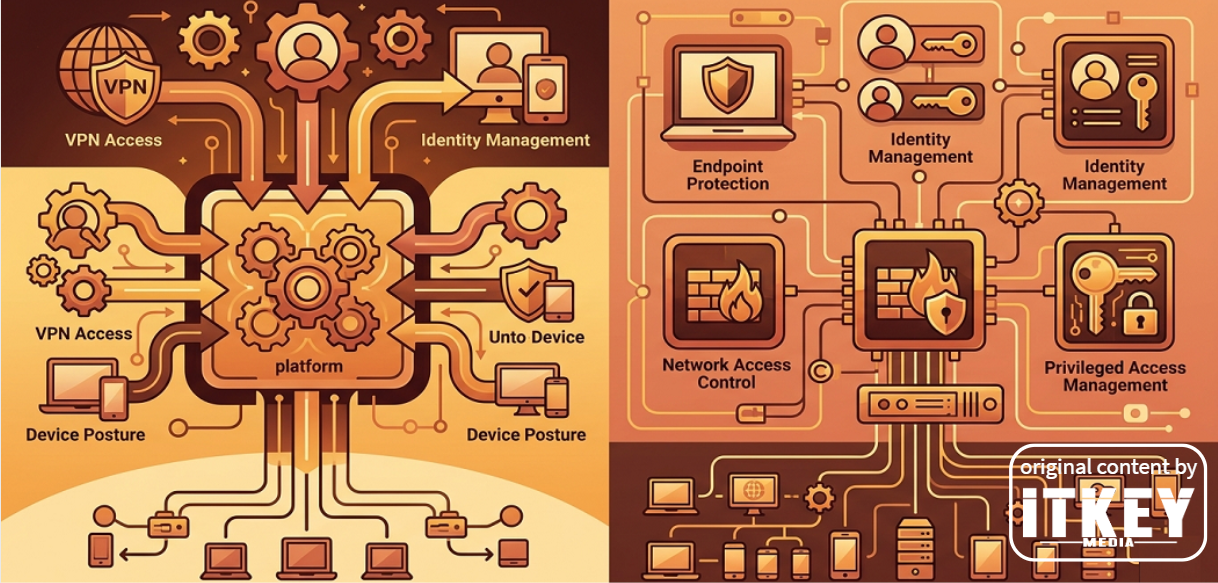
Demand for solutions that combine VPN access, identity management, and device posture control within a single product is indeed growing. Organizations are seeking to reduce the complexity of their IT landscape and move away from a set of fragmented tools—VPN, MDM/UEM, separate MFA services, and access control solutions—toward integrated platforms with centralized management. This approach aligns logically with Zero Trust principles, where not only the fact of network connection matters, but also user identity, access context, and device compliance with security requirements.
Such platforms deliver the most noticeable value to the SMB segment specifically: they reduce implementation and maintenance costs, simplify administration, and provide a unified view of access and endpoint posture. It is precisely in this segment that products are emerging, that aim to combine multiple secure access functions within a single solution. An example of this approach is the recent alpha version of Defguard 2.0.
In large enterprise environments, a different strategy dominates. The best-of-breed approach remains common, where specialized tools are used for separate domains—identity management, endpoint protection, network access, or privileged access management. This model is more complex from an integration perspective, but it provides greater flexibility and allows organizations to use the most effective solutions in each category.
Olga is a recognized expert in IT and information security with 19 years of experience. Among other things, she specializes in information security systems design and implementation. Her profound knowledge of IT technologies and principles of building IT infrastructure put her in the position of the Chairperson of the Committee on IT and Cyber Security of the German-Ukrainian Chamber of Industry and Commerce. Olga is also the CEO of the Ukrainian IT company Silvery LLC.