
- Baltic Innovation Fund 3 launched with EUR 75M from EIF, plus EUR 50M each from three Baltic stakeholders
- The EUR 225M fund aims to unlock EUR 700M for growth-stage companies, focusing on private equity and late-stage VC
- The emphasis is on local managers, regional collaboration, and market-driven capital allocation
- EIF and other partners anticipate tangibly enforced innovation and long-term Baltic integration in European VC
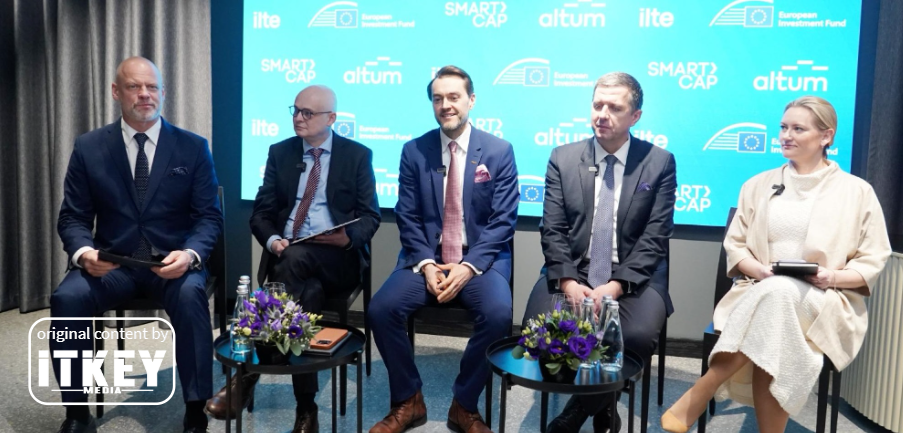
This February, the European Investment Fund (EIF) announced the launch of the Baltic Innovation Fund 3 (BIF 3) and contributed EUR 75M. The third incarnation of BIF is supported by Lithuania’s ILTE National Development Bank, Latvia’s ALTUM, and Estonia’s SmartCap, each committing EUR 50M. EIF, meanwhile, is the new fund’s fiduciary manager, overseeing fund selection, due diligence, governance, and the overall implementation framework of the initiative.
Public-Private Collaboration in Action
The new EUR 225M is designed to back both emerging and established fund managers, with the ambition of unlocking up to EUR 700M in investments for growth-stage companies across the Baltics. As per the announcement, its portfolio will predominantly focus on private equity growth strategies (around 70%), complemented by late-stage venture capital. Over a five-year period, the initiative aims to support between eight and eleven funds, with up to one-fifth of capital directed toward climate-focused investments.

Reinis Bērziņš, Chairperson of the Management Board at ALTUM
‘BIF 3 is a significant step towards expanding access to long-term financing for Baltic companies. Experience shows that every euro invested in the fund attracts several times more financing for companies, creating real economic activity and new opportunities. This initiative is an excellent example of how public financing can work together with private capital,’ ALTUM’s chairperson of the management board Reinis Bērziņš remarks.
Building on Lessons from BIF 1 and BIF 2
BIF 3 builds on earlier programmes, BIF 1 and BIF 2, which have jointly mobilised more than EUR 1.19M and attracted over EUR 900M in private capital. In Estonia, for instance, BIF 1 and BIF 2-backed local funds invested in a total of 76 companies, including many traditional businesses in production and manufacturing. This is important because fund structures like these also create a practical route for institutional investors — including local pension funds — to invest in strong Estonian companies that are not publicly listed.
Lithuania ranked second after Estonia. A total of 34 Lithuanian companies received EUR 234M in investments. This both highlighted and strengthened the competitiveness of Lithuanian businesses and the ability of the fund managers to identify scalable opportunities in the local market.
Ensuring Local Expertise and Continuity Across Stages
According to head of ILTE’s business development division Tadas Gudaitis, one of the key lessons from previous venture and growth funds is that strong local fund managers are essential as they understand the regional ecosystem, market dynamics, and sector-specific opportunities best. The successful outcomes can be achieved where managers not only deploy capital, but also actively support portfolio companies in strategic development, international expansion, and securing follow-on financing.
‘Another important lesson is the need to ensure continuity of capital across stages. Many companies in the region require sustained access to growth financing in order to scale, remain competitive, and strengthen their market position. Interruptions in capital availability can limit long-term impact. Well-structured cooperation between public and private capital creates additionality: it mobilises further private resources, strengthens investor confidence, and contributes to building a sustainable and resilient investment ecosystem,’ Mr Gudaitis continues.

Ralfs Jānis Punāns, Head of the Financial Intermediaries Department at ALTUM
Head of ALTUM’s financial intermediaries department Ralfs Jānis Punāns is convinced that the region’s main bottleneck is that the Baltic market remains too small for late‑stage investors to build sufficient dealflow, which means international growth funds often enter only when companies already scale abroad. BIF 3 addresses this by forming a regional capital pool large enough to attract top‑tier private fund managers, enabling them to invest earlier in Baltic scale‑ups.
‘Long-term partnerships with experienced fund managers, regional diversification, and a balanced mix of early-stage and late-stage growth capital are critical for strong performance. Continuity matters: fund managers who understand the Baltic market can deploy capital more efficiently, attract private co-investors and support companies through multiple funding rounds,’ Mr Punāns adds.
Thus, BIF 3 primarily focuses on later-stage and growth investments, while national mandate-based instruments are generally oriented toward earlier-stage financing. Such clear stage differentiation helps avoid overlap, ensures complementarity between regional and national instruments, and allows each layer of intervention to address distinct market gaps within the broader ecosystem.
Sectoral Diversity and Market-Driven Allocation
In terms of sectoral composition, BIF I and BIF II investments across a wide range of sectors. Portfolio companies included technology developers, creators of innovative solutions, and wellness businesses. Investments were directed both to larger companies and to SMEs.
Mr Punāns specifies that BIF 3 is a fully commercial fund of funds and sector allocation will ultimately be determined by the investment strategies of the selected private fund managers and by where they identify the strongest return opportunities. This does not presuppose directing capital toward specific industries. At the same time, based on the Baltic region’s competitive advantages and the historical investment focus of international growth investors, ALTUM anticipates a significant share of capital to flow into scalable, innovation-driven companies. This market-driven approach ensures that capital is allocated efficiently while supporting the continued shift of the Latvian economy towards higher value-added and export-oriented sectors.
Balancing Commercial Discipline and Development Impact
He emphasizes that since BIF 3 is structured as a fully commercial fund of funds, all investment decisions are made by independent private fund managers, ensuring that financial discipline and market-based returns remain the core investment criteria. Development impact is achieved through capital availability itself, by enabling private funds to invest in innovative Baltic companies that would otherwise face financing constraints.
ILTE also sees BIF 3 as continuing to strengthen a diversified and growth-oriented sectoral composition, driven by market opportunities, professional fund management, and regional competitiveness rather than by rigid sectoral allocation.
However, Mr Gudaitis reminds that ILTE’s mission is to address market gaps and the primary goal is not profit maximization. The stakeholders knowingly take on higher risks — remaining, however, committed to supporting businesses with strong growth potential.
In practice, BIF 3 is expected to balance development impact and financial performance by ensuring that public capital acts as a catalyst — mobilising private investment, strengthening the ecosystem, and enabling commercially viable companies to scale — rather than replacing or distorting market mechanisms.
Tadas Gudaitis, Member of the Board, Head of the Business Development Division at ILTE
‘When implementing targeted state measures, we focus on correcting structural gaps in access to capital, particularly in early or higher-risk segments. At the same time, it is essential that we do not distort the market. This is why investments are made through professional fund managers, who apply rigorous commercial assessment and make independent investment decisions in line with market standards,’ Mr Gudaitis notes.
SmartCap, in turn, expects BIF 3 to improve growth-stage financing availability for Estonian companies through a mix of private equity growth and late-stage venture capital strategies with up to 20% of the programme intended for climate-aligned investments.
‘Previously we have seen capital allocation to industrial manufacturing, medical services, IT and consumer electronics, also consumer goods and retail. The stated objective for Estonia is to improve access to growth capital for high-potential companies so they can become regional category leaders and strong European players,’ SmartCap’s fund manager and CEO Sille Pettai shares.
Harmonised Governance
Seeing how EIF acts as fiduciary manager and is responsible for fund selection, due diligence, and governance, this shared governance and selection framework is the core mechanism for aligning execution across countries and reducing cross-border friction. Typically, the selected fund managers have strong experience in scaling and managing companies, as well as a proven ability to identify high-potential businesses.
The core principles across participating countries are largely aligned: developing capital markets, supporting the growth and expansion of strong regional companies, and fostering the development of innovative businesses. These principles are clearly defined in the fund agreement concluded between all participating countries, ensuring a shared framework and coordinated approach.
‘We operate on the basis of a single joint investment strategy and a unified governance structure agreed by all three Baltic development institutions. The fund-of-funds model allows us to harmonise decision-making, minimise administrative friction and ensure that capital is allocated on purely commercial terms. This coordination is supported by more than a decade of joint experience through BIF 1 and BIF 2, which has created well-established procedures, shared due-diligence standards and transparent communication channels,’ Mr Punāns explains.
Success Beyond Capital
To evaluate BIF 3’s success beyond capital mobilisation, additional key metrics will be in place. ILTE, for instance, will measure BIF 3’s success by its broader impact on Lithuania’s innovation ecosystem, including jobs created, follow-on funding attracted, tech exports and international growth, number of scale-ups, innovation output such as patents or new products, and ecosystem development through partnerships and mentorships. The fund’s mechanism is aimed at ensuring that capital committed by each participating state generates meaningful investment activity within that state, creating a balanced regional approach and linking public contributions to tangible economic outcomes in each country.

Sille Pettai, Fund Manager and CEO at SmartCap
According to Mr Punāns, on the other hand, the primary measure of success is the long-term performance of the underlying funds and their ability to attract private capital on market terms. In addition, ALTUM and its partners monitor development-oriented indicators, such as the growth of portfolio companies, their ability to attract follow-on international investment, and their contribution to exports and high-value employment.
‘These indicators are not fixed or prescriptive. They evolve over time in line with market conditions and the investment strategies of the selected fund managers. This approach ensures transparency while preserving the commercial flexibility that is essential for achieving strong returns,’ Mr Punāns notes.
‘Capital mobilisation through fundraising comes only with strong performance metrics, so the risk and return profile of BIF 3 must be attractive to private investors. Another aspect that determines the success is the number of strong PE and VC fund managers active in the Baltics getting funded by BIF 3, which should improve overall access to capital for Baltic companies,’ Ms Pettai confirms.
Long-Term Outlook for the Baltic Ecosystem
SmartCap views BIF 3 as critical for long-term PE/VC sector sustainability and for ensuring that strong local PE/VC funds can continue supporting the best companies and contributing to economic growth.
ILTE’s vision for BIF 3’s contribution to Lithuania’s role in the European VC ecosystem is about making Lithuania, alongside the Baltic states, a key driver of innovation and VC activity in the region. This involves fostering deep tech startups, scaling innovative SMEs, and creating a supportive regulatory and financial environment that encourages risk-taking and growth. Surely, attracting international investors and driving strategic sectors are critical goals, too. With this in mind, BIF 3 is structured so that the volume of investments made into companies in each Baltic country is expected to exceed this country’s capital contribution to the fund significantly, with a target benchmark of approximately two times the contributed amount.
ALTUM, in turn, sees its role in ensuring the continuity of BIF 3’s impact by investing on market terms and alongside private investors. By increasing the availability of growth capital, attracting international fund managers and helping local companies scale globally, BIF 3 makes the region a more consistent and integrated part of the European venture capital market.

Marjut Falkstedt, CEO at the EIF
To conclude in the words of the EIF’s CEO Marjut Falkstedt, the Baltic region shows remarkable resilience and a strong appetite for innovation. Building on the impressive success of their prior collaboration, EIF, ILTE, ALTUM, and SmartCap are looking to deepen the market with long‑term capital that meaningfully helps high‑quality companies scale and realise their ambition.
BIF 3 marks not only a continuation but a deepening of a decade-long partnership between the EIF and the Baltic development institutions, reflecting a growing confidence in the region’s ability to scale innovation through coordinated action. By aligning capital, expertise, and shared governance, ILTE, ALTUM, and SmartCap are reinforcing a unified investment ecosystem that increasingly attracts international investors. As this collaboration matures, BIF 3 stands as another decisive step toward the Baltics firm and organic integration within Europe’s growth capital landscape, with a special attention to the region’s sustained long-term economic resilience.
Kostiantyn is a freelance writer from Crimea but based in Lviv. He loves writing about IT and high tech because those topics are always upbeat and he’s an inherent optimist!