

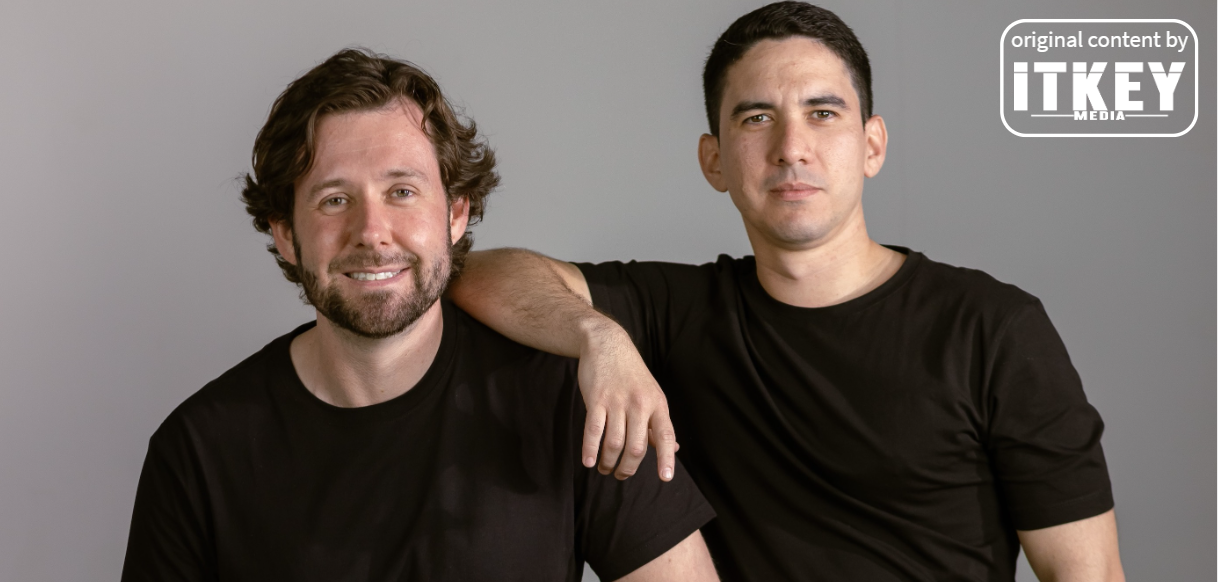
- Czech WanderWallet raised USD 500K of Pre-Seed funding from BD Partners and DEPO Ventures
- The solution tackles fragmented local payment systems that exclude foreigners from digital transactions regionally
- Built rapidly, the fintech startup achieved strong organic growth across Latin American payment corridors
- With the new investment WanderWallet aims to continue scaling seamlessly across countries while maintaining user experience consistency
This March, the Czech fintech for travelers WanderWallet landed a USD 500K Pre-Seed round of investment. The well-known Czech VC fund BD Partners (invested in DecisionRules, among others) became the lead investor of the round, joined by another proactive Czech VC firm DEPO Ventures (invested in Talsec, among others).
Founders Across Borders with a Problem Lived

Vojta Pohunek, Co-Founder and CEO at WanderWallet
WanderWallet’s co-founder and CEO Vojta Pohunek has been living in multiple countries across Latin America for the past four years. With 17 years of background in web and app development, he combines precision and insight from an outsider perspective.
Gabriel Otero (CTO), in turn, is an Argentinian living in Brazil and also knows the problem first hand. His background spans leading international software sales teams of 40+, including quite a few specializing in payments and fintech. He brings in-depth expertise in cross-border payments.
‘The main reason why we set on this journey is that from the beginning we were solving a problem that we both live every day, building a solution for which we not only have the expertise but also a use case personally from day one,’ Mr Pohunek tells ITKeyMedia.
From Idea to Product in Months
The startup has been moving at an impressive pace, too. The founding duo started discussing this project in February 2025, set up the company in March, and had the solution built by May. In June, the first live payments were sent via WanderWallet, and in late July the platform went live in Brazil and Argentina. At first, it was only accepting deposits via stablecoins and one of the main early challenges was to accept direct banking deposits in USD and EUR. This was implemented by October 2025, and WanderWallet’s rapid growth began from November. According to the company, in October they processed USD 9K in total transaction volume, in December it was USD 75K, and by March 2026 it was USD 440K. Importantly, the cofounders assure that marketing was far from top of their priorities and this growth was organic.
‘We’ve been working with the WanderWallet team since the very beginning, and the conviction we had back then has only strengthened over time. It’s a problem that looks small on a spreadsheet, but when you actually experience it, it’s enormous. The team understands it better than anyone else. WanderWallet is part of a broader movement building a new, inclusive financial infrastructure, borderless and free of unnecessary transaction costs, which is exactly why we want to be part of it,’ DEPO Ventures’ partner Michal Ciffra comments.

Michal Ciffra, Partner at DEPO Ventures
‘We were impressed by the team’s capital-efficient execution — growing exponentially in monthly payment volume with near-zero marketing spend — and by the strong product-market fit evidenced by highly engaged users and organic word-of-mouth growth,’ BD Partners’ general partner Ladislav Bartonicek adds.
Tackling the Payments Fragmentation Problem
To recap the problem that WanderWallet is solving, every country in Latin America has its own instant payments system which is a direct and serious alternative to card payments. A growing number of merchants refuse to accept cards at all or give high surcharges to foreign cards. Without access to local payment methods, foreigners then in many instances have to either face the fees or resort to cash.
‘When I want to go to a cinema in Colombia, I cannot buy a movie ticket online. Why? Because the online ticketing system doesn’t accept foreign credit cards. It’s either Colombian cards or local instant payment methods,’ Mr Pohunek specifies.
WanderWallet solves this by integrating directly with local payment rails and enabling users to pay via these instant methods e.g. from their USD balance: the user sends dollars, and merchants in Brazil receive local currency as if from a local bank, and such cross border transfers take seconds to settle.
Fixing Foreign Spending
‘As founders we are both deeply knowledgeable of Latin America. We knew exactly what we’re getting into. The fragmentation is actually something that benefits us, because we came prepared and can navigate it. In each country we launch, we know the local payment system inside out. One strong insight that I can mention is that, starting as a traveler wallet to enable tourists, for example, to buy a drink on the beac, we discovered that our best users are not travelers but expats and digital nomads. They stay with us for months and spend thousands of dollars on everyday purchases, as well as rent, medical bills, higher ticket items like motorbikes, online shopping, etc.,’ the CEO shares.
Recently, WanderWallet launched in Bolivia, and the idea is to have one solution for the whole continent. A concern may arise that adding more countries to one platform might start hurting the user experience instead of improving it at some point. The team assures that the user experience remains of utmost priority and even after adding multiple countries, navigating WanderWallet should remain intuitive and user-friendly.
‘No one has yet approached this problem directly: what happens when you’re at the checkout counter in a foreign land and your card gets declined. What happens if you want to pay rent and the landlord only accepts local forms of payment. How to make this experience the best possible. How to make actually spending as frictionless as possible. We are solving the ‘spending in a foreign country’ problem and everything revolves around that. The more countries we can support, the more value for the user and better experience there actually is,’ Mr Pohunek clarifies.
Investor Confidence and Next-Phase Scaling

Ladislav Bartonicek, General Partner at BD Partners
According to Mr Bartonicek, BD Partners invested in WanderWallet because the startup addresses a clear and growing gap in Latin America’s payment infrastructure: as domestic instant payment systems like Brazil’s Pix and Argentina’s Mercado Pago increasingly replace cash and cards, the 15+ million foreigners traveling through the region each year are effectively locked out. His team is convinced that WanderWallet is well-positioned to become the default payment layer for foreigners across Latin America as instant payments go mainstream.
With new funding in place, WanderWallet is entering a growth phase centered on regional expansion and faster product execution. While early user traction has validated demand for its localized payments approach in Latin America, it’s now up to the company to prove it can replicate that success consistently across multiple countries and market conditions.
As instant payment systems rapidly replace cards and cash across Latin America, the financial divide between locals and foreigners has become both increasingly tangible and increasingly urgent to solve. WanderWallet is entering the market at a moment when cross-border mobility, remote work, and digital nomadism are reshaping how people live and spend abroad, yet payment infrastructure has failed to keep pace. Continuing to execute across fragmented markets while preserving a seamless user experience, the startup is poised to define a new standard for how foreigners access and participate in local economies worldwide.
Kostiantyn is a freelance writer from Crimea but based in Lviv. He loves writing about IT and high tech because those topics are always upbeat and he’s an inherent optimist!