


- EUROAI (EU AI Olympiad) 2026 highlighted exceptional young AI talent emerging across Europe and particularly CEE
- CEE still struggles to convert technical excellence into globally scaled technology companies
- Mentorship, capital, networks, commercial exposure, and founder role models remain critical gaps
What does Europe’s next generation of AI talent look like — and, more importantly, where will that talent build the technologies of tomorrow? The first European Olympiad in Artificial Intelligence (EUROAI), held from July 24th to 19th, 2026, at Babeș-Bolyai University in Cluj-Napoca, offers an interesting starting point. More than 90 secondary-school students from over 20 countries came together to compete in a contest designed to test something increasingly valuable in the AI economy: the ability to understand, build and optimise models rather than simply use existing tools.
The official podium itself is a snapshot of Europe’s technical talent pool:
- Ukraine’s Roman Mielamud took first place,
- followed by Sweden’s Lovmar Teo
- and Poland’s Michał Masny.
Two of the three top-ranked contestants came from CEE — a region with a long-standing reputation for producing strong mathematicians, programmers and engineers, but which has historically been less successful at turning that technical capital into globally scaled technology companies.
That gap is worth examining. For CEE, the question goes beyond identifying exceptional students. What happens after the medal? Can the region create an environment in which its strongest young technical minds become researchers, founders and builders of globally relevant companies — rather than eventually leaving for ecosystems with deeper capital, networks and opportunities?
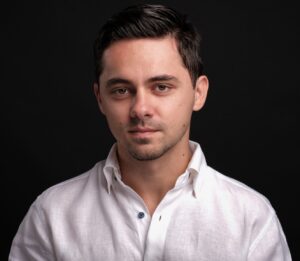
Andrei Pavel, Tech Lawyer at Ventures’n’Law
For instance, tech lawyer Andrei Pavel warns:‘Winning an AI olympiad proves you can build. Turning that project into a company is a different test, and the early failures are rarely technical. They are legal, and most are avoidable.’
From Technical Excellence to Global Companies
ITKeyMedia spoke with EUROAI committee members Carla Crivoi of the National Institute of Neurology and Neurovascular Disease, Witold Drzewakowski of the University of Warsaw, and Tamás Takács of Eötvös Loránd University about the competition, the people it is designed to identify, and what CEE needs to do to turn exceptional AI talent into exceptional technology companies.
EUROAI puts the entire Europe’s technical talent on display, but the CEE region in particular has historically been better at producing exceptional engineers than globally dominant startups. What needs to change for that talent to translate into more CEE-born AI companies?
Witold Drzewakowski: The blessing and the curse of the students scoring top places at national and international science Olympiads is that they can do anything: big tech, research labs, finance, to name a few. Combined with a natural risk-averseness culturally prevalent in our region, this means they have not traditionally seen starting a company as a first-class career choice. However, this is changing rapidly, with more and more people breaking out of this pattern and starting companies at a very young age.
Tamás Takács: CEE has been very good at producing technical excellence, but weaker at surrounding that excellence with the capital, commercial ambition, early customers, and founder role models required to build global companies.
Looking at the students who competed at EUROAI, do you see anything that the CEE startup ecosystem is currently underestimating about the next generation of tech talent?
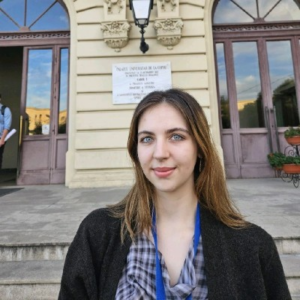
Carla Crivoi of the National Institute of Neurology and Neurovascular Disease, International Scientific Committee Member at EUROAI (CEOAI) – European Olympiad in Artificial Intelligence
Carla Crivoi: I believe the CEE startup ecosystem may be underestimating how quickly the next generation of tech talent can adapt and learn across disciplines. EUROAI was particularly interesting because it tested knowledge from multiple areas rather than focusing on a single specialization, yet most competitors were willing and able to tackle all of them.
Many students come from strong backgrounds in mathematics, computer science, or engineering, but what stood out most was their ability to transfer knowledge from one domain to another and apply it in new contexts. Rather than relying only on what they had formally studied, they were able to build solutions by combining existing knowledge with rapid learning and creative problem-solving.
In a field that evolves as quickly as AI, this adaptability may be just as valuable as technical expertise itself. The next generation is not only learning new technologies faster than ever before, but also becoming increasingly comfortable working across disciplines, which is a key advantage for innovation and entrepreneurship.
CEE has a deep tradition of mathematics, computer science, and engineering. Could AI become the technology that finally turns that intellectual capital into a durable competitive advantage for the region, or does the region remain at risk of exporting its best people?
WD: I think we should be honest that we are not only at risk of exporting talent, but already are. The fact that the frontier LLM research and development is happening elsewhere is and will remain a serious obstacle going forward. However, AI is much broader than LLMs, and there are areas of applications where our talent can create globally successful companies.
AI is also a big enabler of building startups, as it makes the whole process cheaper. More importantly, technical teams can now prototype and test ideas much faster. That may play to CEE’s advantage by lowering the cost of experimentation and encouraging founders to take more risks with their ideas.
TT: CEE remains an exporter of top tech talent. One other reason is that the AI ecosystem in Europe often moves more slowly: regulations, access to capital, compute, and commercialization can all take longer. For the very best students, that can make the US or other faster-moving ecosystems more attractive, especially when they want to work at the frontier. Unless Europe also becomes faster at turning research into products and companies, we will continue to lose some of our best people.
Competitions like EUROAI reward technical depth, problem-solving, and intellectual curiosity. Do you believe these traits actually matter most for building an AI company, or does entrepreneurship require a fundamentally different kind of talent?
CC: To build a successful AI company, having strong technical knowledge is essential, but it is equally important to identify real problems that can be solved or areas that can be improved. While successful companies rely on specialists from many different fields, I believe that participating in competitions like EUROAI is extremely valuable because it helps participants develop a deep understanding of artificial intelligence technologies and learn how to apply them
in practice.
These competitions are not only designed to showcase technical skills. They also challenge participants to address real-world problems and explore current needs and opportunities. Technical depth, problem-solving abilities, and intellectual curiosity are therefore important foundations for entrepreneurship in AI, as they enable innovators to recognize meaningful challenges and develop solutions that can create real impact.
TT: I would add that the best companies are not always founded by the strongest technical experts in the room. Apple is a classic example. Steve Jobs brought the product vision, commercial instinct, and the ability to understand what people wanted, while Steve Wozniak was the one who brought technical depth. Technical excellence matters, but business judgement and the ability to turn technology into something people actually want — or think they want — are very different skills.
If you had to identify one structural weakness in the CEE ecosystem that prevents technically exceptional young people from becoming founders, what would it be: capital, mentorship, ambition, networks, education, or something else?
CC: One of the main challenges in the CEE ecosystem is mentorship and access to experienced entrepreneurial networks. We have many talented young people with strong technical skills, but fewer founders who have already gone through the process of building, scaling, and commercializing tech-driven companies.
As a result, many technically talented young people know how to build excellent products, but they often lack guidance on customer discovery, fundraising, scaling, and go-to-market strategy. The challenge is not a lack of talent or ambition, but limited exposure to people who have successfully navigated these stages before.
I believe the situation will improve as the generation currently participating in competitions, research initiatives, and startup programs becomes the next wave of founders and mentors. To accelerate this process, the CEE region should invest more in multicultural communities that bring together students, researchers, industry experts, entrepreneurs, and investors. Stronger connections between these groups can help transform technical excellence into successful companies.
TT: I would add that the startup culture in CEE is still less mature than places like the US. Capital is harder to access, investors tend to be more cautious, and there is less tolerance for failure. As a result, even very talented founders can find it harder not only to raise their first round, but to stay afloat long enough to find product-market fit.
Is there a role for CEE’s startup founders to play in this ecosystem beyond hiring top students? Might they actively mentor, fund, or even create companies with young technical talent before that talent leaves the region?

Witold Drzewakowski of the University of Warsaw, International Scientific Committee Member at EUROAI (CEOAI) – European Olympiad in Artificial Intelligence
WD: I strongly believe there is a big role to play here for founders, which may include mentoring, connecting, and even potentially investing. But it is as much their role to support as it is the role of universities, schools, and other communities to find effective ways to involve them. Olympiads have huge potential to serve as a bridge between young tech talent and the startup ecosystem, because they are already magnets for some of the most brilliant students. We already see that in some countries the brand of the national AI Olympiads is very strong and helps students stand out when they reach out to founders, researchers, or companies.
How should universities, governments and startups in CEE think differently about students who demonstrate extraordinary technical ability at a very young age? What bridge between identifying exceptional 16–18-year-olds and helping them become exceptional builders or entrepreneurs remains missing?
TT: I think we are quite good at identifying exceptional tech talent, but not so good at showing those students what they can actually build with it. The missing bridge is early exposure to startups, founders, real customers, and real problems. Universities can provide technical depth, but students also need opportunities to experiment, fail, build products, and understand the commercial side. At 16–18, even one strong mentor or startup experience can completely change what someone sees as possible.
Fast-forward ten years: what would you hope to see in the CEE startup ecosystem that would make you say ‘This is what all that talent was ultimately for’?
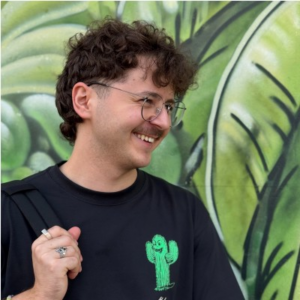
Tamás Takács of Eötvös Loránd University, International Scientific Committee Member at EUROAI (CEOAI) – European Olympiad in Artificial Intelligence
TT: In ten years, I’d hope to see globally important AI companies that were not only founded by people from CEE, but actually built and scaled here. The real success would be when exceptional talent no longer feels it has to leave the region to pursue the biggest opportunities. When successful founders stay involved, reinvest, mentor the next generation we can say the ecosystem is increasingly self-sustaining.
The reason why the success of initiatives like EUROAI matters is because they do more than identify exceptional young talent — they create a community around it and put Europe’s technical potential on display. For CEE, however, identifying that talent remains only the first step: the region still needs to address gaps in capital, mentorship, commercial exposure, networks, and tolerance for failure if it wants its strongest technical minds to become founders locally. The ultimate measure of success will be whether today’s Olympiad participants can and will choose to build globally relevant AI companies from CEE, creating a virtuous cycle in which tomorrow’s talent sees the region not as a place to leave, but as a place to build.
Kostiantyn is a freelance writer from Crimea but based in Lviv. He loves writing about IT and high tech because those topics are always upbeat and he’s an inherent optimist!