

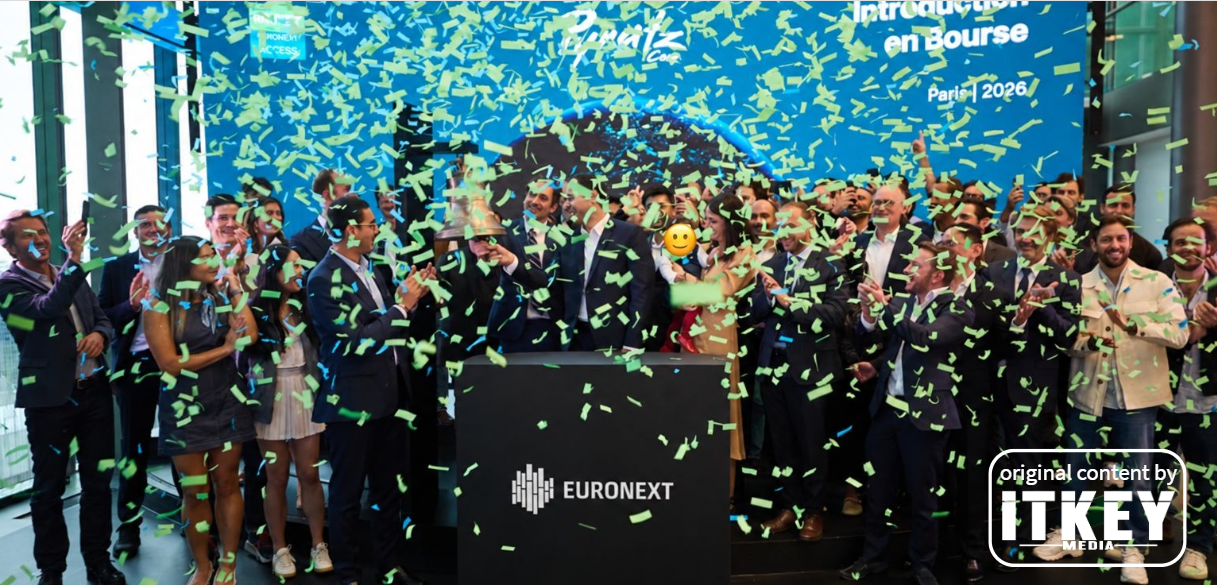
- Pyratz invested in Moonshot AI through an SPV at a reported USD 30B pre-money valuation
- According to Pyratz, open-weight models offer greater deployment control, adaptability, and independence from closed AI providers
- Pyratz sees potential to combine Moonshot AI models with its portco Zama’s technology for secure, confidential AI deployment
- International entrepreneurs remark that Romania’s AI ecosystem needs patient capital, revenue-generating companies, and international growth investment to scale
This Summer, Pyratz Corp., the European investment firm focused on frontier technologies, invested in Moonshot AI, the Chinese AI company, as part of a late-stage financing round that valued the company at USD 30B pre-money. Rather than investing directly, Pyratz participated through Techmind Moonshot AI, an SPV established with French investment intermediary Techmind.vc. Pyratz’s contribution remained undisclosed.
Global Partners at the Frontier of AI Innovation
Pyratz Corp. is a European venture builder and investment firm listed on Euronext Access Paris, with operations in Paris and Barcelona, focused on frontier technologies, particularly AI and blockchain. It combines investment capital with hands-on operational expertise to help technology companies develop products, commercialize innovations, and scale their businesses.
Moonshot AI is a Chinese artificial intelligence company founded in 2023 by Yang Zhilin and headquartered in Beijing. It develops the Kimi family of AI models and the Kimi conversational assistant, with capabilities including long-context processing, coding, document analysis, and complex reasoning. Backed by major investors and rapidly expanding its model capabilities, Moonshot has become a prominent competitor in the global AI market, attracting substantial funding and reaching multibillion-dollar valuations as demand for advanced and open-weight AI models grows.
The Pyratz x Moonshot deal represents more than a financial bet on a fast-growing AI company. Pyratz has cited its own testing and deployment of Moonshot’s models as part of the investment rationale. It also sees potential to combine Moonshot’s open-weight models with technologies from its portfolio company Zama, which specialises in fully homomorphic encryption, to develop infrastructure for secure, confidential AI deployment. The broader ambition is to help European businesses access powerful AI models while retaining greater control over their data.
The investment illustrates how European investors can gain exposure to leading Chinese AI technology while exploring practical applications in Europe’s emerging sovereign AI ecosystem. Its long-term success will depend on Moonshot’s commercial growth and Pyratz’s ability to turn its technological access into tangible business opportunities.
Inside the Deal: Pyratz on Global AI and CEE’s Potential
ITKeyMedia approached Pyratz’s CEO Bilal El Alami and CMO Peiyao Qiu to find out more about the motivation behind the deal and its international significance, and what lessons players from the CEE region might learn from this experience.
What convinced Pyratz that Moonshot AI’s long-term potential justified entry?
Bilal El Alamy: The thesis starts with a question we ask about every AI investment: as intelligence becomes cheap and widely available, who keeps the power to act? Most bets in this space assume whoever builds the best model wins. We think the real question is whether the operators and institutions deploying AI can actually understand, adapt, and control what they’re running — or whether they’re renting capability from a closed black box they can never inspect.
Moonshot AI’s approach addresses that directly. When a deployment partner can inspect, fine-tune, and run models on their own infrastructure, they retain meaningful leverage. This changes how value is distributed across the stack in ways that favor the operator and their clients, not just the model provider.
We were already using Kimi, and we tested deployment and self-hosting before we invested. It is also in products we use to help people try ideas. The conviction was not just a ranking. What we underwrote is control of deployment: the company can run the model itself, instead of depending on a small set of providers.
Where is Moonshot’s most durable competitive advantage: model performance, distribution, monetization, or something else?
BEA: The performance-distribution-monetization frame is real, but it misses the more durable differentiator, which is architecture philosophy.
Closed, proprietary models generate lock-in, but they also concentrate risk in a single provider relationship. Open-weight models, executed well, shift leverage toward the deploying operator. The entity running the model can adapt it, audit it, and run it on their own infrastructure. This matters enormously for enterprise sales, for regulated industries, and for any sovereign context where full dependence on an external API is a blocker.
The part we underwrote is that the customer can deploy the model on infrastructure they control. Distribution and monetization matter, but they follow from trust — and in AI right now, trust increasingly requires something you can actually inspect.
The durable attraction is that ability to deploy. Performance, distribution and monetisation still matter.
With AI valuations shaped by expectations not profitability, what concrete milestones over 2–3 years would make this investment justified?

Peiyao Qiu, CMO at Pyratz
Peiyao Qiu: We don’t measure this by when a single revenue number hits. We look at whether the underlying thesis is proving out.
We are not discussing valuation targets or return expectations. What we watch is adoption and commercial traction. There are three clusters that are a proposal, not milestones already decided:
- First, enterprise adoption depth. Not headline user counts, but genuine integration: repeat usage, enterprise contracts that involve fine-tuning or custom deployment on the operator’s infrastructure. That’s the signal that open-weight architecture is delivering the flexibility it promises, not just promising it.
- Second, international distribution. A model that performs across languages and contexts with real deployment partners in multiple regions is building something fundamentally more durable than a single-market product. Breadth of adoption is a capability signal as much as a commercial one.
- Third, sustained capability progression relative to the frontier without resource requirements that only the largest closed labs can meet. If Moonshot continues to close or hold the gap on benchmark tasks while keeping deployment costs manageable, the efficiency thesis holds.
Central and Eastern Europe has strong engineering talent and lower costs, but few globally dominant AI companies. Why hasn’t talent translated into owned AI IP? What needs to change?
BEA: The CEE region has genuinely exceptional engineering talent. The pipeline is real. The gap isn’t the engineers — it’s the system around them.
Owned AI IP requires three things that are harder to build than raw talent:
- patient capital with a high tolerance for long iteration cycles,
- product intuition anchored in markets you actually understand deeply,
- and distribution infrastructure that takes research-grade output and turns it into something someone pays for at scale.
What has to change is capital that stays long enough to own the intellectual property, and buyers who procure from local builders instead of renting a foreign API. Naturally, this would be our opinionated proposal, not a verified finding.
CEE’s biggest missing ingredient: capital, ambition, compute access, commercialization expertise, or something else?
BEA: If we were to name one missing ingredient, it is ownership: capital that holds through the expensive years, and customers who buy the product rather than hire the person. Again, this would be our opinionated proposal, not a verified finding.
What CEE country / emerging AI hub is most underestimated by investors? What signal would convince you to invest here before the market catches on?
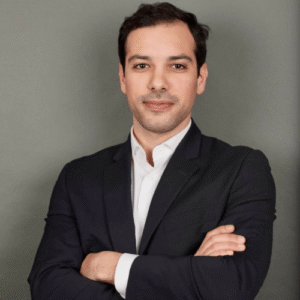
Bilal El Alamy, Founder and CEO at Pyratz
BEA: Romania. The engineering talent density is high and still significantly underpriced relative to comparable profiles in Western Europe. The country has produced real exits and a growing cohort of founders who have built and sold companies at international scale. This creates a mentorship and angel network layer that bootstraps the next generation in ways that pure talent pipelines alone cannot.
The signal we would look for before moving ahead: a cluster of two or three companies in the same vertical each generating real revenue outside the home market. A single outlier is luck — a cluster is structural. It means something has shifted in the ecosystem: quality of early-stage capital, founder networks, talent retention. You can spot a cluster forming 12-18 months before outside capital notices it, if you’re watching the right indicators.
For Romania specifically, we’d watch for AI or deep-tech companies attracting Series B commitments from US and European growth funds, not just regional VCs. That’s the inflection that tells you the ecosystem has crossed a critical threshold and the market hasn’t priced it yet.
The Pyratz–Moonshot AI deal highlights how the future of AI investment may depend not only on model performance, but also on the ability to control, adapt, and deploy AI securely and independently. For Central and Eastern Europe, the discussion underscores how world-class engineering talent must be matched with patient capital, strong commercialization capabilities, and customers willing to invest in homegrown intellectual property. As Romania and other CEE markets develop their AI ecosystems, the opportunity lies in turning the region’s existing strengths into globally competitive companies that own their technology and scale beyond their domestic markets.

Kostiantyn is a freelance writer from Crimea but based in Lviv. He loves writing about IT and high tech because those topics are always upbeat and he’s an inherent optimist!