

- Brno-based MAIA Labs secured CE certification following a 600-patient randomized clinical trial
- The startup’s ColoMAIA II improves adenoma detection while automating endoscopy documentation
- Further, the company is pursuing FDA clearance and expanding its US clinical footprint
- MAIA Labs’ other plans include expanding into gastroscopy, urology, gynecology, and bronchoscopy
For a great number of patients, a colonoscopy is a routine medical procedure. For physicians, however, it is also a race against what the human eye can miss. Small or flat precancerous lesions can be difficult to spot, and even a technically successful examination does not guarantee that every adenoma has indeed been detected. This is where AI is increasingly moving from an experimental technology into the clinical workflow.
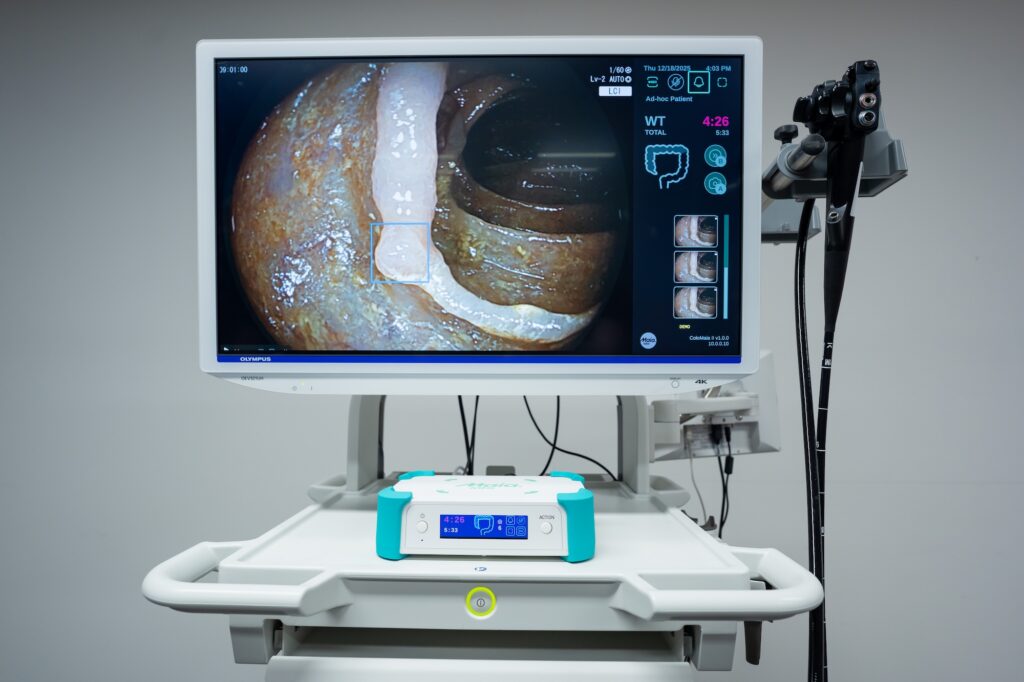
Czech deep tech company MAIA Labs is positioning itself at the forefront of that shift. This June, its ColoMAIA II system, an AI-powered assistant designed to support physicians during colonoscopies, received CE certification under the EU Medical Device Regulation, opening the door to commercial deployment across European markets.
The milestone comes with clinical evidence behind it. In a prospective multicenter study involving 600 patients, MAIA Labs reports that the system delivered a 61% relative increase in adenomas detected per colonoscopy compared with standard colonoscopy. According to the company, ColoMAIA II is already used in more than 20 European hospitals, while the technology simultaneously gets adjusted for the US market.
The bigger question, however, is what happens when AI moves from promising clinical research into everyday medicine. Better detection is only one part of the equation. Hospitals need to justify the cost, physicians need to trust the technology, and AI systems need to fit seamlessly into established workflows without creating new sources of friction or unnecessary interventions.
MAIA Labs, meanwhile, is also betting that the opportunity extends beyond detecting lesions. ColoMAIA II can assess procedure-quality metrics in real time and automatically generate structured reports, potentially reducing the administrative burden on endoscopy teams while integrating findings into existing hospital systems.
The Path from Routine Colonoscopy to AI-Assisted Care
ITKeyMedia spoke with MAIA Labs’s founder and CEO Lukáš Loun to look beyond the certification milestone and explore the evidence behind its claims, the challenges of bringing medical AI into routine care, and where the company sees the technology—and the wider AI-in-healthcare market—going next.
What is the founder’s background, and why is he the right person to build MAIA Labs?
Lukáš Loun: I came from business, not medicine. This shaped the way I look at healthcare. My core belief is very simple: Physicians should treat patients. Technology should take care of everything else wherever possible. A physician should not spend time after a procedure rewriting what they have just seen and done. They shouldn’t have to start timers, copy information between systems, search for images, or enter data that was already generated during the procedure manually.
That’s exactly where I see the role of MAIA Labs: to remove everything from the physician’s workload that does not require a human, and give them more time for what they are irreplaceable at — caring for the patient and making clinical decisions.
I won’t tell gastroenterologists how to practice medicine. They know medicine. Our job is to build technology around them that makes their work easier.
As it turns out, this is the hardest part of MedTech. The AI model itself is only one part of the problem. You need access to high-quality medical data, the trust of hospitals and physicians, clinical evidence, integration, certification, and ultimately a product that physicians actually want to use every day.
The result today is MDR certification, a 600-patient randomized trial, and a system used in daily clinical practice.
What does “MAIA” stand for?
LL: MAIA stands for Medical AI Assistant. The word Assistant is essential here. It directly reflects our philosophy: the physician should practice medicine, while technology helps with everything else.
Without replacing the physician, MAIA follows the procedure, helps identify what the physician might otherwise miss, remembers what happened during the examination, and prepares information that would otherwise have to be documented manually afterwards.
The name has one more meaning: in mythology, Maia is a nymph associated with care and protection. This is exactly how we want our MAIA to work — as an unobtrusive assistant that is always present during the procedure while leaving the final decision to the physician.
How did MAIA Labs start?
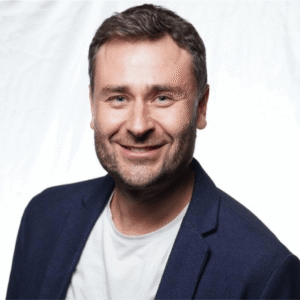
Lukáš Loun, Founder and CEO at MAIA Labs
LL: We founded MAIA Labs in Brno in 2022 with a fairly simple ambition: to build medical AI that would not just perform well in a laboratory, but actually reach patients.
- 2022: Company founded and winner of the JIC’s Prototype & Verify program.
- 2023: Best Idea for Use Case at the InterSystems Global Healthcare Summit, overall winner of Vodafone Idea of the Year, and the Roche DIGI@MED award. HLTH in Las Vegas was also where our journey with Mayo Clinic began. By the end of the year, demand from Czech hospitals had already exceeded our installation capacity.
- 2024: Best HealthTech Startup at the Central European Startup Awards, Golden Aesculapius, and a global Top 10 position at the Global Startup Awards in Istanbul.
- 2025: European premiere of the new generation of ColoMAIA at UEG Week in Berlin, collaboration agreed with Cleveland Clinic London, and the launch of our randomized clinical trial.
- 2026: First US installation at Mayo Clinic Florida, completion of the 600-patient randomized trial, head-to-head data against CAD EYE presented at DDW, MDR certification, and continued expansion across European hospitals.
The interesting part is that AI itself was not what took the most time. It was data, hospital trust, integration, and regulation. Twenty-seven months passed between our first conversation with Mayo Clinic at HLTH and having a system running in their procedure room. This gives a pretty good idea of how MedTech really works.
What is the biggest obstacle to adoption?
LL: One of the biggest obstacles is still the mindset of part of the older generation of physicians and a natural skepticism toward artificial intelligence, which I perfectly understand. Physicians are responsible for their patients. They cannot start trusting a technology simply because somebody puts ‘AI’ on the box. That’s why we do not try to convince physicians with marketing. Instead, we convince them with results. Once a physician sees the system working during a real procedure and understands that it is not trying to take away their decision-making but to support them, the attitude often changes very quickly.
Another major barrier is integration. Hospitals don’t want another isolated device, another monitor, another cloud platform, or another system where physicians have to enter information. That’s why we designed MAIA from the beginning to work with existing endoscopy towers and hospital systems while changing the physician’s workflow as little as possible.
Technology should adapt to the physician — not the physician to the technology.
How does ColoMAIA II perform in the hardest cases?
LL: That’s where AI becomes particularly interesting. A physician may already have performed procedures all day. They may be tired. Bowel preparation may be less than ideal. A lesion may be flat, difficult to see, or appear on the screen for only a fraction of a second.
The algorithm does not get tired.
In our randomized trial, we saw particularly strong results under more difficult conditions. With suboptimal bowel preparation (BBPS 6–7), adenoma detection rate was 41.6% with ColoMAIA II versus 23.0% with standard colonoscopy. In the proximal colon, it was 29.9% versus 18.3%. Overall, ADR increased from 29.0% to 39.9% in the trial.
Speed is also critical. A flat lesion may be visible for only a very short time. In a comparison with CAD EYE on the same recordings, ColoMAIA II achieved sensitivity within 500 ms of 86.8% versus 62.4%, with an average detection delay of 382 ms versus 814 ms.
Based on its combination of speed, accuracy, and contextual processing, we consider ColoMAIA II to be one of the most technologically advanced solutions in its category.
And consistency is, in my view, one of AI’s greatest strengths: without physician fatigue, it can continue to provide the same objective level of support.
Does higher detection mean a lower risk of colorectal cancer?
LL: Yes, there is a strong association between higher adenoma detection rates and a lower risk of interval colorectal cancer. One of the most frequently cited studies, Corley et al. in the New England Journal of Medicine, analyzed more than 300,000 colonoscopies and found that each one-percentage-point increase in adenoma detection rate was associated with approximately a 3% reduction in the risk of interval colorectal cancer. In our randomized trial, ADR increased from 29.0% to 39.9% — an improvement of 10.8 percentage points.
Of course, that doesn’t mean we can simply multiply 10.8 by three and claim that we reduced cancer incidence by a specific percentage. That’s not what our trial demonstrated. It shows why high-quality screening matters so much.
Colorectal cancer is, to a significant extent, preventable. If we can make screening sufficiently effective, identify precancerous lesions early, and remove them before malignant transformation, we can move toward a future in which a significant proportion of colorectal cancers simply never develop. For me, that is the real ambition of AI in colonoscopy.
More detected lesions mean more interventions. Is that a problem?
LL: I think we should look at this from the patient’s perspective. The patient is already scheduled for a colonoscopy. They are prepared, often sedated, the physician has allocated the time, and the scope is already inserted. If we find three adenomas instead of one and can safely remove all of them during the same procedure, we are typically talking about a few additional minutes.
At the same time, the difference for the patient can be enormous. They may avoid another bowel preparation, another procedure, and another sedation — and, most importantly, we remove a precancerous lesion as soon as we see it.
Our data also don’t suggest that the increase in detection comes from removing more irrelevant tissue. Histological agreement for clinically significant removed lesions was 77.6% with ColoMAIA II and 77.5% in the standard group.
So from my perspective, the fact that a higher-quality colonoscopy finds more relevant lesions is not the problem.
Is MAIA’s real value about workflow rather than detection?
LL: Yes. Ultimately, it is all about workflow. Detection is a very important part of it, but what we have really built is technology capable of understanding the entire procedure in context. This is the fundamental difference: a conventional AI model looks at the current image and asks whether there’s a polyp here, while MAIA additionally considers what happened before. It’s somewhat similar to the way the human brain works: a physician sees a polyp, moves the endoscope, the polyp disappears from view, and then appears again a few seconds later. The physician does not start wondering whether it is a new polyp. They remember what happened before and understand the context.
MAIA works on the same principle: It aggregates information over time and, as a result, can better understand what is actually happening during the procedure. This improves not only detection but opens up an entirely different level of automation. The system can recognize a finding, connect it to images and anatomical location, record the course of the procedure and quality metrics, and ultimately prepare a structured report.
The physician no longer needs to describe after the procedure something they have already seen during it. If both the physician and MAIA have already seen it once, there’s no reason why the human should have to type it again.
Why is the US market ready for MAIA Labs now?
LL: Because we are ready for it! We have MDR certification, a completed randomized clinical trial, and our first experience with deployment in a US clinical environment at Mayo Clinic Florida. We’re currently going through the FDA process, and our goal is to obtain FDA clearance in the first half of next year.
At the same time, the US conversation around AI in endoscopy is changing. It is no longer just about who has one percentage point better sensitivity. Hospitals are increasingly asking about workflow, reporting, procedure quality, integration, and whether the technology can actually be used every day. This is exactly where we believe our strongest position lies.
What has MDR taught you about the FDA?
LL: That in Europe, we sometimes make things unnecessarily complicated. The European MDR has created a very robust regulatory framework, but the certification process is also complex, expensive, and lengthy.
The US system is, in some respects, more pragmatic. Where an appropriate predicate device exists, it may be possible to use the 510(k) pathway and demonstrate substantial equivalence to a device that’s already been cleared. This can provide manufacturers with a more predictable regulatory route than the European system, where the same concept of a direct predicate does not operate in the same way.
Thai doesn’t mean the FDA is easy. Requirements around quality, clinical evidence, software, human factors, and safety remain extremely high. But in my experience, the system can be more transparent and pragmatic. Europe could learn from the idea that high safety standards and faster patient access to innovation do not necessarily have to be in conflict.
How will MAIA Labs use the new funding?
LL: Very clearly: to scale. We have the product, clinical data, certification, and a growing installed base. Now, we need to remove the constraints that prevent us from growing faster.
- The first area is international expansion — particularly the US and additional European markets.
- The second is installation and integration capacity. We do not want a hospital that wants MAIA to have to wait months for deployment.
- And the third is expanding the technology into additional modalities.
We are actively working on gastroscopy, but we are already collecting data from urology, gynecology, and bronchoscopy as well.
It matters because the technology we are building is fundamentally more than just ‘AI for polyps.’ It is an architecture capable of following an endoscopic procedure, understanding its context, and transforming what happens into structured data. That is what we want to scale.
Where does MAIA Labs ultimately want to be?
LL: We want to become a platform that can be deployed across any endoscopic procedure.
Our goal is not to give physicians another piece of software they have to operate.
It is exactly the opposite: We want technology to gradually disappear from their workload. The physician should examine the patient, look at the screen, make decisions, and practice medicine. In the background, MAIA should follow what is happening, understand the context, capture findings, connect them with images and anatomical locations, record quality metrics, and prepare a structured report.
At the end of the procedure, the physician shouldn’t have to sit down at a computer and describe again what they saw only minutes earlier. What they have already seen once, they shouldn’t have to document twice. Instead, MAIA should prepare the structured report directly in the hospital system, leaving the physician to review, adjust where necessary, and approve it.
Today, we start with colonoscopy. We are moving into gastroscopy and already collecting data from urology, gynecology, and bronchoscopy.
But the long-term vision is one: One intelligence layer across endoscopy that lets physicians practice medicine while technology takes care of the rest.
MAIA Labs’ CE certification signifies how AI-assisted endoscopy is moving from the research environment into routine clinical practice. By combining lesion detection with procedure-quality monitoring and automated documentation, the Czech company specifically helps physicians find more adenoma, while generally reshaping how endoscopic procedures are performed and documented. Whether this vision ultimately translates into measurable improvements in patient outcomes and healthcare efficiency will depend on the technology’s adoption and how convincingly MAIA Labs can demonstrate its value in everyday clinical settings.
The next major test will be the US market, where MAIA Labs is pursuing FDA clearance and has already established an initial clinical foothold. Beyond the regulatory and commercial challenge, the company is betting that the underlying technology can extend well beyond colonoscopy, with gastroscopy already in development and data being collected across urology, gynecology, and bronchoscopy. If those expansions succeed, MAIA Labs is poised to evolve from a specialist colorectal AI company into an intelligence layer for endoscopy that allows physicians to focus on clinical decisions while technology handles the increasingly complex work of seeing, recording, and organizing what happens during a procedure.

Kostiantyn is a freelance writer from Crimea but based in Lviv. He loves writing about IT and high tech because those topics are always upbeat and he’s an inherent optimist!