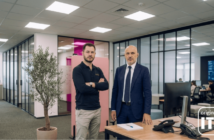


- Aneli Capital launches a EUR 35M VC fund targeting ICT, robotics, space, and energy startups
- The new fund aims to close CEE’s funding gaps with fast decisions and founder-friendly terms
- The founding partners bring deep ecosystem experience, planning to back about 20 startups with average tickets of EUR 1.5M
- Most capital will be allocated to startups coming from or working in Lithuania
Last December, Lithuania’s experienced and respected capital management firm Aneli Capital announced its new vehicle for VC investments — the EUR 35M Aneli Capital Fund. The new fund will invest in Information and Communication Technology (ICT), as well as robotics, space, and energy startups. The capital is provided by the well-known Lithuania’s development bank ILTE and the Polish Magna Polonia.
A New Fund Bridging CEE’s Funding Gap
Seeing how CEE startups are gaining global recognition, it’s apparent how many of them still have to deal with limited funding and scaling challenges, particularly compared to their Western peers. Aneli Capital means to bridge such gaps by pairing capital with fast decisions and founder-friendly terms.
The partners include:
- Daiva Rakauskaitė, CFA, partner and fund manager.
- Nerijus Baliūnas, leading business development and strategy.
- Jacek Blonski, leading deep tech, networking, and negotiations.
- and Sabina Sinicienė, investment director.
The partners can boast profound experience in investing, managing Business Angel Fund II, and co-founding the Lithuanian Venture Capital Association and the Lithuanian Business Angel Network (LitBAN). Aneli Capital Fund is the next step in their involvement in Lithuania and CEE’s VC scene.
‘We are excited to support Aneli Capital Fund. They have extensive experience in managing startups and will soon be strengthened by highly qualified advisors. We are aiming for two goals: to earn a solid return by investing in companies operating in progressive sectors and supporting young tech companies from the CEE region at the same time,’ Magna Polonia‘s chairman of the management board Miroslaw Janisiewicz states.
A Major Fund to Boost to Boost CEE Tech Startups
ITKeyMedia approached Aneli Capital Fund’s partner Daiva Rakauskaitė to delve deeper into the fund’s plans, ambitions,and vision:
Was there any particular trigger that convinced the partners that a vehicle like Aneli VC Fund was needed?
Daiva Rakauskaitė: Within 2021-2023 there was a boom of business angels and VC investments. Starting from 2022, LPs became very reserved towards VC, therefore there was a sharp drop in new VC numbers and amounts. This means that starting from 2025, the lack of VC money will show, the best startups stay in the market, and VCs will see higher-quality deals. This is the best time to invest in order to earn profit for our LPs.

Daiva Rakauskaite, Managing Partner at Aneli Capital
When we started co-investing with Business Angels Fund I and II in 2008–2009, Lithuania had very limited early-stage capital. Our goal was to build a business angel and venture ecosystem for bold founders who could not access bank financing. Over the following 15 years, that ecosystem expanded significantly, and the ‘Business Angels Fund’ became a general market term. In practice, the market increasingly perceived us as part of LitBAN rather than as a distinct investment platform.
By 2023, we saw that both the market and our own ambitions had evolved. We were ready to raise a new venture capital fund with a clearer identity, a broader mandate, and a stronger long-term partnership approach. This required a new vehicle and a new name that would reflect who we are today and how we invest.
Aneli was created to represent responsible, trusted, and smart investing. As a gender-neutral name derived from ‘angel,’ it symbolizes our role as a guiding star and a tranquil partner for founders – supporting them not only with capital, but with trust, values, and long-term commitment.
What are the most common green flags and red flags for your investment decisions?
DR: Green flags: We look for strong and ambitious teams operating in relevant sectors with a proven market need, validated solutions, and clear sales traction, as well as the ambition to scale internationally.
Red flags: We tend to avoid companies outside our focus sectors, teams or products that lack clear market validation or growth potential, founders who intentionally dodge taxation or are in conflicts with investors or employees.
Many funds emphasize founder-friendliness. Can you elaborate – What does this mean particularly with Aneli Capital in practice?
DR: Our founder-friendliness comes from a real partnership, not just an investment size. We believe in being an active partner, bringing hands-on support, in-depth expertise in regtech, energy management, financial planning and strong networks. By working closely with startups, our goal is to help them turn into competitive, resilient businesses and also make them more attractive to follow-on investors.
Beyond capital deployment, what ecosystem roles do you see Aneli Capital playing?
DR: We see Aneli Capital as an active contributor to the startup ecosystem. Aneli Capital was among the initiators to give birth to Lithuanian business angels network (LitBAN), for many years our partners were members of LitBAN board, we also became members of Lithuanian Venture Capital Association (including board member positions) right after its establishment. Recently, we have started our partnership with Unicorns Lithuania and we expect this collaboration to strengthen founder education and knowledge-sharing initiatives. Additionally, we’ve created Youtube-based educational content for both founders and investors, where we share practical, real-world insights to help guide people in the right direction.
Given the pace of technology change, how does one future-proof the sector focus?
DR: Market competition and customer demand are the main forces that push innovation forward. Companies respond to what customers want and to what competitors are building. These are the pressures that together shape how technology and sectors evolve over time.
Being partly anchored by public institutional capital, how do you balance commercial returns with regional economic development goals without compromising either?
DR: Our core policy is to generate profit for our investors. When we succeed at that, both private and public investors benefit. Private investors earn returns on their capital, while public investors also benefit from new companies that contribute tax revenue.
More globally, what structural or policy changes could accelerate the regional ecosystem over the next decade?
DR: Tax incentives encourage business angels to invest more actively in startups and innovation. These incentives help channel more private capital into the startup ecosystem. Alongside this, strengthening the region also requires educating the next generation about technological shifts and how to adapt to the disappearance of some roles.
Overall, how do you see Lithuanian and CEE startup/VC ecosystems evolving in e.g. 5–10 years from now? What is Aneli VC Fund’s impact and role in it?
DR: Over the next 5–10 years, we envision the Lithuanian and CEE startup ecosystems growing into fast-scaling, technology-driven hubs producing more unicorns and globally competitive ventures. Aneli Capital aims to facilitate and accelerate this evolution by providing not just capital, but networks, mentorship, and hands-on support to help startups scale faster and succeed internationally.
Portfolio Plans, Priority Sectors, and Geographic Allocation
More specifically, the Aneli Capital Fund team plans to back eight startups and complete several exits from earlier funds over the next year. In its first five years, the fund expects to complete about 20 investments, with a typical ticket of around EUR 1.5M.
In addition to ICT, robotics, and energy, Aneli Capital identifies strong untapped potential in photonics and smart manufacturing and intends to prioritize these areas. Part of the capital will also go to AI startups, with a focus on solutions that are already operating or in testing and can demonstrate practical and reliable results.

Inga Beiliūnienė, Head of International Partnerships at ILTE
More than half of the EUR 35M fund is planned for allocation in investments in Lithuania, while the remaining capital will target opportunities in Latvia, Estonia, Poland, and other CEE countries.
‘Consistent support of innovation development and experimental activities in companies and teams is exactly how solutions driving long-term economic progress are created. By investing in startups, ILTE helps develop new technologies while also strengthening our countries’ competitiveness and resilience to future challenges,’ ILTE’s head of international relations Inga Beiliūnienė concludes.
The launch of the Aneli Capital Fund marks a meaningful step in strengthening the VC landscape in Lithuania and the wider CEE region. By combining capital with experience, networks, and active support, the fund is poised to help more startups survive early stages and scale internationally. Its presence also signals growing maturity in the regional ecosystem, encouraging innovation, talent development, and long-term economic growth.

Kostiantyn is a freelance writer from Crimea but based in Lviv. He loves writing about IT and high tech because those topics are always upbeat and he’s an inherent optimist!