
- Meniscus Resector by GMD became the winner of MSCA 2026 Lviv’s Biomedical Engineering & Health category
- The founder Dr Bogdan Gryshchuk developed the device from firsthand arthroscopy experience
- MSCA prize money supports the next model, company audit, and production expansion
- As GMD expands the production of more devices, the applications can be expanded across knee, shoulder, and hip procedures
This April, the Melville Sikorsky Challenge Accelerator (MSCA) concluded its first cohort. Meniscus Resector by GMD won in the Biomedical Engineering & Health category and received a USD 5K non-equity cash award.
MSCA and GMD in a Nutshell
The Melville Sikorsky Challenge Accelerator is an international innovation and investment platform connecting startups, R&D teams, and technology companies with global investors and mentors. It runs a series of competitions focused on high-impact technologies, helping promising projects move from research and development toward commercialization and international markets. Through its UK–Ukraine partnership and investment network, MSCA provides participants with acceleration, mentorship, investor access, and opportunities for long-term growth.
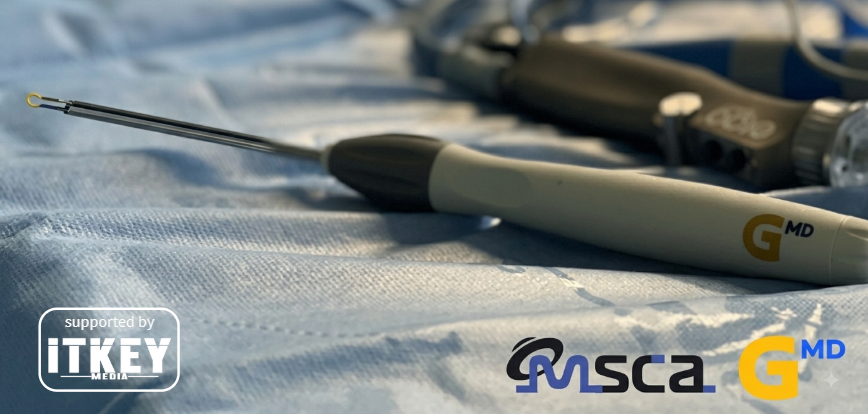
The Meniscus Resector is an arthroscopic radiofrequency surgical instrument designed for partial meniscus resection (partial meniscectomy). Its distinguishing features include:
- bipolar loop electrode for radiofrequency tissue resection;
- integrated aspiration to remove tissue debris and bubbles during surgery;
- manipulator allowing precise positioning of the electrode;
- designed to fit through standard arthroscopic portals (outer diameter up to 5 mm).
The objective is to make meniscus resection:
- faster,
- more precise,
- easier to control,
- while reducing unnecessary damage to surrounding tissue.
The commercial entity in Ukraine is Gryshchuk Medical Devices (GMD). In 2024, founder Dr Bogdan Gryshchuk additionally incorporated a UK company called GMD-R Ltd.
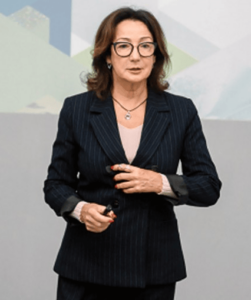
Inna Maliukova, Head of the All-Ukrainian Innovation Ecosystem Sikorsky Challenge Ukraine
Inna Maliukova, Head of the All-Ukrainian Innovation Ecosystem Sikorsky Challenge Ukraine, lists several factors contributed to GMD’s victory:
- ‘First, it is the high level of technological maturity of the project compared to other participants in the competition.
- Second, it is the availability of a ready-made solution that is already present on the market today and fully ready for scaling abroad.
- Third, it is the personal contribution of Dr Bohdan Hryshchuk: his profound expertise in surgery, his global involvement in the professional community and dedication to the cause.
- And, finally, GMD’s existing connections with international partners, which can help the team quickly enter new international markets in the near future.’
ITKeyMedia sat down with Dr Gryshchuk to find out more about the GMD’s Meniscus Resector, the path to it, and its further steps in view of the MSCA victory and beyond.
What convinced you that you were the right person to deliver a device like GMD’s Meniscus Resector in the beginning of your journey?
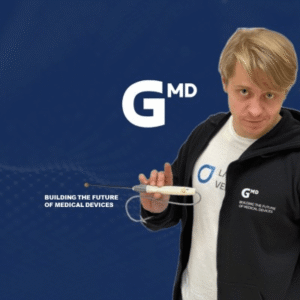
Dr Bogdan Gryshchuk, Founder and CEO at Gryshchuk Medical Devices (GMD)
Bogdan Gryshchuk: I’ve been an orthopedic traumatologist for 14 years, and I’ve been practicing arthroscopy independently since 2021. At the beginning of my journey, I was clearly aware of the existing problem with using traditional instruments. When the idea for a new device turned up, I simply knew that it would work, because I understand this story ‘from the inside.’ Naturally, first experiments added to my confidence when I saw how it works in reality, and that was an inspiration. My colleagues were quite supportive, too, including my mentor and scholars from my environment. ‘He who seeks – he will find’, – they told me, adding that the idea was interesting and had to be tried.
What, in your opinion, stopped a device like GMD’s Meniscus Resector from turning up earlier?
BG: Device manufacturers and operating surgeons are rarely the same people. I think that’s why no one or few people have observed the shortcomings of traditional methods. And if they have, they either didn’t do anything about it, or they are doing it too slowly, or at least slower than I do.
If an orthopedic surgeon challenged you and said their current tools already worked well enough, how would you convince them to change their practice?
BG: That’s actually what happened when I told my colleagues about my innovation at a congress on traumatology. A colleague said that what they had was already quite sufficient – ‘I use an ablator for coagulation or ablation of tissues”.
My answer was: ‘Firstly, the electrode-loop is thinner and has a loop-shaped window, allowing for better visibility and, consequently, better control of the process. This means more accurate and neater work. Secondly, the Resector can perform horizontal resection, while an ablator cannot. Thirdly, the speed of the operation increases, because you don’t have to change instruments with different functions so often, because the Resector combines these functions in itself.’
The response was a surprised face and ‘interesting, this makes sense…’
Sometimes, medical devices are technically impressive but fail commercially. What is the biggest non-technical challenge you face in bringing this technology from prototype to routine surgical use?
BG: Funding is the biggest challenge. A medical product is a long journey of model iterations, adaptation to user wishes and a crazy number of legal standardization processes. All this is quite costly. As a medical doctor with a laughable salary from the state, I move as quickly as possible, but funding is the only significant obstacle. The rest is a matter of enthusiasm, mindset, and ingenuity.
I’m glad to have many acquaintances across different areas, and even my patients often show interest and want to help with their knowledge or connections.
That is how I came across the MSCA and connected with materials researchers, patent attorneys, manufacturers of parts, and documentation experts.
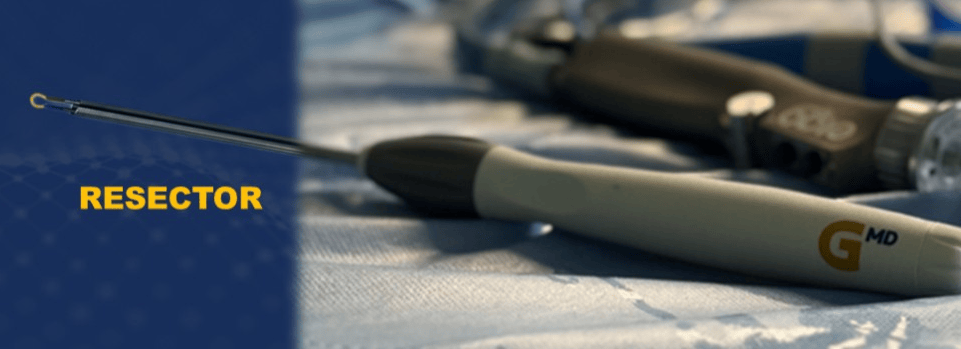
Meniscus Resector by GMD
In terms of regulatory and manufacturing complexity, what has been your hardest lesson so far when moving from research toward commercialization?
BG: The most important lesson – no such thing. Everything is important. The main thing is to get things done. If it’s hard – take small steps and don’t stop. I might add that it’s imperative to talk to everyone about the project. There is a stereotypical fear that ‘the idea will get stolen’ – firstly, it won’t, and secondly – why not let others try to do it better or faster. If they can, I will be grateful, because the idea will progress faster. I enjoy an advantage on the legal and scholarly side, because I am a scholar and a surgeon who knows how to use such devices.
What outcome matters more to you: reducing operating time, improving surgical precision, reducing tissue damage, or changing the way surgeons think about meniscus treatment?
BG: Surgery is precision – and this is already a maxim. Surely you’re familiar with the phrase ‘surgical precision.’ Our device improves precision, followed by speed and efficiency and reduced trauma, pain and, consequently, faster recovery.
How do you plan to use the prize money from MSCA Lviv 2026?
BG: The prize money is used to develop the next model, which is getting tested just around these days.
We will also spend it on the annual audit of our company. And the most important thing is to increase production. After testing our new model, we will launch 50 units of devices into production.
Do you see your technology platform expanding into other orthopedic procedures beyond meniscus surgery?
BG: During our research, the device was implemented for the treatment of the cruciate ligament of the knee, Hoff’s disease, cartilage defects, pathological medial patellar ligament, discoid meniscus, impingement syndrome, patellofemoral conflict. Adding to that the treatment of the shoulder joint: biceps tendonitis, shoulder impingement syndrome, damage to the rotator cuff or articular labrum. We’ve also planned implementation in hip arthroscopy.
Meniscus Resector by GMD represents a promising example of how clinical insight can be translated into practical medical innovation, with the potential to make arthroscopic meniscus procedures more precise, efficient, and less traumatic. Its victory in the Biomedical Engineering & Health category at MSCA Lviv 2026 provides valuable recognition and momentum as the company moves from research and prototyping toward wider production and clinical adoption. With a new model already undergoing testing and plans to expand the technology into other orthopedic procedures, GMD’s next challenge is turning a compelling surgical innovation into a scalable medical solution with global reach.
As for the MSCA 2026 Lviv, it currently welcomes applications to its second cohort until August 31st. This cohort’s categories are: AI, cyber security, and water resources.
Kostiantyn is a freelance writer from Crimea but based in Lviv. He loves writing about IT and high tech because those topics are always upbeat and he’s an inherent optimist!