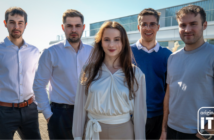


- Danish-Romanian spektr attracted its USD 20M Series A led by New Enterprise Associates
- The startup develops AI agents automating manual compliance investigations while preserving human oversight and accountability
- The new funding will expand the AI platform and accelerate global adoption among financial institutions
This April, Danish-Romanian startup spektr raised its USD 20M Series A round led by New Enterprise Associates (NEA) to automate one of financial services’ most time-consuming functions. Other participants include spektr’s long-standing supporters: Northzone, PreSeed Ventures (PSV), and Seedcamp.
While headquartered in Denmark, spektr also has a notable CEE connection with the company’s CTO and co-founder, Ciprian Florescu, based in Iași, Romania, where part of the company’s engineering expertise has been built. His collaboration with CEO Mikkel Skarnager predates spektr by several years, having previously co-founded digital onboarding company HelloFlow, which was acquired by identity platform Trulioo in 2022.
Confidence Built on Founder Experience and a New Compliance Vision
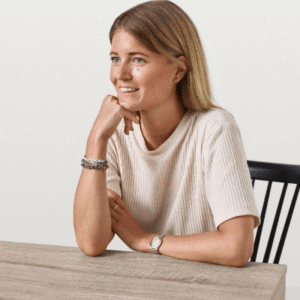
Maxine Rior, Principal at Northzone
‘We are incredibly excited to partner with spektr. They are an exceptional team with a very clear product vision, and we believe they will be able to leverage their experience from HelloFlow to build spektr into a category-defining company within the compliance space,’ Northzone’s principal Maxine Rior shares.
‘Their execution power and strategic understanding of the financial compliance market are profoundly impressive,’ PreSeed Ventures’ general partner Alexander Viterbo-Horten adds.
That earlier venture proved instrumental in shaping Spektr’s direction. Rather than exposing a lack of digital tools, the founders say their experience highlighted a different problem. Financial institutions had already invested heavily in workflow software and compliance data providers, yet analysts continued to perform much of the investigative work manually. Gathering information, validating business activities, mapping ownership structures and preparing documentation remained largely human-driven tasks. It was this observation that became the starting point for spektr.
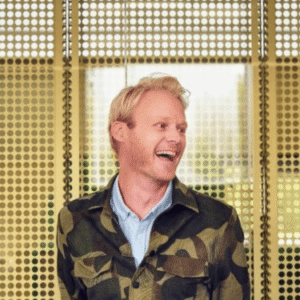
Alexander Viterbo-Horten, General Partner at PreSeed Ventures (PSV)
‘When we started this company, we weren’t entirely sure the world would get it. We’d spent years watching brilliant compliance professionals – smart, careful people – spend most of their days copy-pasting company names into search bars, scrolling through PDFs, and rewriting the same risk rationale for the hundredth time. It felt wrong. Not just inefficient, but like a genuine waste of human potential. That frustration is where spektr came from, and it’s what has kept us going on the hard days,’ Mr Skarnager recalls.
Rethinking Manual Work in Financial Services
Indeed, financial institutions have spent years digitizing compliance. Yet despite increasingly sophisticated software, much of the work behind KYC, KYB, and ongoing due diligence remains surprisingly manual. Compliance analysts still spend hours researching companies, verifying ownership structures, collecting evidence and documenting risk assessments before a decision can be made.

Mikkel Skarnager, Co-Founder and CEO at spektr
‘Compliance technology has mostly focused on workflow and data collection. But the real bottleneck has always been the work itself — analysts researching companies, interpreting information, and documenting decisions,’ the CEO continues.
Copenhagen-based spektr believes AI is finally capable of changing that. The spektr team believes that previous generations of compliance technology had focused primarily on workflows and data collection, while leaving the actual work untouched. The startup’s ambition is to automate that underlying investigative process through AI agents capable of researching, verifying and preparing compliance cases before they reach human specialists.
The distinction is subtle but significant. Rather than positioning AI as a replacement for compliance professionals, spektr frames it as a way to eliminate repetitive operational work while allowing experts to focus on judgment and higher-risk decisions. It is a message that reflects a broader shift taking place across enterprise software, where AI is increasingly expected to execute tasks rather than simply assist with them.
Building Trustworthy AI for Regulated Industries
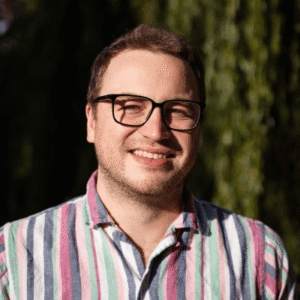
Ciprian Florescu, Co-Founder and CTO at spektr
Building those capabilities for financial institutions, however, presents challenges that extend well beyond model performance. Unlike many enterprise AI applications, compliance systems must operate within strict regulatory frameworks. Every recommendation or assessment must be explainable, supported by evidence and suitable for internal governance and external audits. For banks and fintech companies, transparency is not an optional feature but a regulatory requirement.
This focus on explainability has shaped spektr’s technical approach from the outset. Instead of presenting AI as an autonomous decision-maker, the company describes its platform as infrastructure that helps compliance teams perform investigations more efficiently while maintaining oversight and accountability. Human reviewers remain responsible for final decisions, with AI acting as an assistant capable of gathering information, organizing evidence and preparing structured analyses.
A Competitive Edge Beyond Foundation Models
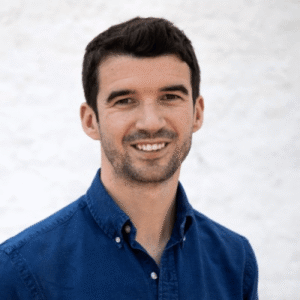
Tom Wilson, Partner at Seedcamp
A positioning like this may also become one of spektr’s competitive advantages. As foundation models become increasingly accessible, many software companies question the persistent defensibility of their own products. Spektr’s answer is that the value lies not in access to AI models themselves, but in combining those models with in-depth compliance expertise, regulatory knowledge and enterprise-grade infrastructure capable of operating in highly regulated environments.
According to the company, the platform already serves customers including such household names as Monta, Mercuryo, Phantom, Pleo, and Santander Leasing.
‘We’re delighted to have the opportunity to back Mikkel and Ciprian as they go again with spektr. The HelloFlow journey gave us a taste of the market-leading products they can build and we’re excited to see where they can take spektr, building on that experience,’ Seedcamp’s partner Tom Wilson remarks.
Scaling the Platform Post-Series A

Luke Pappas, Partner at New Enterprise Associates (NEA)
The company has closed its USD 20M Series A financing round to expand its AI platform and accelerate adoption among financial institutions globally. The funding arrives at a time when regulators and financial institutions alike are exploring how AI can be adopted responsibly in highly regulated environments. While enthusiasm around generative AI has spread rapidly across industries, compliance has remained one of the sectors where trust, governance and explainability are likely to determine the pace of adoption as much as technological capability itself.
‘Closing this round with NEA leading and our existing investors doubling down means more than the number. It means we get to keep building the thing we actually believe in: a world where compliance teams wake up and spend their time making real decisions, not drowning in data collection,’ Mr Skarnager shares.
‘spektr is tackling the most manual part of compliance operations in financial services. Their approach has the potential to redefine how compliance operations are run,’ New Enterprise Associates partner Luke Pappas concludes.
For Spektr, the next phase will therefore involve more than expanding internationally or onboarding new customers. The company will need to demonstrate that AI can consistently reduce operational workload while meeting the rigorous standards expected by regulators and enterprise compliance teams. If successful, it is posed to signal a broader transformation in how compliance work is performed—one driven not simply by better software, but by systems capable of carrying out meaningful portions of the work itself.
Kostiantyn is a freelance writer from Crimea but based in Lviv. He loves writing about IT and high tech because those topics are always upbeat and he’s an inherent optimist!