

- Pickmybrain received USD 2.1M of Pre-Seed funding to build AI-powered digital twin platform for experts
- Founded as asynchronous video platform, Pickmybrain evolved into AI knowledge aggregation system
- Experts monetize knowledge via subscriptions and optional live interactions
- With the new investment, Pickmybrain aims global expansion, scaling its portable AI brains and preserving expert knowledge
This April, Pickmybrain—the Estonian AI platform for creating monetizable digital twins of experts—raised its USD 2.1M Pre-Seed round backed by investment platform Raison.app, angel investor Garri Zmudze of the Longevity Science Foundation, and more undisclosed investors.
From Video to AI: Scaling Expert Knowledge Globally
Founded in 2022 by Sergei Verbitski and his team, Pickmybrain (formerly WOIS.io) started as a platform for connecting people with experts and has evolved into an AI-powered system that turns professionals’ knowledge into personalized ‘Digital Brains.’ The startup built traction by combining AI-generated answers with direct expert access through asynchronous video, attracting more than 1,000 professionals across business, sports, and entertainment.
Essentially, Pickmybrain is a platform that enables experts to turn their knowledge, experience, and communication style into AI-powered Digital Brains that can answer questions on their behalf 24/7. It combines these AI models with structured access to the real expert, including asynchronous messaging and video responses for higher-value or complex requests. The company’s goal is to help professionals monetize their expertise at scale while providing users with on-demand access to personalized, expert-level insights.
ITKeyMedia sat down with Mr Verbitski to dive deeper into Pickmybrain’s offering, ethos, and vision:
What is the background of Pickmybrain’s founding team? What particular trigger inspired them that a solution like this was needed and convinced them that they were the right people to deliver it?
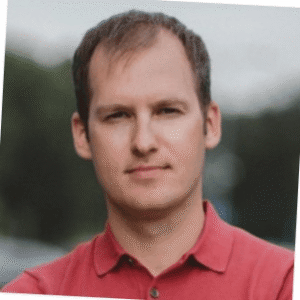
Sergei Verbitski, Founder and CEO at Pickmybrain
Sergei Verbitski: PickMyBrain came from something deeply personal. I have built around 20 companies in my life, and four of them became truly successful. Along the way, I collected a lot of experiences that shaped how I see life and business. I always felt I had stories worth sharing.
But I also knew two things about myself. First, I am not a natural social media person or influencer. Second, I am a slow storyteller. In an era of hooks, short clips, and shrinking attention spans, people like me often never get properly heard. Not because we have nothing to say, but because the format of the internet rewards speed over depth.
The realization that I did not want these experiences to disappear pushed me to start this company. I wanted to leave something meaningful behind and capture what I had learned before moving forward to new chapters of life.
At the same time, I kept noticing how many extraordinary people were around me whose stories, lessons, and hard-earned wisdom would also likely never be told — because they were busy, private, not ‘content creators,’ or just not built for algorithm-driven platforms.
That became the trigger: why is there no place where remarkable people can simply share what they know, in their own way, without needing to become influencers?
What makes us the right team to build this is the fact that this problem was never theoretical for us. We understand both sides: the people who have real stories, knowledge, and perspective to share, and the modern internet formats that often fail to serve them. Pickmybrain was built to close that gap: to help bright minds preserve their knowledge, share it authentically, and make it accessible to others in a way that fits who they really are.
How would you summarize Pickmybrain’s history so far in the main milestones you’ve covered and challenges you’ve overcome?
SV: The idea started around four years ago, before ChatGPT and before AI became mainstream. At the time, the original vision was to build an asynchronous video platform — something like Clubhouse, but with video for authenticity, and asynchronous by design so people could share thoughtful answers once instead of repeating themselves again and again.
We discovered that video is much harder for most people than it seems. Many people feel shy on camera, dislike how they look or sound, or simply feel uncomfortable recording themselves. Further, raw, unedited video is difficult to consume in a world shaped by TikTok and Instagram. Without hooks, editing, and fast pacing, even valuable stories can be overlooked, especially when the audience doesn’t know the person yet.
Rethinking the format but not the mission, we realized that most interesting people had already shared parts of their knowledge somewhere else: in articles, notes, podcasts, interviews, books, or old posts scattered across the internet. Instead of asking them to create from scratch, we started thinking about how to organize and unlock all of that existing knowledge, combining it with new insights they could still add over time.
When AI arrived in the form we now know today, it became a huge turning point for us. PickMyBrain evolved into an AI-powered library of knowledge — essentially a way to search across a person’s body of work, ask questions in any language, and get answers grounded in their original materials, with links back to the source.
At the same time, we wanted to avoid becoming ‘just another AI chat product.’ Obsessed with real people, real stories, and authentic human perspective, we kept building around that idea. Since video had always been part of our DNA, we introduced asynchronous 1:1 video questions, allowing users not only to interact with someone’s Digital Brain instantly, but also to ask the real person directly when they wanted a personal answer.
The next challenge was to make this scalable and sustainable for both us and the experts. That led us to build monetization into the product itself. Experts can now offer subscriptions to their Digital Brain, charge for exclusive or private content, and monetize direct 1:1 access — all asynchronously, in a way that respects their time.
This shift also opened the door to bringing larger creators and influencers onto the platform, because now PickMyBrain was not only a place to preserve and share knowledge, but also a real business tool for experts.
How do you measure and verify the fidelity of a Digital Brain, i.e. how accurately it represents the expert’s thinking rather than just their content?
SV: The value of a Digital Brain is not just in how much content it has, but in how faithfully it reflects the person behind it. So, fidelity starts with how the Digital Brain is built. There are two main paths:
- either the expert builds it themselves through our self-service platform,
- or we help build it for them in a more hands-on way.
In both cases, the goal is the same: not just to upload information, but to shape a system that captures how this person thinks, explains, prioritizes, and responds.
If experts are building it themselves, we empower them with many tools to educate their Digital Brain using their real body of knowledge. For example, they can simply add a link to their personal website, a YouTube interview, an article, a note, or other source materials. We automatically process and transcribe this information, use it to train the Digital Brain, and also generate a short summary of each piece of content. That way, the expert can clearly see what was added to the knowledge base in a concise form, even if the original material is long, such as a book, an interview, or an extended note.
We also generate several sample questions, usually three to five, based on each added material. This helps in two ways:
- First, it makes the content more accessible to end users, because they do not have to guess what to ask.
- Second, it gives the expert a practical way to see how the Digital Brain interprets and surfaces their knowledge.
In other words, it is not only about ingesting content, but also about checking whether the system is turning that content into the kinds of questions and answers that feel natural and relevant.
Another important layer is personalization. Experts shape the response style and behavior of their Digital Brain. They can make answers shorter and more precise, or longer and more detailed. They can define the role or tone the AI should take: for example, to sound like themselves, or to communicate in a more advisory, educational, or sales-oriented way. These settings matter because fidelity is not only about factual correctness. It is also about whether the response feels aligned with the expert’s real voice and intent.
Finally, our inbox for the owner of the Digital Brain is where they can see the actual questions people ask and the answers the system provides. In this ongoing feedback loop, experts can review what their Digital Brain is saying, step in personally when needed, and add comments or improvements over time. So verification begins at setup and continues in real usage.
In practice, fidelity is a combination of four things:
- the quality of source material,
- the way that material is structured and summarized,
- the response settings chosen by the expert,
- and the expert’s own ability to monitor and refine the outputs over time.
Rather than treating a Digital Brain as a static AI profile, it’s a living system that becomes more accurate as the expert adds more source material, shapes its behavior, and stays involved in the loop. That is how it represents the expert’s thinking, not just their content.
What surprising user behaviors have emerged when people interact with Digital Brains VS real experts? How has that changed your product roadmap?
SV: The most surprising thing wasn’t how people used the product. It was how they felt while using it. I expected quick, transactional interactions. I got something much more intimate. People went deep. They asked the questions they’d been afraid to ask in real life. They used the Digital Mind as a thinking partner — a space where they could be honest about their confusion, their fears, their real situation, without the social stakes of a live conversation.
One pattern that moved me: people weren’t just looking for information. They were looking for permission to trust their own instinct and take the unconventional path. Receiving it from a mind they deeply respected — even through a Digital Brain — landed in a way that reading the same idea in a book never had.
The other thing we didn’t anticipate was what I call the bridge effect. A significant number of users who started with a Digital Mind ended up booking live sessions with the actual expert. The Digital Mind didn’t reduce demand for the human — it amplified it. Once people had a taste of how this person thinks, they wanted more — the real conversation.
That changed our roadmap profoundly. The Digital Brains and the live sessions were no longer two separate products. They’re one continuous relationship – with the Digital Brain as the always-available first chapter, and the live session as the moment when the relationship deepens.
Do you have to take measures to prevent users from over-trusting AI-generated expert advice, especially in high-stakes domains like health, finance, or legal guidance?
SV: Our approach starts with clarity. Every interaction is explicitly framed as an expert’s perspective and experience, not professional advice, front and center.
But the design principle I care most about is this: we want to increase a user’s capacity to think, not replace it. The ultimate outcome of a Pickmybrain interaction isn’t ‘I have my answer.’ It’s ‘I now understand the landscape well enough to make my own decision, and I know the right questions to ask a professional.’
If frontier AI labs release native expert persona features, what remains your defensible moat?
SV: Our moat is not tech. Any startup in 2026 that claims its moat is purely technological is either naive or not being straight with you. The models improve constantly. The infrastructure commoditizes. Technology is the table stakes, not the edge.
Our moat is our experts themselves, the relationships we’ve built, the trust we’ve earned, the depth of knowledge we’ve captured together. When Peter Vesterbacka, Paul Pogba, or Bozoma Saint John chose Pickmybrain, that wasn’t a transaction but a decision about where they wanted their legacy to live. Such relationships are not something a foundation model ships in a product update.
Another layer is our hybrid model. We’re not building a pure AI product but the infrastructure for meaningful human connection at scale. The live 1:1 layer, the relationship between Digital Brain and real person, the journey from curiosity to genuine conversation. AI labs build intelligence, while Pickmybrain builds the relationship ecosystem around it.
Finally, there’s trust. Experts trust us with their intellectual legacy. Users trust that what they’re getting is real. That trust is accumulated in thousands of small moments of integrity, over years. It cannot be acquired or replicated quickly.
Do you anticipate experts to demand portability or control over their Digital Brains outside your platform eventually?
SV: In fact, we already support embedding a Digital Brain into experts’ own environments, such as their websites, chats, apps, and other touchpoints. Our broader view is that the Digital Brain should live wherever the expert and their audience already are. That’s why we are now building a more agent-based functionality, so it can operate directly across a user’s own workspace, messengers, and similar platforms and environments.
Over time, this becomes even more powerful when the Digital Brain is able to learn not only from the expert’s uploaded knowledge, but also from the context they choose to share from their own ecosystem, for example local news, weather, health data from Apple Health, and other personal or workflow-related signals. In that model, it becomes much less of a platform feature and much more of a personal, portable intelligence layer.
Is there a risk that scaling expertise via AI ultimately commoditizes it, driving prices down rather than increasing earnings for experts?
SV: The experts getting commoditized by AI are those whose value was primarily in delivering information. If your edge is knowing something that can be googled, AI compresses that edge. That’s true and it’s fair.
Pickmybrain’s experts, on the other hand, aren’t information repositories. They’re judgment holders. Pattern recognizers. People whose value comes from decades of being wrong, recovering, adapting, and arriving at a way of seeing the world that cannot be easily synthesized from public data.
For such experts, we don’t believe we’re commoditizing their wisdom. Instead, we’re helping it reach the people it was always meant to reach but never could. We expand the market. We don’t compress it.
And there’s something deeper: when we preserve someone’s thinking, when we build their Digital Brain with care and depth, — we’re not just creating a product. We’re ensuring that what they learned, what they built, what they believed, outlives the physical limits of their time on Earth. That’s the opposite of commoditization.
The new funding is intended to help Pickmybrain grow its AI-powered Digital Brains platform worldwide. It enables the startup to expand its team, move into new markets, and continue improving its system that blends AI with human expertise. The company aims to strengthen its position at the intersection of the creator economy and the emerging expert economy with the core idea of turning individual knowledge into scalable and monetizable digital assets.
Pickmybrain is tackling a challenge that extends beyond technology: preserving and scaling human knowledge in a way that remains personal, authentic, and accessible. As AI makes information increasingly abundant, the company’s focus on capturing individual judgment, experience, and perspective highlights the growing value of expertise itself rather than knowledge alone. This Estonian startup is poised to help shape a future where experts can share their insights with far larger audiences while maintaining meaningful human connections.

Kostiantyn is a freelance writer from Crimea but based in Lviv. He loves writing about IT and high tech because those topics are always upbeat and he’s an inherent optimist!