
- Drone startup Monopulse raised EUR 2M+ from Lithuanian and international VC funds and business angels to accelerate growth
- Its Falcon MK3S advances reconnaissance capabilities, while HydroHex expands the company’s portfolio into amphibious unmanned platforms
- In-house assembly, selective outsourcing, and disciplined spending support manufacturing scalability without compromising reliability or product quality
- Following the investment, Monopulse plans to scale production, develop new platforms, and expand across European markets
This October, the well-known Lithuanian-Danish drone manufacturer MNP Technologijos / Monopulse has raised more than EUR 2 million from local and international investors to scale production, develop new unmanned platforms, and expand into additional European markets. The funding comes less than a year after the company outlined plans to strengthen its manufacturing footprint and pursue civilian applications alongside its defence business. Since then, Monopulse has launched an upgraded reconnaissance drone, established facilities in Lithuania and Denmark, and begun deploying its technology with a critical infrastructure operator.
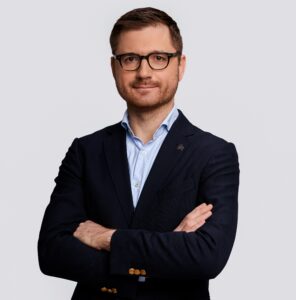
Dr Justas Poderys, Founder and CEO at Monopulse
This latest round is led by the well-known early-stage VC fund CoInvest Capital (invested in Tingit, among others), with additional participation from another renowned Lithuanian fund NGL Ventures (invested in WhiteBridge AI, among others), 68 individual business angels, investors from the Lithuanian Business Angel Network (LitBAN), and Silicon Valley-based Plug and Play Ventures. Monopulse will use the new capital to increase production capacity, support research and development, and accelerate its entry into Scandinavia, Germany, France, and the Netherlands.
The company’s recent growth has been driven primarily by large government orders, according to co-founder and CEO Dr Justas Poderys. The revenue more than tripled last year, while the company raised a relatively small amount of external capital, a combination that Plug and Play’s Head of Baltic Povilas Žinys sees as evidence of the team’s ability to deploy funding efficiently. Working capital financing from Lithuanian National Development Bank ILTE also helped Monopulse fulfil orders without relying exclusively on equity investment.
‘We recognise that this growth sets a high bar for the years ahead, but we have a very capable sales team,’ Dr Poderys tells ITKeyMedia. He is also conscious that scaling production and entering new markets can quickly increase operating costs, making spending discipline central to the next phase. ‘We want spending to support sustainable growth, with a clear purpose behind each significant investment,’ he emphasizes, pointing to the need to assess the expected return on major purchases and overseas commercial activities.
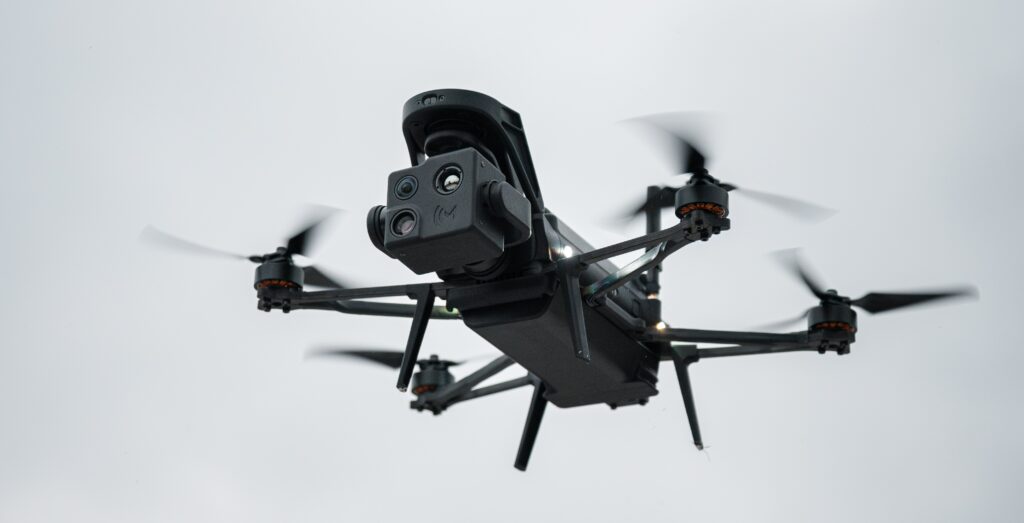
Monopulse’s Falcon
From Falcon Upgrades to a Broader Product Portfolio
One of the company’s main milestones since its previous funding announcement has been the release of the Falcon MK3S, an unmanned aircraft designed for surveillance and reconnaissance missions. The NATO Class I (Mini) platform supports multiple camera options, including night vision, and features improved performance in environments where Global Navigation Satellite System (GNSS) signals are unavailable or disrupted. The new version also adds connectivity for external accessories, allowing operators to configure the aircraft more closely around specific mission requirements.

Povilas Žinys, Director at Plug and Play Lithuania
Monopulse’s drones are already used by the armed forces of several NATO countries, including Lithuania and Denmark, according to its investors. Mr Žinys highlights the company’s ability to combine engineering expertise with an understanding of military requirements, noting that its products have progressed beyond the prototype stage into operational use. He also points to the team’s work on electronic-warfare-resilient reconnaissance capabilities as a reason the company has attracted investor interest.
The manufacturer is developing a second platform, HydroHex, intended to operate both in the air and on the water. The product line now includes HydroHex7 for inland waters and rivers, and HydroHex10 for nearshore operations, where saltwater exposure creates additional challenges around sealing, corrosion resistance, and long-term reliability. Rather than announcing a firm launch date, Monopulse is working with prospective customers ranging from smaller national organisations to major international prime contractors to validate the platforms against operational requirements.
‘Decisions that benefit performance in the air can introduce compromises on the water, and vice versa,’ Dr Poderys points out. The team is accountable for both operating environments throughout the design process, particularly when developing a platform expected to transition between them. Customer validation is therefore the immediate priority, with delivery timing dependent on how well the designs meet the needs of prospective users.
Manufacturing Control Without Making Everything In-House
Alongside product development, Monopulse has established facilities in Lithuania and Denmark. Finding suitable premises proved more difficult than the physical deployment itself, Dr Poderys recalls, because the company needed space that could accommodate production, workshop activities, research and development, and office functions under one roof. The experience has reinforced the importance of choosing facilities around the requirements of the entire business rather than treating manufacturing space as an extension of a conventional office.
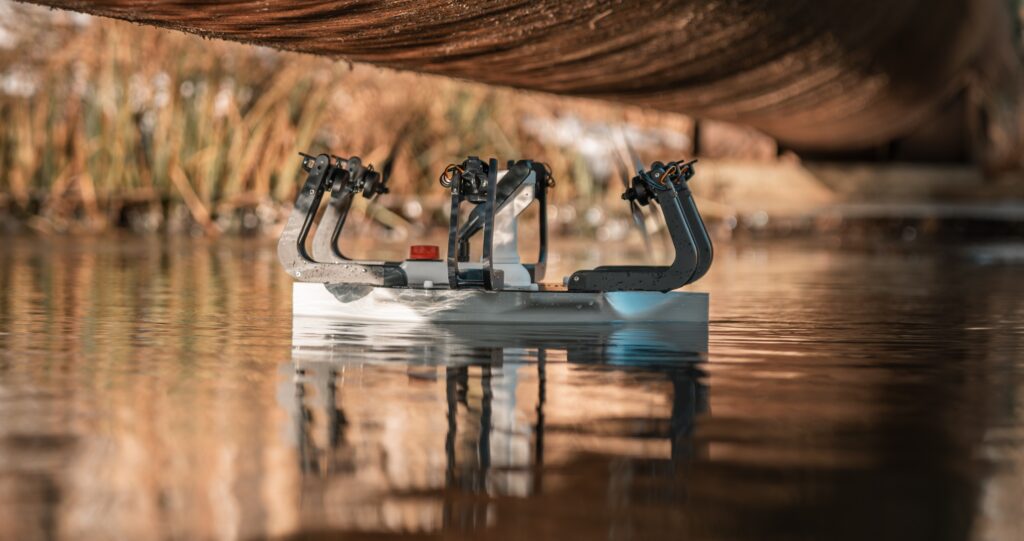
Monopulse’s HydroHex
Monopulse assembles its platforms in-house, including motors built from pre-manufactured components supplied by partner factories. Remote controllers are the main exception, produced by an original equipment manufacturer to the company’s specifications, while specialist suppliers continue to provide selected components. Dr Poderys distinguishes this approach from manufacturing every individual part internally, arguing that control over assembly and system integration can provide oversight without requiring the company to replicate its suppliers’ industrial capabilities.
The company maintains different product configurations to accommodate customers with different priorities. Some are prepared to accept higher costs and less mature technology in exchange for access to the latest capabilities, while others prefer proven components and thoroughly tested performance.
‘We do not need to put every new technology into every configuration immediately,’ Dr Poderys notes, explaining that development speed must be balanced against manufacturing consistency, reliability and cost.
Defence Contracts Create a Route into Civilian Markets
Although defence remains central to Monopulse’s business, the company has also begun moving into civilian applications. Its products are already being used by a critical infrastructure operator, providing an initial commercial foothold outside military procurement. The deployment has also exposed differences in customer expectations, operating procedures and support requirements that the company is now incorporating into its approach.
‘Moving from military to civilian applications is not as straightforward as it might appear,’ Dr Poderys explains. Even where the underlying technology is suitable for both, the way a product is delivered, operated and supported may need to change. The experience could be relevant as Monopulse pursues opportunities in infrastructure monitoring, security and emergency response, although the company has not disclosed specific targets or timelines for these segments.

Viktorija Trimbel, Managing Director at CoInvest Capital
CoInvest Capital sees this combination of defence demand and potential civilian applications as an important part of the investment case. The fund’s managing director Viktorija Trimbel argues that the company is addressing a capability gap confirmed by end users, rather than developing technology in search of a market. She also points to Monopulse’s location in Lithuania, on NATO’s eastern flank, as a source of credibility as European governments seek suppliers able to deliver quickly and strengthen regional supply chains.
‘The technology can be integrated into wider systems for air defence, counter-drone or critical infrastructure protection, which opens a path well beyond the home market,’ Ms Trimbel adds. In her view, Monopulse’s ability to combine a locally developed product with international partnerships could help it become a more significant part of Europe’s defence supply chain. This opportunity will depend on the company’s ability to convert interest from prospective customers into repeat orders while meeting the operational and procurement requirements of each market.
Scaling Across Europe
Monopulse’s immediate international focus is Scandinavia, where it is building on its presence in Denmark, followed by expansion into Germany, France, and the Netherlands. Dr Poderys attributes the opportunity to shared security concerns and a common geopolitical environment, while cautioning that similar requirements don’t make procurement processes identical. Understanding local business practices and customer expectations will therefore be as important as having a relevant product.

Roberta Rudokienė, Managing Director at Lithuanian Business Angels Network LitBAN
LitBAN Managing Director Roberta Rudokienė describes the company as an investment opportunity shaped by its founding team, growth potential, and position in one of Europe’s most active technology sectors. Mr Žinys likewise highlights the combination of engineers, researchers and former military personnel in Monopulse’s 14-person team, which he believes gives it a practical understanding of both technical design and frontline requirements. For investors, such a combination offers a basis for expansion, but the company still needs to build the production and commercial capacity required to serve a larger international customer base.
‘What convinced us most was Monopulse’s commercial progress and the team’s ability to deploy capital effectively. Last year, the company more than tripled its revenue while raising a relatively small amount of external capital. Its technology is no longer just a prototype: the Falcon drones developed by Monopulse are already being used by the armed forces of several NATO countries. More importantly, the team continues to develop new products and has a growing pipeline of orders,’ NGL Ventures’ founder and CEO Justinas Pašys agrees.

Justinas Pašys, Founder and CEO at NGL
The longer-term ambition is to become a one-stop provider for government customers’ multicopter needs. Dr Poderys frames that goal around two complementary areas: operational capability, including testing, training and use in the field, and support across the mission chain, from surveillance through engagement to post-engagement damage assessment. Over the next two to three years, he expects Monopulse to bring a broader range of products and services together, supported by the manufacturing capacity, engineering capabilities and international presence needed to deliver them.
The new funding provides additional resources for this expansion, but the company refrains from disclosing a detailed timetable or individual milestones for deploying the capital. Its next test will be to scale production without sacrificing reliability, turn HydroHex from a customer-validation project into a commercial offering, and extend its reach beyond existing defence customers. After Monopulse delivers on those priorities, this round could help it evolve from a growing regional drone manufacturer into a broader supplier of unmanned systems for European government and infrastructure customers.

Kostiantyn is a freelance writer from Crimea but based in Lviv. He loves writing about IT and high tech because those topics are always upbeat and he’s an inherent optimist!