


- AceON Accelerator selected JST 3D as the winning solution among its highly competitive 5th cohort
- JST 3D uses AI to transform CT scans into high-precision interactive 3D models
- The technology improves surgical planning by revealing anatomical details beyond human vision
- The startup’s ambitions encompass scaling its tech stack infrastructure, market expansion, and AR/VR and robotic integrations
Last December, the well-known AceON Accelerator concluded its most recent international cohort, drawing a record-breaking wave of applications from founders in 49 countries. From this diverse global talent pool, startups representing 16 countries were chosen for the two-month acceleration program. The journey ended with a virtual Demo Day, where 23 startups presented their innovations to AceON’s investment committee. Among them, one company stood out and secured an investment of EUR 40K as the winner’s prize: JST 3D, addressing a growing global healthcare challenge—the surge in CT and MRI scans and the demand for faster, more precise medical image analysis.
AceON Accelerator in a Nutshell
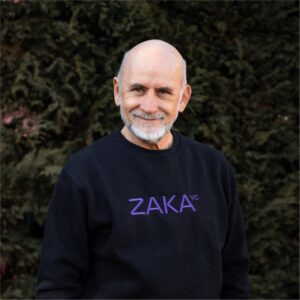
Ján Kasper, Co-Founder and Managing Partner at ZAKA VC, Co-Founder at AceON Accelerator
Organized by Accace and the famous Czech investment firm ZAKA VC (invested in Nephrogen, among others), AceON Accelerator is an international startup acceleration program that supports early-stage founders in building scalable, investment-ready companies. It provides selected startups with mentorship, strategic guidance, and access to a global network of investors and industry experts through an intensive, time-bound program. The accelerator programs culminate in Demo Day where startups pitch their solutions to AceON’s investment committee for potential funding.
‘The 5th batch of AceON once again shows that more and more founders we work with understand that real success requires a global mindset from day one. They are building solutions with genuine worldwide potential, and it’s inspiring to see this ambition so early on. Our role is to be their first believer – supporting them at the earliest stage with know-how, connections, and capital, and helping them take the next confident step toward sustainable growth,’ ZAKA VC’s and managing partner / AceON Accelerator’s co-founder Ján Kasper states.
The Team Behind the Winning Startup
JST 3D’s founding team consists of Simone Macchi, Alberto Regalia, and Giacomo Gaglione. Their background combines interdisciplinary academic and professional expertise, contributing a wide array of competences in such sectors as the development of generative AI applications and complex AI-powered models, as well as corporate finance and the legal aspects of technological innovation. The medical developments that gave rise to JST 3D’s entrepreneurial idea, its product, and its clinical application were brought to life in a joint effort with the startup’s medical advisor who had been conducting academic research in the past years, on the digital transformation of medical processes relating to image diagnostics applied for the abdominal surgery.
‘JST 3D’s primary objective is to equip surgeons and radiologists with advanced digital tools improving the analysis of radiological examinations. Specifically, we developed an AI-powered application transforming standard computed-tomography (CT) scans into highly accurate and interactive 3D models. This software offers significantly improved visualisation of different organs and other anatomical structures, thus supporting surgeons and radiologists as they formulate the diagnosis and subsequently prepare surgical procedures, notably including oncological surgeries,’ Mr Macchi tells ITKeyMedia.
Why It Wasn’t Possible Before

Giacomo Gaglione, Co-Founder at JST 3D
As it appears, the barriers preventing such AI-powered solutions from developing previously primarily related to the relatively limited public availability of abdominal CT scans for AI to learn from and the consequent absence of a fully-automated solution for the generation of 3D models from standard CT scans.
‘In this sense, the presently available solutions for 3D reconstructions of various organs and anatomical structures available still rely on human ‘handcrafting’. They are mostly performed manually, which drives up their price considerably. Furthermore, there are specific features relating to organs in the urinary tract which make it more complex to execute 3D reconstruction of these anatomical structures. It’s worth pointing out that these organs are characterized by a variety of tissues which are more complex to identify accurately than those in other organs,’ Mr Gaglione specifies.
What Makes JST 3D the Winning Solution
According to Peter Pašek, managing director and partner at Accace Slovakia / co-founder of AceON Accelerator, the jury’s decision to invest in JST 3D was driven by the strength of their core technology.
‘Their AI can reveal anatomical details that are invisible to the human eye and translate standard CT scans into actionable 3D models, giving clinicians a powerful new tool to improve surgical planning and patient outcomes,’ Mr Pašek explains.
Scaling the Technology and the Market
The JST 3D team shares that they will use a significant part of the received funds on the enhancement of the technological infrastructure behind their AI model, as well as the scalability and of the product to cover more anatomical structures. Another part of the funds will help JST 3D deepen its national market penetration by personally participating in specialised medical events and by setting up demo days showcasing the startup’s product to potential clients, such as private clinics and public health structures.
Visions of the Future of Medical Imaging

Peter Pašek, Managing Director and Partner at Accace Slovakia, Co-Founder of AceON Accelerator
‘Another startup, MedBit, joined the accelerator program and tackles a problem that is structurally adjacent to JST’s, yet from a complementary angle, focusing on detecting morphological changes over time of a pathology and turning them into interpretable visual narratives. Putting it briefly, JST 3D zooms into getting accurate 3D reconstructions of organs and tissues from CT scans, while MedBit considers the understanding of how tissues change over time. This feature aligns well with JST 3D’s goal of moving beyond raw segmentation towards surgical-grade planning tools,’ Mr Macchi adds.
Going further, JST 3D commits to exploring more solutions to boost the operational capacity of its AI model, including its integration with AR/VR for educational purposes, as well as with existing robotic tools for assisted surgery.
JST 3D’s work highlights how advanced AI can meaningfully transform medical imaging by aiding clinicians with faster, clearer, and more actionable insights for complex surgical decisions. AceON Accelerator’s support underscores both the technical strength of the startup’s solution and the growing importance of scalable AI-driven tools in modern healthcare. This recognition positions JST 3D as a promising contributor to improving patient outcomes while shaping the future of surgical planning and radiological analysis.

Kostiantyn is a freelance writer from Crimea but based in Lviv. He loves writing about IT and high tech because those topics are always upbeat and he’s an inherent optimist!