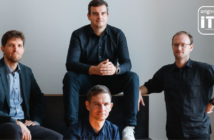


- KLIPY has evolved from GIF discovery into infrastructure for digital expression
- Its ecosystem now spans billions of searches, developers, creators, and major platforms
- AI is shifting KLIPY’s moat toward relevance, trust, distribution, and cultural context
- Following new funding, KLIPY plans expanded distribution, monetization, AI capabilities, and creator tools
For KLIPY, the past year has changed the scale of the problem that it is trying to solve. The startup began by helping people find and share GIFs, memes, and other short-form media, now describes itself as an infrastructure layer connecting developers, creators, platforms, and advertisers around digital expression. This June, KLIPY secured USD 3.8M and joined Google’s AI Futures Fund as it pushes that vision further into AI-powered search, creation, monetization and interactive experiences.
From GIF Search to Billions of Monthly Searches
The company says its infrastructure now serves more than 7 billion searches a month, with more than 19,000 developers and 170,000 creators in its ecosystem. Its distribution has expanded across platforms including Discord, Microsoft, and BeReal, while the company has also launched KLIPY Ads Manager and moved into mini-games and interactive formats.
‘Our ambition is clear: we are building the AI expression layer for the internet,’ KLIPY’s co-founder and CEO Givi Beridze explains. ‘Every app where people communicate should give them the ability to find, create, and share exactly what they want to express.’
Tenor’s Exit Opened a Strategic Window
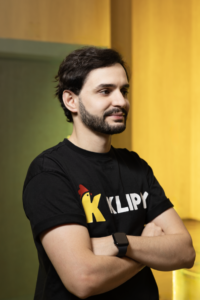
Givi Beridze, Co-Founder and CEO at KLIPY
Such an expansion comes at a particularly fortunate moment for KLIPY, as Google winds down the Tenor API that had become a standard source of GIF functionality for third-party applications. Reportedly, more than 8,500 developers and 40,000 creators had migrated to KLIPY since January 2026, while the company’s pitch deck claims a 2:1 advantage in share rates against other APIs based on partner A/B tests.
The connection to Tenor is more than a market-timing story because KLIPY’s founding team includes Frank Nawabi, who co-founded Tenor before Google acquired it in 2018. ‘At Tenor, we created the largest GIF-sharing platform and pioneered the very first sponsored GIF,’ Mr Nawabi recalls. ‘Now, KLIPY is building a next-generation ‘expression layer’ for the AI era that combines search, AI, and monetization into a unified API platform, with tools for content rights holders and creators to distribute and manage short-form media at scale.’
Infrastructure Around Digital Expression
That history gives KLIPY a particular perspective on what happens when a seemingly lightweight communication format becomes infrastructure for other products. Today, the company’s API supports expressive media across social and creative platforms, while its broader platform gives creators, brands, and other rights holders ways to distribute and manage content. Its library contains more than 10 million short-form assets, supports more than 39 languages, and is increasingly supplemented by AI-powered creation, search, and moderation.
The company’s original monetization thesis has also evolved since ITKeyMedia covered KLIPY in 2025, when contextual advertising was presented as a way to turn high-volume GIF engagement into revenue. Today, Mr Beridze argues that the harder problem is not finding advertising inventory, but building the commercial machinery around it.
‘The biggest lesson is that distribution creates the opportunity, but the commercial infrastructure determines how much of it you capture,’ he notes. ‘A search for a reaction carries immediate context: what someone wants to express at that moment, but turning that opportunity into a business requires the right formats, advertiser demand, measurement, and a good experience for the platform and its users.’
KLIPY is therefore developing several revenue channels rather than relying solely on contextual advertising. Its model now combines programmatic demand, direct campaigns through KLIPY Ads Manager, and paid enterprise relationships with platforms, with the June funding intended partly to expand monetization and creative tools. The company has already put the advertising proposition into practice, naming Sony Pictures as a launch partner for an Ads Manager campaign around Spider-Man: Brand New Day.
AI Changes the Content Equation, Distribution, Data, and Cultural Relevance
The central challenge is changing too, because AI can make the supply of memes, GIFs, and stickers effectively limitless. In that environment, KLIPY believes the valuable infrastructure is no longer simply a large content library, but the ability to determine what is relevant, trustworthy and useful in a particular interaction.
‘Our moat is the connection between distribution, relevance, and the ecosystem around them,’ Mr Beridze argues. ‘Generating an image is becoming easier, but getting the right expression into the right moment across the apps people already use remains a much bigger problem.’
This creates a different role for KLIPY’s data and distribution network. Billions of searches provide signals about what people are trying to express across languages and markets, while developer integrations provide access to the moments when that expression is actually needed. Creators add cultural breadth, while platform and content-owner relationships add another layer of trust, giving KLIPY an argument that its advantage should grow as AI increases the volume of available content.

Waska Chaduneli, Co-Founder and CTO at KLIPY
The problem, however, is that more content can also produce more noise, particularly as generative AI makes it cheap to create an endless stream of mediocre material. KLIPY’s co-founder and CTO Waska Chaduneli argues that the company’s answer has to combine automated systems with human judgment rather than treating volume as a proxy for quality: ‘We approach this through moderation, relevance, and cultural context. Our moderation combines automated systems and human review, with content ratings and filtering controls that let platforms choose what fits their audiences.’
Scaling Across Cultures and Markets
Cultural relevance becomes particularly important for a company built to operate across markets. An expression that works in one language or community may carry a completely different meaning somewhere else, making localization and creator diversity part of the infrastructure rather than a secondary feature.
Mr Chaduneli points to the international operating model as one of the advantages KLIPY developed by building from Georgia: ‘Building from Georgia taught us to treat efficiency as an engineering advantage. We had to think carefully about every infrastructure decision, every hire, and every feature, and that discipline becomes extremely valuable when you reach billions of requests.’
KLIPY has kept that efficiency mindset as its footprint has expanded between Georgia and the US, with a team of fewer than 20 people. Mr Chaduneli argues that the company’s size is deliberate rather than a limitation, although operating critical infrastructure across thousands of integrations creates new coordination challenges.
‘One assumption we challenge is that headcount is a reliable measure of progress,’ he emphasizes. ‘A small team with strong ownership and clear priorities can build infrastructure used by some of the largest platforms in the world.’
Google Brings Frontier AI Into the Strategy

Jonathan Silber, Co-Founder and Director at Googles AI Futures Fund
Google’s involvement adds another dimension to that strategy. The AI Futures Fund provides KLIPY with access not only to capital but also to Google’s frontier AI ecosystem, including early access to Gemini models, which the company is using for functions such as search and moderation.
‘The value is the combination of capital, proximity to frontier AI development, and experience operating technology at global scale,’ Mr Beridze explains. ‘For KLIPY, the opportunity is to connect advances in AI with real distribution, because we already have billions of searches and thousands of developers building with us.’
Google’s AI Futures Fund views this combination as precisely what makes KLIPY interesting. The fund’s co-founder and director Jonathan Silber frames the opportunity around a broader change in how people use digital products: ‘The way people communicate online is changing rapidly, driven by AI. Increasingly, people want to be active co-creators of content, not passive consumers, and KLIPY is building the intelligent, trusted expression layer that the next generation of apps will rely on.’
Testing the Vision Through Platform Partners, Revealing the Convergence of AI with Distribution to Investors

Jérémie Colin, Senior Android & AI-assisted Developer at BeReal
The company’s platform partners offer a more immediate test of whether that infrastructure works in everyday communication. BeReal, which uses KLIPY to support expressive content for its users, highlights the practical side of the proposition rather than the longer-term AI narrative.
‘BeReal is all about authentic expression, and KLIPY helps our users express themselves in fun, engaging, and creative ways. Their platform is purpose-built for the next generation of social connection, and the migration was quick and easy,’ BeReal’s senior Android & AI-assisted developer Jérémie Colin notes.
Sturgeon Capital, meanwhile, sees KLIPY’s position between AI, distribution and monetization as the core investment case. The fund’s partner Robin Butler argues that the company has spent the past three years building the technology and relationships necessary to capitalize on that position rather than simply chasing the latest AI trend: ‘Sturgeon invested in KLIPY because we believe that the company sits in a unique position to leverage AI to provide the users of their partner platform with an enhanced experience while supporting those platforms to monetise their distribution.’ The investor adds that the team has built a highly scalable technology stack and relationships with some of the world’s largest consumer platforms.
What’s Next?

Robin Butler, Partner at Sturgeon Capital
KLIPY’s next stage is therefore less about adding more content formats than about making its infrastructure increasingly useful to the applications that distribute expression. Over the next six to 12 months, the company plans to expand distribution, scale monetization, add more AI capabilities, simplify developer integration and give creators and studios more ways to reach audiences. Its newest AI mini-games have already grown 5.5-fold in two weeks, according to Mr Beridze.
The longer-term target is considerably more ambitious: KLIPY wants to grow from more than 7 billion monthly searches toward 90 billion over the next two years. Success will not be measured only in search volume, however, with the company also tracking revenue, partner retention, creator participation and the value its integrations generate for platforms. The end goal is for KLIPY to become the default infrastructure behind how people find, create and share visual and interactive forms of expression across the internet.
This would mark a significant evolution from the business ITKeyMedia covered back in 2025, when the opportunity was primarily framed around monetizing GIF engagement. The new proposition is broader: as AI makes content creation easier, KLIPY wants to own the infrastructure that connects an almost unlimited supply of expression with the people, platforms and moments where it becomes meaningful. In that model, the company is no longer simply helping users find the right GIF, but attempting to become the layer through which the internet decides what people can express next.

Kostiantyn is a freelance writer from Crimea but based in Lviv. He loves writing about IT and high tech because those topics are always upbeat and he’s an inherent optimist!