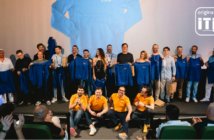


- Asternova Vest targets over 18 Seed and Series A companies from Western Romania with investments up to EUR 4M
- The new Fund addresses the region’s financing gap between pre-seed capital and Series A
- The team combines international VC expertise with regional knowledge and ecosystem-building experience
- The fund plans to accelerate portfolio companies, create jobs, help attract follow-on capital, and support international scaling
This June, a Romanian-French consortium comprising Aster Capital Partners, Iceberg+, and Venture Booster launched Asternova Vest, a regional venture capital fund targeting a total size of EUR 37M to finance startups and tech companies in Western Romania. ADR Vest, the region’s development agency, is providing more than EUR 26M as the fund’s anchor investor through the Regional West Program. Asternova Vest plans to back more than 18 companies at the Seed and Series A stages, with individual investments ranging from EUR 500K to EUR 4M.
The new fund combines Aster’s international VC expertise with the consortium’s local knowledge of innovation and entrepreneurship. Aster Capital Partners, which has been authorized by France’s Autorité des Marchés Financiers since 2002, brings more than 25 years of VC experience, having managed approximately EUR 60M across eight funds and invested in nearly 100 companies.
To Bridge Western Romania’s Funding Gap
Asternova Vest is designed to address a persistent financing gap in Romania’s startup ecosystem, particularly the difficult transition between angel or pre-seed funding and Series A. The fund will focus on companies that have already demonstrated market validation and are ready to accelerate growth, targeting sectors including software, AI, advanced industry, energy, mobility and healthcare.
Its investment focus will primarily cover Timiș, Arad, Hunedoara, and Caraș-Severin counties, while also welcoming startups willing to establish or expand their activities in the region. The initiative builds on Western Romania’s track record of successful technology companies, including the likes of Imobiliare.ro, Movidius, Tazz, and 123FormBuilder.
The investment team combines international and regional expertise, including Aster Capital’s Jean-Marc Bally and EIT Urban Mobility’s Traian Urban. The Timișoara-based executive team comprises Ionuț Țața, founder and CEO of Iceberg+, Ioana Ștefănuț, co-founder of Venture Booster, and Adrian Gheorghe, founder of Doers Movement and co-founder of Growceanu, bringing extensive experience across venture capital, corporate banking, innovation financing and startup development.
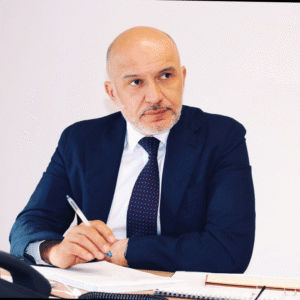
Sorin Maxim, General Director at ADR Vest
‘The West Region needs financial instruments capable of supporting innovative companies in their growth stages. If Vest Ventures is the place where ideas receive support to transform into startups and validate their potential, Asternova Vest comes to complete this journey through access to accelerated growth capital for companies ready to take the next leap. We want more and more innovative businesses to stay, develop and generate added value here, in the region, contributing to the transformation of the region into a regional hub of technology, innovation and entrepreneurship,’ Mr Maxim states.
‘By involving ADR Vest as an anchor investor, Asternova Vest proposes a model that the Romanian entrepreneurial ecosystem has been waiting for a long time: a fund built to transform promising startups from the West Region into competitive companies at the European level. The development of portfolio companies and returns for investors are not competing objectives, but congruent. Combining local expertise with the international experience and investment rigor brought by Aster Capital, the fund is built on the alignment of interests between founders, investors and the economic development of the region”, Mr Țața adds.
Helping Local Startups Complete Their Journey
ITKeyMedia approached these two investors to delve deeper into the new fund’s policy and mission.
How would you describe the particular funding gap in Western Romania that Asternova Vest is bridging?
Ionuț Țața: The gap isn’t a lack of ideas — it’s a lack of institutional early-stage capital between the friends-and-family stage and the Series A stage that founders in Bucharest, or anywhere in Western Europe, take for granted. A founder in Timișoara, Arad, or Oradea with a working product often has to fly to Bucharest, Paris, London, Berlin, or even US just to find someone who can write a EUR 200-300K check and actually understand the local market and talent pool. Asternova Vest is a EUR 37M fund anchored by ADR Vest, the regional development agency, and managed by Aster Capital Partners — so we’re one of the first vehicles that puts real, professionally managed risk capital physically in the region, with tickets sized for the first institutional round rather than for a seed that’s really disguised debt.
What are the most important red flags and, conversely, green flags for Asternova Vest when selecting portfolio startups?
IȚ: Green flags: founders who can articulate their unit economics without hand-waving, a team where the cap table already reflects real commitment rather than founders sitting on token equity, and evidence they’ve talked to customers — not just built something they assume the market wants. We also look favorably on teams that treat compliance and accounting hygiene seriously from day one, because that tells us how they’ll behave once they have real capital.
Red flags: founders diluting themselves below a defensible ownership stake before even closing an institutional round, financial statements where convertible loans or prior grants have been booked in ways that quietly push the company toward negative equity, and any mismatch between where a company is registered and where its actual operations and eligibility sit — that kind of structural sloppiness usually surfaces bigger problems later. We’d rather pass and leave the door open for a future round than force a deal that doesn’t hold up under diligence.
Which sectors do you believe are currently underestimated in Western Romania and could produce the region’s next breakout technology companies in the near future?
IȚ: Medtech and biotech are the sectors where the region might have been the most underestimated — in these fields there is a real depth of startup innovation coming out of university and clinical research that hasn’t yet translated into the kind of company-building attention it deserves, provided the science has a genuine commercial thesis behind it. Mobility and automotive-adjacent technology is the other one — Western Romania’s automotive manufacturing base gives founders here a level of domain access and engineering talent that’s hard to replicate elsewhere, and we think that’s still underexploited by startups building software and hardware on top of it.
How does an anchor investor backed by public funding balance market potential drive and regional policy objectives?
IȚ: We don’t treat those as competing forces. Every investment still has to clear the same commercial bar — a real market, a defensible model, a path to attractive returns — because that’s what protects the fund and, ultimately, the region’s capital. What the public anchoring does is shape where we look: we have a mandate to build the ecosystem in Western Romania, so we spend more energy sourcing and supporting companies here rather than defaulting to wherever deal flow is easiest to find. In practice that means proactive origination — university partnerships, regional events, local syndicate building — rather than compromising the investment bar itself.
Sorin Maxim: The balance comes from the way the fund itself is structured. ADR Vest, as the anchor investor, is taking on the initial risk of helping create a new source of venture capital for the region, but we are not involved in the day-to-day management or individual investment decisions. Our role is to define the strategic framework, identify the regional priorities, and assume the risk that comes with being an anchor investor.
The investment decisions remain with a private, international fund manager, based in Paris, which brings its own investment processes, criteria, and market discipline. This separation is important: the fact that public funding is involved does not mean that investment decisions become less commercially driven. Companies still have to demonstrate the potential to become strong, scalable businesses.
At the same time, our objective is broader than individual investments. We want to help build a stronger venture capital ecosystem in Western Romania and create confidence around the region’s potential to produce high-growth technology companies. By being an anchor investor, we are helping create a market that we expect private capital to join over time increasingly.
There is also an educational dimension. We want to bring to the region a different approach to financing innovative companies – one that is more flexible and better adapted to the realities of high-growth technology businesses. We have seen in other ecosystems that this type of capital can play a significant role in helping companies scale.
So, in simple terms, our role is to take the initial risk, create the framework and help build the market. The private fund manager brings the investment expertise and discipline. And our long-term expectation is that, as the ecosystem proves itself, more private capital will follow.
Regional VC funds sometimes struggle to attract the highest-quality founders. How does Asternova Vest compete with funds based in Bucharest, London, or Berlin for the best investment opportunities?
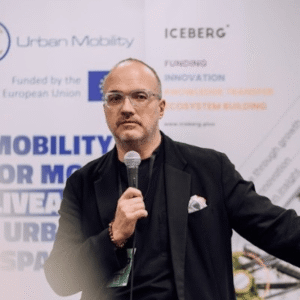
Ionuț Țața, General Partner at Asternova Vest , Founder at Iceberg+
IȚ: We compete on proximity and speed, not on trying to out-brand a London fund. We’re in the region, we know the local talent pool, the universities, the manufacturing base, and we can move faster on diligence because we’re not doing it remotely. We’re also building a bridge outward rather than asking founders to choose between us and international capital — we’ve been running sessions with Romanian investors and operators in the UK, and we’re active around events like the U.S.-Romania AI & Business Summit and How to Web, precisely so a founder who takes our check isn’t cut off from later-stage or international investors. The pitch to a strong founder is: get real capital and real regional support early, without giving up the international door.
Do you have a strategy for helping portfolio companies access international follow-on investors or acquisition opportunities?
IȚ: Yes — we see that as part of the job, not an afterthought. We’re actively building relationships with Romanian and diaspora investors and operators abroad — London in particular — so portfolio companies have a warm path to follow-on capital when they’re ready to raise internationally. We’re also positioning AsterNova Vest around the events where that kind of capital shows up, rather than waiting for it to find us. The goal is that a company we back at seed doesn’t hit a wall at Series A because it’s based in Western Romania — we want to have already opened that door before they need to walk through it.
What would success for Asternova Vest look like five years from now beyond financial returns?
SM: For us, success five years from now will be measured both by the financial performance of the fund and by whether we have changed the growth trajectory of the companies in which we invest, and ultimately, strengthened the startup ecosystem in Western Romania.
At the programme level, we are targeting investments in 18 innovative SMEs in their scaling and expansion stages, alongside at least 45 new jobs. But these numbers are only part of the picture. The more important question is whether these companies grow significantly faster and reach markets much earlier than they would have without access to this type of financing, expertise, and international connections. Scaling is probably the most important outcome we are looking for.
We also want to see companies from the region becoming international businesses rather than remaining successful only in the local market. And if we do our job well, we would like to see the foundations laid for at least one company with the potential to become a unicorn originating from Western Romania. That is an ambition, not a promise, but it is important to have that level of ambition when building an ecosystem.
There is another outcome that’s perhaps less visible but equally important: creating a pool of experienced entrepreneurs and people with expertise in scaling companies. Not every startup will succeed, and that is inherent to venture capital. But the knowledge and experience accumulated by founders, managers, and teams remain in the ecosystem. People who have gone through the process can go on to build new companies, invest in others, mentor younger founders, or create complementary businesses.
Ultimately, we want to create a strong demonstration effect. If young entrepreneurs in the region can see companies starting here, scaling internationally and attracting serious investment, it changes their perception of what is possible. And that can be one of the most valuable long-term effects of the fund: showing, through real examples, that globally competitive technology companies can be built in Western Romania.
Do you see a regional VC model like yours becoming a blueprint for other parts of Romania or even other innovation ecosystems across Europe?
SM: Yes, we believe this model can be replicated, particularly because we see venture capital as something that can be built around strong regional ecosystems rather than concentrated exclusively in a few major financial centres.
A more decentralised approach is important. The strongest innovation ecosystems tend to develop their own networks of founders, investors, universities, companies and expertise, with each ecosystem developing its own strengths and investment patterns. Venture capital does not necessarily have to be organised around a single national centre.
We are already seeing signs that this approach can work in Romania. Other regions have started to develop similar initiatives, which we see as a very positive development. If several regions succeed in building their own investment capacity, they can create a much stronger national startup ecosystem than if all capital and expertise remain concentrated in Bucharest.
We also believe there is a broader lesson for European policy. Public funding can be particularly effective when it is used to catalyse private capital and build local investment capacity, rather than simply financing individual companies. A regional anchor-investor model can help create the conditions for a sustainable venture capital market, while investment deci-sions remain driven by professional fund managers and market discipline.
So yes, we believe the model is worth encouraging at European level – not necessarily by replicating the same fund everywhere, but by giving strong regional innovation ecosystems the tools to develop their own pools of capital, expertise and ambition.
To Put Western Romania on Europe’s Startup Map

Jean-Marc Bally, Managing Partner at Aster Capital
‘Asternova Vest reflects our belief that the Western Region of Romania is emerging as one of the most promising technology hubs on the continent. By combining capital with strategic support, we are armed to help entrepreneurs accelerate their development, attract international opportunities, and build businesses capable of competing globally,’ Aster Capital’s Jean-Marc Bally concludes.
Asternova Vest marks an important step for Western Romania’s startup/VC ecosystem by bringing institutional growth capital closer to founders and helping bridge the financing gap between early-stage validation and Series A. By combining regional public backing with international fund-management expertise, the new fund is poised to strengthen the region’s ability to retain talent, attract private capital, and produce technology companies capable of scaling globally. More broadly, its regional anchor-investor model offers a potential blueprint for Romania and CEE, demonstrating how decentralised, professionally managed venture capital can help build stronger innovation ecosystems beyond established financial centres.
Kostiantyn is a freelance writer from Crimea but based in Lviv. He loves writing about IT and high tech because those topics are always upbeat and he’s an inherent optimist!