

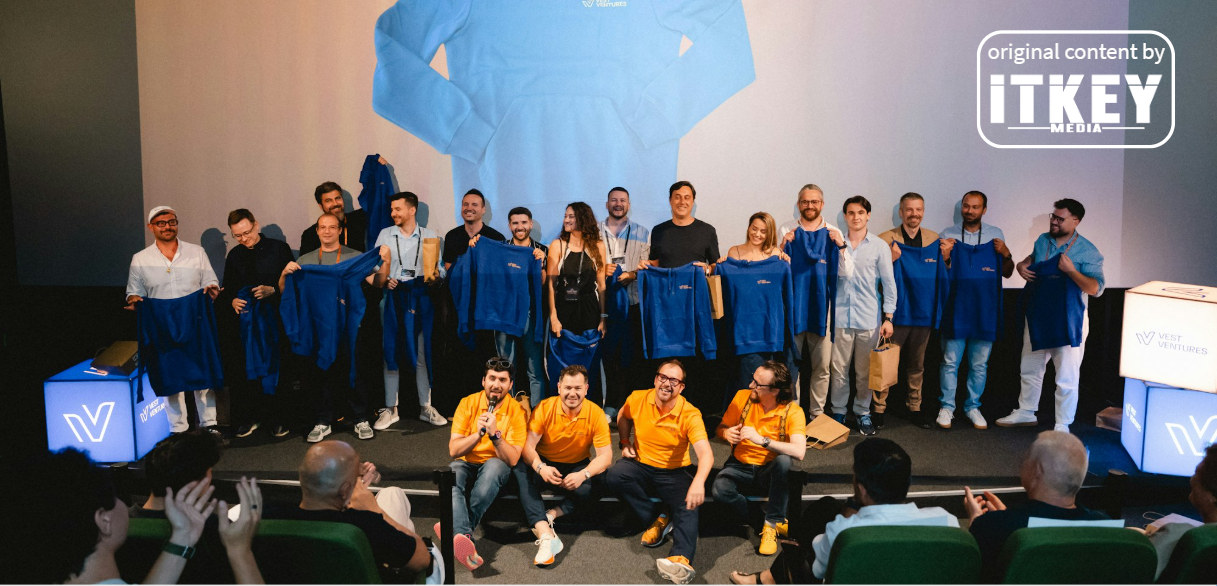
- West Romanian Vest Ventures concluded its first cohort of nine startups selected from over 100 application
- The 15-week accelerator delivered workshops, mentoring, and coaching from internationally renowned experts.
- Participating startups secured nearly EUR 1M, combining acceleration with access to capital
- Vest Ventures recognizes the remaining gaps and continues building a sustainable and resilient regional ecosystem
This July, Vest Ventures announced the conclusion of the first cohort of its acceleration program. The jury reviewed more than 100 applications for the cohort, with nine startups from two countries ultimately selected for a 15-week intensive program.
The program focused on the practical challenges of building and scaling early-stage companies, covering everything from product validation and strategy to go-to-market, sales, pricing, fundraising, legal and IP, leadership, and company building.
The founders took part in:
- 35 workshops,
- more than 150 one-on-one mentoring sessions,
- and over 260 hours of coaching, supported by 14 mentors, most of them international.
The Mentors Behind the First Cohort and the Nine Startups They Advised
Among others, the mentors involved in the program included:
- Cristobal Alonso, General Partner at Vest Ventures
- Zane Bojare of Enablers School, expert in communication, pitch and storytelling
- Gilles De Clerck of EuroMena Funds, expert in market engineering, growth and sales
- Karina Lapina of Enablers School, specialist in acceleration and venture building
- Adrian Pica of EUROWAG, entrepreneur and expert in product and growth
- Dan Renwick of Creative Combinator, coach specialized in pitch delivery
- Stoyan Yankov of Stoyan Consult ApS, mentor in leadership, performance and productivity for founders
By the end of the program, participating startups secured close to EUR 1M in investment, underscoring Vest Ventures’ ambition to combine acceleration with tangible access to capital and establish a significant regional platform for early-stage companies with ambitions to scale internationally.
The nine startups in Vest Ventures’ first accelerator cohort span healthcare, deep tech, AI, electric mobility, logistics, academic research, gaming and B2B software. Their solutions target a diverse set of challenges, from chronic disease prevention and scientific research to digital commerce, sustainable agriculture and next-generation semiconductors. They are:
- CautCurier.ro is building infrastructure for same-day delivery, combining an elastic delivery fleet with home-delivery solutions designed around safety and convenience, including its Safe Drop offering.
- Data Sweep is developing what it describes as a “Bloomberg Terminal for Academic Research.” Its AI-powered platform is designed to make it faster and easier for researchers to discover, navigate and analyze scientific literature and other academic materials.
- Elvo provides a B2B software platform for managing and operating electric vehicle charging networks. The company is already active in the European market, with its technology compatible with more than 700 different charging-station models.
- FIORA5 is developing intellectual property for high-performance RISC-V processors, targeting the next generation of semiconductor technologies and contributing to the development of advanced chip architectures.
- Harmonia Technologies is developing Organic+, a precision root-feeding solution for growers. The technology aims to improve the efficiency of agricultural inputs by reducing waste, limiting the overuse of resources and giving growers greater predictability in the cultivation process.
- Ixaria helps European furniture manufacturers increase their online sales by creating digital experiences designed to build customer confidence, strengthen engagement and ultimately improve conversion rates.
- Outpost Chess is building an AI-powered platform for chess training and gameplay. It provides real-time guidance and adaptive learning mechanisms designed to personalize the experience and help players improve their skills.
- Revelio Medical is developing a digital platform focused on preventing chronic diseases. The solution combines lifestyle data, gamification and personalized interventions to encourage healthier behaviors and help users make lasting changes.
- WakeZ is developing a digital approach to depression management centered on sleep as a measurable biomarker and potential point of intervention. Its technology combines Apple Watch data, AI algorithms and nocturnal haptic stimulation to identify relevant changes early, alleviate symptoms and help prevent relapse.
ADR Vest: The Public Anchor Behind the Accelerator
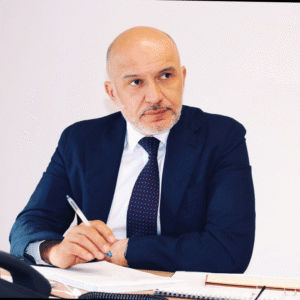
Sorin Maxim, General Director at ADR Vest
ADR Vest is a non-governmental, nonprofit regional development agency and public-interest legal entity that manages EU-funded regional development programs and promotes investment and innovation across Romania’s West Region. ADR Vest is the public anchor investor and Managing Authority behind Vest Ventures, the organizer of the Vest Ventures Accelerator.
‘The first Vest Ventures cohort sends a simple message: it is possible. We have people who can build globally competitive products, we have young people who have the courage to take risks and entrepreneurs capable of turning an idea into a company. Our role is to provide them with the context, tools, and confidence they need to move forward. I hope that the success of this first cohort will inspire others to take the step towards entrepreneurship. We have every reason to believe that startups that can change markets and compete anywhere in the world can start in the West Region. But for this, we must have the courage to try, collaborate and build together an ecosystem in which good ideas get the chance they deserve”, ADR Vest’s general director Sorin Maxim declares.
From Regional Talent to Global Companies: Lessons from Vest Ventures’ First Cohort
ITKeyMedia sat down with Mr Maxim and his colleague Răzvan Șuta, Vest Ventures’ co-founder and COO, to find out more about Vest Ventures accelerator’s mission, vision, lessons learned from the first cohort, and the remaining gaps in the Western Romanian startup/VC ecosystem.
Traditional investors often say they invest in companies, not ideas. Does your accelerator change that equation by helping transform ideas into investable companies?
Răzvan Șuta: First and foremost, we invest in founders. The human quality might be underrated these days, given all the AI help out there. Especially at the stage at which we are investing, the human factor — the professionals driving the idea,the mvp, the prototypes into the market represent the core asset. Conversely, the Vest Ventures accelerator program is centred around challenging the founders, their strategies and operating methods, and their assumptions, so they grow so that later down the line they are much better prepared to raise another investment round but also to bring more structure to their business. Thus, the equation becomes: founders first, market sizing and potential after, while the product and its commercial validation and signals in this direction must follow as early as possible.
Many early-stage founders have ideas but lack market validation. What specific signals did you look for when deciding which companies in the cohort had the potential to become investable?
RȘ: Strong founding team, domain experts or not, who are coachable; Ability to execute fast, to learn, to iterate; Market potential: Where are they positioning themselves in the market and what data is backing them up; Commercial validation: Contracts, LOIs, sales cycle time, buying intent measured and controlled.
Today, ‘Smart money’ has grown into a proper buzzword in the startup world. What specifically did smart money mean inside this particular accelerator program?
RȘ: Each founder had their own improvement points in this past cohort. I’ll name a few: depth of the market research and ICP definition, sales strategy stress testing, investor narrative building, investor relations management, investor storytelling, and investor negotiations. All these might seem like common knowledge that can be self-taught, but what really happens is that the founders do feel a responsibility towards the coaches to showcase their best effort, as a way to build both professional and personal relationship with the senior mentor. Finally, the mentioned takeaways are not simply solved in a single workshop, but across several, often moving back and forth.
Seeing how Cristobal Alonso previously managed Startup Wise Guys’s accelerator, what is fundamentally different about building an accelerator backed by regional European funding as opposed to a purely private model?
Sorin Maxim: The fundamental difference is not in the way the accelerator is managed, but in the type of risk we are able to take at the regional level. Cristobal Alonso brings a very pragmatic, strongly business-oriented approach to the programme. His experience has given him a very clear understanding of what works in an accelerator, what founders actually need, and, equally importantly, what makes a company investable. This business grounding is one of the key assets of Vest Ventures.
Our role as a regional investor is to take part of the initial risk and create the conditions for such a programme to exist in Western Romania. But the management remains private and commercially driven. The accelerator has commercial criteria, assumes investment risk, requires co-financing, operates against clear performance indicators and has a financial upside if the programme performs well.
So this is not about public funding replacing market discipline. It is about using public funding to take a risk that can help develop a market that is still relatively young, while putting the actual programme in the hands of people who understand how the private market works.
There is also a broader regional mission that a purely private accelerator may not necessarily have. We are not looking only at the immediate financial return from the companies involved. We want to build a stronger startup ecosystem in Western Romania: to create a critical mass of ambitious founders, attract and retain talent, connect startups with international mentors and investors, and demonstrate that globally competitive companies can be built here.
In that sense, European and regional funding can act as a catalyst. The objective is not to create a permanent dependency on public money, but to use it to build an ecosystem strong enough to attract increasingly more private capital and become sustainable on its own.
After 15 weeks, 35 workshops, and 260+ hours of mentoring, what was the biggest transformation you observed in founders?
RȘ: More mature understanding of the macro while being able to think very focused on the business direction defined in the accelerator.
Looking back at your first cohort, what surprised you most—either positively or negatively—about the quality, ambition, or preparedness of founders from the region?
RȘ: The commitment to join the whole program and sessions, and understanding it as an opportunity to grow as founders and part of their journey to become international C-level professionals, despite all the daily business fires going on. This is a consequence of:
- mature professionals that were selected,
- the group as a whole came together, sometimes positively challenging each other, thus thinking as a collective, ‘a tribe,’
- the expectations regarding attendance were managed very well by the org team.
Looking at how Vest Ventures aims to build globally competitive companies from the West Region of Romania, what unique advantages do this cohort’s founders from this ecosystem enjoy and what gaps still present obstacles for competing internationally?
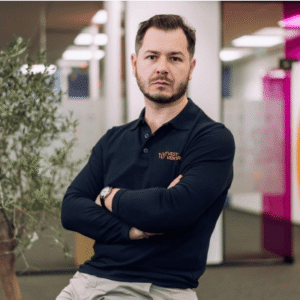
Răzvan Șuta, Co-Founder and COO at Vest Ventures
RȘ: The talent is there — mainly tech, though. The resilience is there, the inventive type of founder is there, but they need to be channeled to think innovation and structured execution.
We still need to work to inspire, to think bigger, to execute faster, to develop a culture around competent company management and governance, as well as sales structures. We think too small, and we need to work collectively to brand ourselves and our strengths. Changing mindset and behaviour takes time, and the way to accelerate the change is with international expertise, with visits and bridges in other ecosystems to say the least.
SM: Western Romania has a very good starting position for building internationally competitive companies. We have strong universities, a substantial industrial base, a significant presence of international companies, fairly good infrastructure, and importantly, a geographic position that gives companies easy access to the European market.
But these advantages are not enough on their own. One of the most important things we have seen is that building a good product is only the beginning. To compete internationally, founders also need strong partnerships, credibility, access to the right networks and people who can help them understand and enter new markets.
This is particularly important in the early stages. A young company simply does not have the resources or the capacity to build everything on its own. Having a trusted partner or a ‘bridgehead’ in another market can make an enormous difference — whether that means finding the first customer, a local partner, an investor, or someone who understands how business is actually done there.
We have seen this very clearly in our cohort. The founders bring strong products and considerable technical capabilities, but scaling internationally requires a much broader set of skills: communication, sales and marketing, leadership, fundraising, and the ability to build teams and partnerships across borders.
This is probably one of the biggest gaps we still need to address. The region has no shortage of technical talent or good ideas. What we need to strengthen is the layer around them – the international networks, business expertise, experienced mentors, growth capital and market connections that can help a good company become a global one.
That is also where an accelerator can make a real difference: not by replacing what founders can do, but by giving them access to relationships, credibility and expertise that would otherwise take years to build on their own.
A successful startup ecosystem requires more than individual companies—it needs investors, mentors, talent, research links, and follow-on capital. Which missing piece is currently the biggest bottleneck in Western Romania?
SM: If I had to identify one fundamental bottleneck, I would say that Western Romania still lacks enough visible success stories of companies that have scaled internationally and reached a significant level of growth.
We have good founders, strong technical talent and good ideas. What we still need are more examples of companies from the region that have gone through the entire journey — from an early-stage idea to a rapidly scaling business operating on international markets. These examples matter because they create both know-how and confidence. When founders see that someone from their own ecosystem has done it, the perceived risk of aiming higher becomes much lower.
The second gap is financial. We need more financing mechanisms adapted to innovative companies at different stages of growth, particularly capital that allows them to scale quickly rather than grow incrementally. A company entering an international market often needs to move faster than its organic revenues would allow, and traditional financing is not always well suited to that.
There is also a shortage of experienced mentors who have actually built and scaled companies, rather than simply having theoretical knowledge about entrepreneurship. That experience is extremely valuable because it helps founders avoid mistakes and, perhaps just as importantly, gives them the confidence to make bigger decisions.
So these gaps are interconnected: we need more specialised capital, more people who have already built companies at scale, and more visible success stories. And success stories themselves create a powerful multiplier effect. They bring experienced people back into the ecosystem, attract investors, produce new mentors and, most importantly, show the next generation of founders that it is possible. Sometimes what an ecosystem lacks is not talent, but the confidence that comes from seeing someone else succeed.
What outcomes would convince you that Vest Ventures has truly succeeded e.g. 5 years from now: the number of startups funded, exits generated, companies that remain in the region, or something else entirely?
SM: I would not define the success of Vest Ventures simply by the number of startups funded or the number of workshops delivered. Those are important outputs, but they are not the ultimate measure of impact.
We already have some clear targets: 120 business ideas developed to at least the minimum viable product stage, 77 investments in innovative SMEs at an early stage of development, 50 new jobs created, around 300 people trained through pre-acceleration and acceleration programmes, and around 20 networking, promotion, and entrepreneur-attraction events.
But the real test is what happens after that. For us, the most important indicators will be whether the companies we support actually scale and gain exposure to international markets. We want to see founders move beyond the local market, attract further private investment, build international partnerships and grow their businesses significantly faster than they would have without this support.
There is also an important ecosystem effect that is already visible. The fact that founders from the first cohort are still building their businesses and that we are already creating a pool of people with practical entrepreneurial and scaling experience is itself a valuable outcome. Not every startup will succeed — this is an indelible part of the nature of entrepreneurship and venture capital. But the knowledge, relationships, and experience accumulated through the programme remain in the ecosystem.
Five years from now, I would like to see that the companies we have supported have grown, raised further capital and reached international markets. Just as importantly, I would like to see the people who went through the programme continuing to contribute to the ecosystem – as founders, mentors, investors or business partners. Even when a company does not succeed, the experience and knowledge gained should stay in the region.
For me, the real measure of success is whether Vest Ventures helps create more companies that can scale from Western Romania to international markets. If, five years from now, it is easier for a good founder from this region to find capital, expertise and the right connections to grow, then we will know that we have made a difference.
The Beginning of a Longer-Term Platform and a Regional Benchmark

Cristobal Alonso, General Partner at Vest Ventures
‘For an investor, a good accelerator is not just about clearer presentations, but about companies that are better prepared to enter a real market, understand risk, attract capital, and execute faster. The first Vest Ventures cohort showed exactly this: founders who came with ambitious ideas and exited the program with better defined businesses, clearer models, and a more mature understanding of what it means to build a scalable company. For us, this is the beginning of a platform through which we want to bring more smart capital, international mentorship and execution discipline to the early-stage ecosystem in the region,’ Vest Ventures general partner Cristobal Alonso concludes.
Thus, the first cohort of Vest Ventures accelerator marks a significant step in the development of Western Romania’s startup ecosystem, providing excellent opportunities for regional founders to access international expertise, investment, and the networks needed to build globally competitive companies. By combining public-backed capital with private-sector investment discipline and international mentorship, the accelerator offers a model that helps bridge some of the gaps between Romania’s sizable pool of technical talent and the capital, expertise, and market access required for international scaling. If its early results can translate into follow-on investment, successful exits, and a stronger pipeline of founders, mentors, and investors, Vest Ventures is poised to become a meaningful reference point not only for Western Romania, but for the evolution of regional venture ecosystems across Romania and the whole CEE region.
Kostiantyn is a freelance writer from Crimea but based in Lviv. He loves writing about IT and high tech because those topics are always upbeat and he’s an inherent optimist!