

- Croatian-American Daytona raised USD 24M Series A to develop infrastructure for AI agents
- The company builds composable computers designed for autonomous software systems
- The platform supports code execution, computer use, and reinforcement learning workloads
- The funding expands Daytona’s product development, infrastructure capabilities, and team growth
This February, Croatian-founded startup Daytona raised USD 24M in Series A funding to develop infrastructure for AI agents. The round was led by FirstMark, joined by Datadog, e2vc (invested in DiffuseDrive, among others), Figma Ventures, Pace Capital, and Upfront Ventures, alongside Eno Reyes of Factory, Nikita Shamgunov of Databricks, and Gorkem Yurtseven of fal as angel investors.
From Developer Environments to Agent-Native Infrastructure
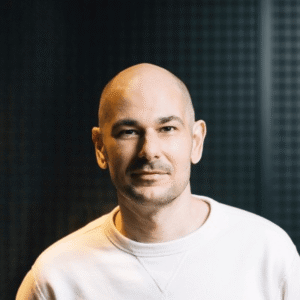
Ivan Burazin, Co-Founder and CEO at Daytona
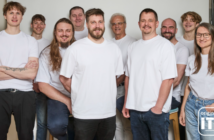
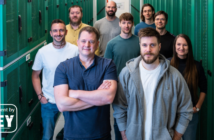
Founded by Ivan Burazin (CEO), Vedran Jukić (CTO), and Goran Draganić (Chief Architect) in 2023, Daytona is building what it describes as ‘composable computers’ — programmable environments designed specifically for AI agents. The company argues that existing cloud infrastructure was built primarily for production applications, not for autonomous systems that need to experiment, maintain state, and execute tasks over longer periods of time.
Daytona’s founders have spent years working on developer tools and infrastructure. Before starting Daytona, Mr Burazin co-founded Codeanywhere, founded the Shift developer conference, and later served as Chief Developer Experience Officer at Infobip.
The company initially focused on development environments, helping developers create consistent and reproducible workspaces. As AI agents became more capable, Daytona shifted its focus toward a broader infrastructure challenge: providing autonomous software systems with environments where they can actually work.
Why AI Agents Need Their Own Computing Environments
The Daytona team believes that agents require more than APIs. They need execution environments with filesystems, tools, permissions, memory, and the ability to safely test different approaches. The company compares this shift to previous changes in computing, where new types of users created demand for new infrastructure layers.
‘Today’s cloud infrastructure was built for production workloads: stateless, immutable, optimized to run the same code the same way every time. That works for serving software. It doesn’t work for creating it. When humans work, we need real computers: machines where we can install packages, run experiments, make mistakes, and recover. Agents need the same thing, except at a scale and speed humans never required: environments that launch in milliseconds, fork into parallel branches, snapshot mid-execution, and scale to millions of concurrent instances,’ Mr Burazin explains.
With this in mind, Daytona’s platform provides isolated environments where AI agents can run code, use development tools, interact with files, and continue work over time. Unlike traditional cloud workloads, which are often designed around stateless requests and predictable execution, agent workflows are quite often experimental and non-linear. Agents may need to create multiple versions of a solution, pause work, resume later, or recover from failures.
Daytona’s approach is to make these environments fast to create, easy to manage, and suitable for large numbers of concurrent agent workflows. The company sees this as a new infrastructure category emerging alongside the growth of AI agents.
Building the Sandbox Layer for the Agent Economy

Kevin Zhang, General Partner at Upfront Ventures
‘This isn’t an extension of existing infrastructure. This is an entirely new primitive. The primitive is what we call a sandbox. At Daytona, we think of sandboxes as programmatic, composable computers. These are full computing environments where CPU, memory, storage, GPU, networking, and the operating system can be composed on demand, then started, paused, forked, snapshotted, or destroyed at any point,’ Mr Borazin continues.
Daytona claims it reached a USD 1M forward revenue run rate less than three months after launching its agent-focused infrastructure, doubling that figure six weeks later. The company currently supports agent workloads for startups and enterprise customers, including LangChain, Turing, Writer, and SambaNova.
Three main use cases for Daytona’s infrastructure are highlighted:
- code execution,
- computer use,
- and reinforcement learning.
Rebuilding Cloud Infrastructure for Autonomous Systems
The Daytona is convinced that AI agents will require a different approach to cloud infrastructure. Traditional cloud platforms were designed around applications that run continuously and predictably. Agent workloads are different: they may create temporary environments, explore multiple solutions, and require persistent context across longer workflows.
The company believes future infrastructure will need new approaches to managing state, permissions, orchestration, and coordination between autonomous systems. In this picture, sandboxes are just the starting point. As agents take on more work, the entire infrastructure stack will need to be rebuilt from first principles with the agent as the primary consumer.
Scaling Daytona’s Vision After the Series A
‘We’re thrilled to double down in Daytona. The team’s relentless pace and obsession over developer experience have been truly inspiring to witness, best reflected by the constant activity and customer love in the Daytona Slack and X. It is just the beginning of this new agent era infrastructure opportunity, and we cannot think of a better and more focused team than Daytona to take it on,’ Upfront Ventures’ general partner Kevin Zhang comments.
Daytona is using its USD 24M funding to expand its product development, infrastructure capabilities, and team as it works toward becoming a foundational layer for companies building AI-powered applications.

Matt Turck, Partner at FirstMark
The company’s bet is that as AI agents move from experiments into production environments, developers will need infrastructure designed not only for humans building software, but also for software systems capable of building and operating independently.
‘We believe the next infrastructure shift is from human-centric cloud primitives to agent-native ones. Daytona’s breakthrough is making ‘a computer for every agent’ practical: instant startup, persistent state, and the tooling agents need to write code, use Git, and execute safely at scale. That’s a foundational building block for the agentic economy, and we are thrilled to partner with Ivan, Vedran and the Daytona team,’ FirstMark’s partner Matt Turck concludes.
By building infrastructure designed for autonomous software systems, Daytona is positioning itself at the center of a broader shift in how computing resources are created and used in the AI era. The company’s growth also highlights the increasing role of CEE-founded startups in developing globally relevant technology companies, moving beyond regional markets to compete in emerging categories shaping the future of software. As AI agents become more capable and widely adopted, Daytona’s approach is poised to become an important building block in the transition toward agent-native computing.

Kostiantyn is a freelance writer from Crimea but based in Lviv. He loves writing about IT and high tech because those topics are always upbeat and he’s an inherent optimist!