


- Kyiv-based The Fourth Law develops AI autonomy systems spanning drones, robotics, and aerial defense applications
- Its products include scalable autonomy modules, autonomous FPVs, and interceptor drone systems
- Axon’s investment accelerates engineering expansion and autonomous technology development efforts
- Future plans focus on scaling autonomous systems, engineering talent, manufacturing, and global expansion
Ukraine’s defense technology ecosystem continues to attract global strategic attention as companies born from wartime necessity begin to develop into a new generation of deep-tech players. Among the most illustrative examples is The Fourth Law (TFL), the Kyiv-based defense tech startup which successfully secured strategic investment from US public safety technology company Axon. The investment supports The Fourth Law’s research and development efforts, including expanding its engineering team and advancing autonomous systems for drones and robotic platforms.
The Fourth Law was founded in 2023 by Yaroslav Azhnyuk, known for co-founding Petcube, an entrepreneur with notable experience in building hardware-software products. The startup’s founding thesis was based on an apparent observation: many of the technologies that defined the consumer technology revolution—computer vision, embedded systems, sensors, artificial intelligence, and connectivity—are becoming equally important in defense. As such, the team believes that autonomy is not a single technology, but a combination of perception, decision-making, software, hardware, manufacturing, and continuous improvement.
A Software Challenge in the Battlefield and the Intelligence Layer Behind Robotic Systems

Yaroslav Azhnyuk, Founder and CEO at The Fourth Law
Historically, military advantage was often associated with superior physical platforms: aircraft, ships, armored vehicles, and weapons systems. Today’s battlefield is a highly contested environment: GPS can be disrupted, communication links can fail, and adversaries constantly adapt their tactics, creating the need for systems that can continue operating despite uncertainty. The emerging battlefield is different. The advantage increasingly comes from the ability to collect information, make decisions, and adapt faster. In this environment, software becomes a strategic asset, and autonomy becomes a strategic capability.
As such, the challenge was not about simply building another drone. Instead, The Fourth Law tackled creating the intelligence layer that allows robotic systems to operate in increasingly complex environments. The startup’s product strategy reflects a broader ambition: building an autonomy layer that can be integrated across different robotic platforms, rather than developing a single-purpose drone.
A drone is no longer only a flying vehicle. It is a combination of:
- sensors,
- artificial intelligence,
- communications,
- manufacturing capability,
- operational data,
- and engineering feedback loops.
Those who can improve these systems faster may gain an advantage over those relying on traditional development cycles.
This is another reason why Ukraine has become such an important environment for defense innovation. Technologies and products get tested under real operational conditions, creating unusually fast feedback cycles between engineers and users.
A Product Portfolio Spanning Offensive and Defensive Autonomy
The Fourth Law’s current product portfolio spans both offensive and defensive applications of autonomy:
- Its flagship TFL-1 autonomy module provides AI-powered terminal guidance and cruise capabilities for FPV drones. The system uses onboard computer vision to identify and track targets, allowing drones to continue their mission even in environments where traditional communication links or satellite navigation may be disrupted. According to the company, TFL-1 has increased FPV drone mission success rates by two to four times while adding approximately 10% to unit cost.
- The module has been integrated into The Fourth Law’s own Lupynis-10-TFL-1 autonomous drone, alongside platforms developed by other Ukrainian drone manufacturers, reflecting the company’s approach of building a scalable autonomy layer rather than a closed hardware platform.
- The company’s newest product expands this approach into aerial defense. TFL-AntiShahed is an AI-powered autonomy module designed for interceptor drones. It uses edge AI to detect, identify, and highlight hostile UAVs such as Shahed and Geran-type strike drones faster than manual observation alone. The system analyzes thermal imagery and object characteristics, helping interceptor drone operators detect and engage incoming threats earlier. The introduction of TFL-AntiShahed marks an important shift in the company’s roadmap. While early autonomy systems focused on increasing the effectiveness of individual drones, counter-UAV applications demonstrate a broader vision: autonomous systems operating across the entire battlefield ecosystem—from strike platforms to defensive interception networks.
Developing its products, The Fourth Law takes advantage of Ukraine’s tragically unique situation: continuous learning system: deployment generates data, data improves models, and improved models create better operational capabilities.
Investing in in the Future of Autonomous Defense
The investment reflects a broader shift in defense technology: modern warfare is increasingly becoming a software and autonomy challenge, where the ability to develop, deploy, and improve intelligent systems rapidly can become as important as traditional hardware capabilities. Axon’s involvement highlights a growing trend of established tech companies increasingly seeing defense autonomy as a major technology category. The funding round comes at a time when Ukraine’s defense technology ecosystem is moving from rapid experimentation toward industrial scaling.
Recognizing how aerial defense is becoming an increasing priority both nationally and internationally, Axon made a strategic investment in The Fourth Law to support the development of technologies designed to address emerging unmanned aerial threats. The increasing use of unmanned systems in conflict zones has self-apparently underscored the need for effective countermeasures, particularly against Group 3 drones like Shaheds, that can pose serious risks to infrastructure and civilian life. The Axon team believes that the Fourth Law’s technology, and more specifically, its capability to support terminal guidance and last-mile targeting for interceptors, represents an important advancement in mitigating these types of threats.
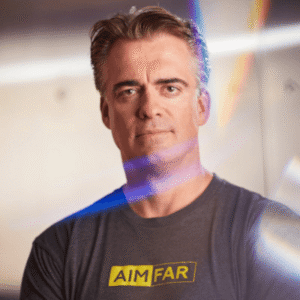
Rick Smith, Founder and CEO at Axon
‘We are investing because the world can learn from how drones are developed and deployed in Ukraine, and we believe that through the work of companies like The Fourth Law, even more world-class solutions will emerge,’ Axon’s founder and CEO Rick Smith states.
Beyond the Battlefield: Autonomy as a Broader Technology Shift
For investors and strategic partners, defense technology is becoming attractive because unlike many emerging technologies, it has an immediate operational demand.
Although The Fourth Law is currently focused on defense applications, the company positions autonomy as a broader technological shift. The team expects autonomous systems to transform multiple industries over the coming decade, including logistics, agriculture, construction, and industrial robotics. Defense is simply where the requirements are most demanding.
A system capable of operating in a highly contested environment—without reliable communication, under unpredictable conditions, and with limited human intervention—represents a significant technological challenge. Solving this challenge creates capabilities that can eventually extend beyond military applications.
Having proven that the tech works, the next challenge for companies like The Fourth Law is about building organizations capable of:
- recruiting world-class engineering talent,
- manufacturing at scale,
- integrating with multiple platforms,
- maintaining rapid development cycles,
- and competing globally.
For The Fourth Law, the ambition is to become part of the infrastructure behind the next generation of autonomous systems. The core argument is that the future of robotics will not be defined by a single breakthrough product, but by the ability to continuously improve intelligent machines operating in the real world. And Ukraine, through necessity, has become a place where that future gets built first.

Kostiantyn is a freelance writer from Crimea but based in Lviv. He loves writing about IT and high tech because those topics are always upbeat and he’s an inherent optimist!