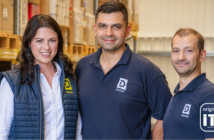


- TYTAN Technologies secured EUR 30M Series A to accelerate the manufacturing of its AI-powered interceptor systems
- The founders built the company around scalable responses to rapidly evolving autonomous aerial threats
- Responsible AI, interoperability, and industrial execution remain central priorities for the company’s development
- Future investment will expand manufacturing, accelerate deployment, and strengthen air defence integration
This February, European defence technology company TYTAN Technologies raised EUR 30M in Series A funding to scale production, accelerate the development of its AI-powered interceptor systems (battle-tested in Ukraine), and strengthen the integration of its technology into modern air defence networks. The round was led by Armira and the NATO Innovation Fund / NIF (invested in SatVu, among others), with participation from existing investors including 10x Group, D3 VC, Magnetic Capital, Lakestar (invested in Dexory, among others), OTB Ventures, and Visionaries Club.
Urgent Capability Gap and Defence Tech Momentum

Patrick Schneider-Sikorsky, Partner at NATO Innovation Fund
The investment comes as defence organizations across Europe face a rapidly changing security environment driven by the proliferation of low-cost drones, autonomous systems, and increasingly complex aerial threats.
‘TYTAN’s air defence technology addresses an urgent capability gap for Ukraine and Allies alike, enabling them to defend their airspace, military bases and critical infrastructure against drone incursions cost-efficiently and at scale. NIF is proud to partner with the TYTAN team to defend the airspace across the NATO Alliance,’ NIF’s partner Patrick Schneider-Sikorsky remarks.
Building a Company Around Modern Air Defence
Balázs Nagy (CEO) and Batuhan Yumurtacı (CTO) founded TYTAN Technologies in 2023 round the recognition that existing air defence approaches were not designed for the speed, scale, and cost dynamics of today’s drone threats. With the goal of addressing emerging aerial threats, TYTAN Technologies focuses on developing autonomous interceptor systems designed to provide a scalable response to modern drone warfare. The company approaches the challenge as a broader systems problem involving autonomy, hardware, software, manufacturing, and integration.
For deep-tech defence companies, production capability is often as critical as technological innovation. A successful system must not only perform in testing environments but also be manufactured reliably, deployed efficiently, and continuously improved. The company’s roadmap focuses on increasing production readiness, improving system reliability, shortening development cycles, and expanding integration capabilities.
Autonomy and Integration Challenges

Balázs Nagy, Co-Founder and CEO TYTAN Technologies
The growing use of drones in modern conflicts has created demand for new approaches to air defence. Traditional systems were often designed around expensive platforms and limited numbers of threats, while autonomous systems introduced new possibilities in terms of scale and responsiveness. Autonomy continues growing increasingly important as the complexity and speed of aerial threats increase. However, the TYTAN team emphasizes that autonomy must remain connected to responsible operational control as a tool that improves speed, precision, and operational effectiveness, not as a replacement for responsible decision-making.
One of the key challenges for emerging defence technologies is interoperability with existing systems and their different architectures, interfaces, and operational concepts. Integration is not simply a technical interface problem. It requires understanding how a new capability fits into existing command structures, sensor networks, decision-making processes, and operational workflows. Rather than replacing current defence infrastructure, TYTAN Technologies aims to develop capabilities that can complement existing architectures.
As AI grows increasingly integrated into defence systems, questions around autonomy, accountability, and governance have become central to the industry. Importantly, this technology increases the importance of responsible design and deployment, and responsible autonomy requires clear boundaries, accountability, transparency, and compliance with international frameworks.

Batuhan Yumurtacı, Co-Founder and CTO at TYTAN Technologies
TYTAN Technologies positions AI as an enabling technology that improves response speed and operational effectiveness while maintaining responsible deployment principles.
The Next Phase of Growth
The Series A funding supports TYTAN Technologies’ next phase of growth: expanding manufacturing capacity and transitioning from technology development toward large-scale deployment. This round reflected growing investor interest in European defence technology companies developing solutions for a rapidly changing security landscape.
‘Europe is entering a once-in-a-generation reset in how air defence is designed, produced and deployed,’ Mr Yumurtacı states.
‘This funding round is all about sustainably building the industrial and technological foundation for a sovereign, AI-enabled air defence architecture made in Europe for Europe,’ Mr Nagy adds.
Prioritizing Execution and Strengthening the Leadership Team
For TYTAN Technologies, in turn, the immediate challenge is execution: increasing manufacturing capacity, advancing its AI-powered interceptor technology, and demonstrating that its systems can operate as part of broader air defence networks.

Tahsin Kart, Co-CEO at TYTAN Technologies
With the new investment, TYTAN Technologies has evolved from a startup proving its interceptor technology into a company focused on industrial-scale production and deployment.To strengthen what already works and elevate TYTAN Technologies to the next level as the leading European air defence company, new strategic hires were due.
Tahsin Kart of CycloTech and Roketsan Missiles fame joined TYTAN Technologies, bringing extensive expertise in propulsion and missile systems, to lead the industrial scaling of TYTAN’s next-generation air defence solutions.
‘Restoring European sovereignty requires more than pure ambition, it demands deep technical expertise and operational discipline. That is precisely why I am joining TYTAN. I have spent my career building advanced defence systems and now I want to help scale TYTAN’s track record as a leader in counter-drone technology into something larger: a European company with technical depth and strategic vision to shape the future of our common air defence,’ Mr Kart comments.
Ex-NATO General Chris Badia joined the company’s board. For him, TYTAN Technologies represents a new generation of European defence companies capable of combining operational experience with scalable industrial execution.
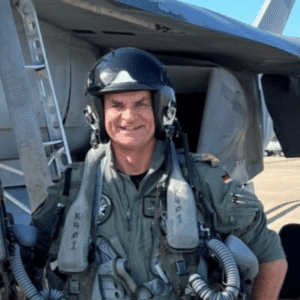
Chris Badia, Board Member at TYTAN Technollogies, Retired NATO General
‘Its platform approach provides the needed capabilities for modern layered air defence and supports long-term defence programmes across the continent,’ General Badia remarks.
Progress Beyond Funding
One year from now, the company expects progress to be measured through production readiness, system reliability, deployment capability, and continued improvements in performance. Success would mean translating technological capability into operational capability at scale.
As European defence priorities increasingly shift toward autonomous systems, industrial capacity, and resilient supply chains, companies like TYTAN Technologies are positioning themselves at the intersection of advanced engineering and strategic security needs.

Kostiantyn is a freelance writer from Crimea but based in Lviv. He loves writing about IT and high tech because those topics are always upbeat and he’s an inherent optimist!